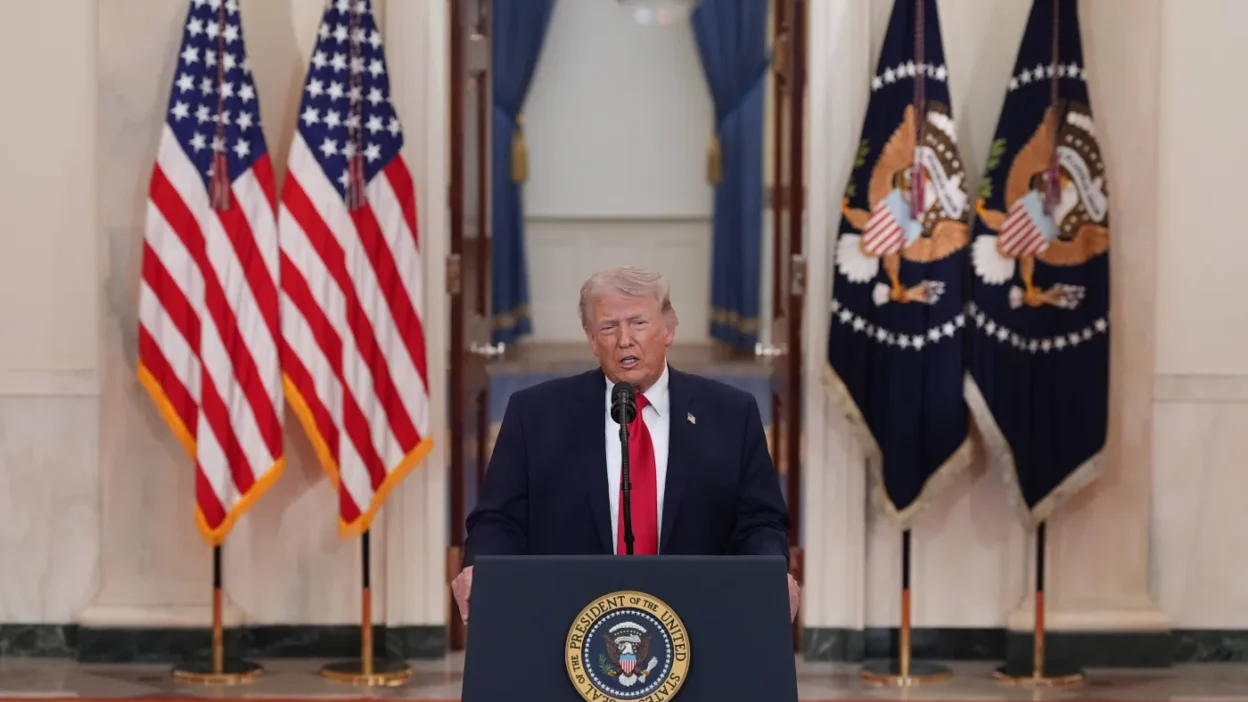
In a Wednesday address, U.S. President Donald Trump outlined justifications for actions against Iran but offered no concrete details regarding the conflict’s end or future strategy.
Trump Justifies Military Action “Epic Fury”
Donald Trump’s address aimed to justify the decision to initiate military actions, termed “Epic Fury” by the administration. The President argued these actions were necessary for the security of the United States and the broader Western world.
Iran’s Nuclear and Missile Programs as Threats
Trump emphasized the threat posed by Iran potentially acquiring nuclear weapons, while also pointing to the development of its missile program. He assessed that the combination of these elements constitutes a serious risk to international stability.
Lack of Evidence and Clear Strategy
Despite strong rhetoric, the President did not present new information or evidence confirming the effectiveness of current military operations. He also failed to explain how the current operation would definitively prevent Iran from further developing nuclear technology.
Iran’s Nuclear Program: A Central Point of Conflict
The issue of Iran’s nuclear program remains central to the conflict. Tehran maintains its activities are civilian and for energy purposes. However, international data indicates Iran is enriching uranium to 60 percent, nearing weapons-grade levels.
Intelligence Assessments Before the War
U.S. intelligence agencies assessed before the war that Iran had not formally begun a weapons program, but was undertaking actions that could enable its rapid launch. Trump did not detail these findings in his speech, limiting himself to general statements about the threat.
No Defined End Date or Objectives
A key aspect Americans awaited was a timeline for the end of military operations in Iran. While Trump previously suggested a swift resolution, he only spoke of intensifying actions over the next two to three weeks – a timeframe previously offered by Mark Rubio.
Unspecified Conditions for Ending Operations
The President stated that basic strategic goals were close to being realized, but did not specify the conditions required to declare the operation complete. He also did not announce the deployment of ground troops, indicating a continuation of limited operations – primarily air and missile strikes.
Monitoring Iranian Nuclear Infrastructure
Trump announced the continuation of satellite surveillance of key facilities and warned that any attempt to restart them would meet with immediate military response.
The Strait of Hormuz and Oil Markets
The conflict with Iran directly impacts global energy markets, particularly the Strait of Hormuz, a crucial oil transport route. Disruptions in the region have already led to increased energy prices, impacting economies worldwide.
Responsibility for Strait of Hormuz Security
Trump suggested that after the end of hostilities, responsibility for the security of the Strait should be taken over by countries most dependent on oil supplies, but did not specify which nations or outline a stabilization mechanism.
Shift in Tone Towards NATO and Allies
In previous days, Trump criticized NATO countries for insufficient engagement in the conflict, even suggesting a reduction in U.S. involvement. His tone in Wednesday’s address was noticeably more moderate, avoiding direct criticism of NATO and adopting a more general appeal for responsibility from oil-dependent nations.
Economic Impact on the U.S.
Military actions have clear economic consequences, with rising fuel prices and financial market uncertainty impacting the U.S. economy. Trump acknowledged rising gasoline prices as a temporary phenomenon, offering no specific solutions to mitigate the economic effects of the conflict.
Political Implications for Trump’s Second Term
The war with Iran is becoming a key reference point for evaluating Donald Trump’s second term, sparking controversy even among voters who expected a reduction in foreign military interventions.
Congressional Approval and Diplomatic Options
The approaching deadline under U.S. law regarding the continuation of military actions requires the President to obtain Congressional approval, potentially creating political tensions. Trump did not address this issue, nor did he mention potential diplomatic efforts, with the absence of any reference to negotiations with Iran being particularly notable.