


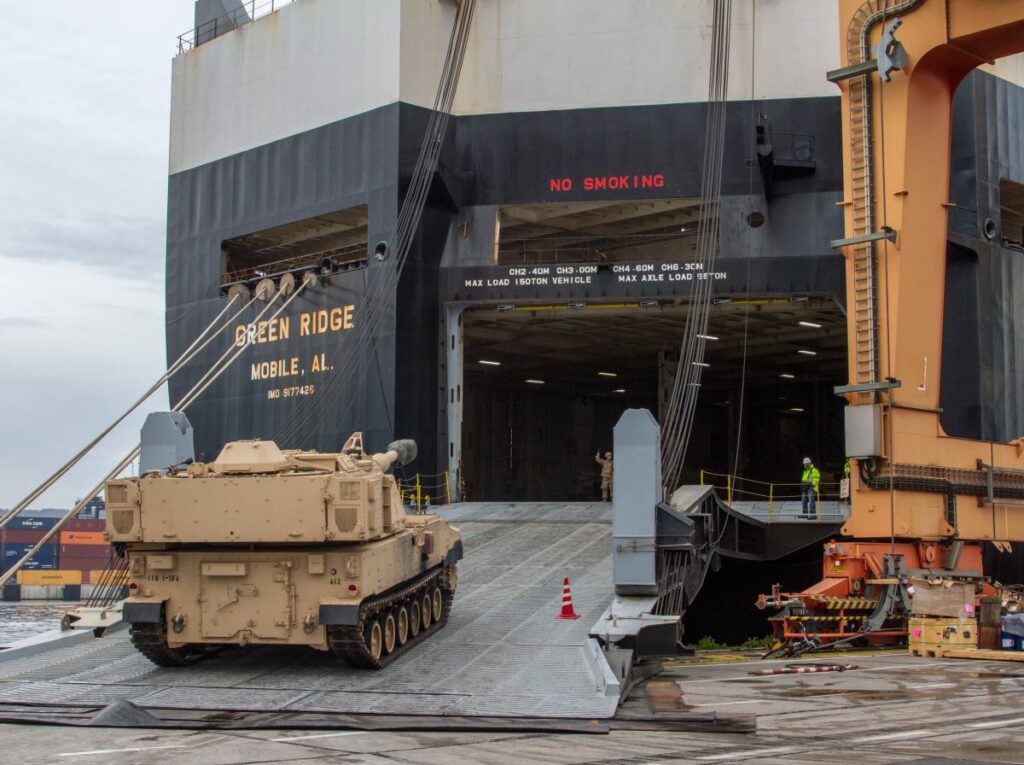
Following a vague social media announcement by Donald Trump, uncertainty looms over the deployment of 5,000 U.S. troops to Poland, leaving analysts to debate whether this signifies a reinforcement, a rotation, or empty political rhetoric.
The Grey Variant: Tactical Rotation or Confusion?
The figure of 5,000 soldiers potentially aligns with the standard size of an Armored Brigade Combat Team (ABCT), specifically the 2nd ABCT of the 1st Cavalry Division, which was previously scheduled for rotation. With logistics already in motion, it is possible Trump is referring to this unit, assuming the Pentagon reverses its recent decision to halt the deployment.
Sending an entirely new brigade, however, would be a logistical and financial strain. According to a 2024 Atlantic Council analysis, a single nine-month ABCT rotation costs U.S. taxpayers over one billion dollars, making the rapid deployment of a new, unplanned unit highly improbable.
The Optimistic Variant: Relocating from Germany
Trump’s number coincides with Pentagon declarations regarding the reduction of U.S. forces in Germany. Speculation suggests this could involve the 2nd Cavalry Regiment, a Stryker Brigade Combat Team stationed in Vilseck, Bavaria. Moving this unit to Poland would be a significant geopolitical shift, potentially replacing temporary rotations with a permanent presence.
However, this presents major infrastructure challenges. Housing 10,000 soldiers and their families would require massive, multi-year investments in Polish military bases, far exceeding the current annual spending on American troop maintenance and facility upgrades, which has already surpassed 1.5 billion zlotys through 2025.
The Black Variant: Empty Rhetoric
It is possible that Trump’s statement lacks substance, as social media pronouncements often evaporate without implementation. Similar to his past promise of sending a hospital ship to Greenland—a pledge that never materialized—this declaration may be a reactionary gesture without a follow-up plan.
Analysts, including those from the Polish Institute of International Affairs, caution against expecting a permanent increase in U.S. troop levels. The broader U.S. military strategy aims to reduce its footprint in Europe, prioritizing regional defense by the Europeans themselves over long-term, large-scale deployments of American personnel.