Experts assess potential scenarios where Donald Trump’s increasingly critical stance could damage the alliance, even without formal withdrawal.
Trump Escalates Criticism of NATO
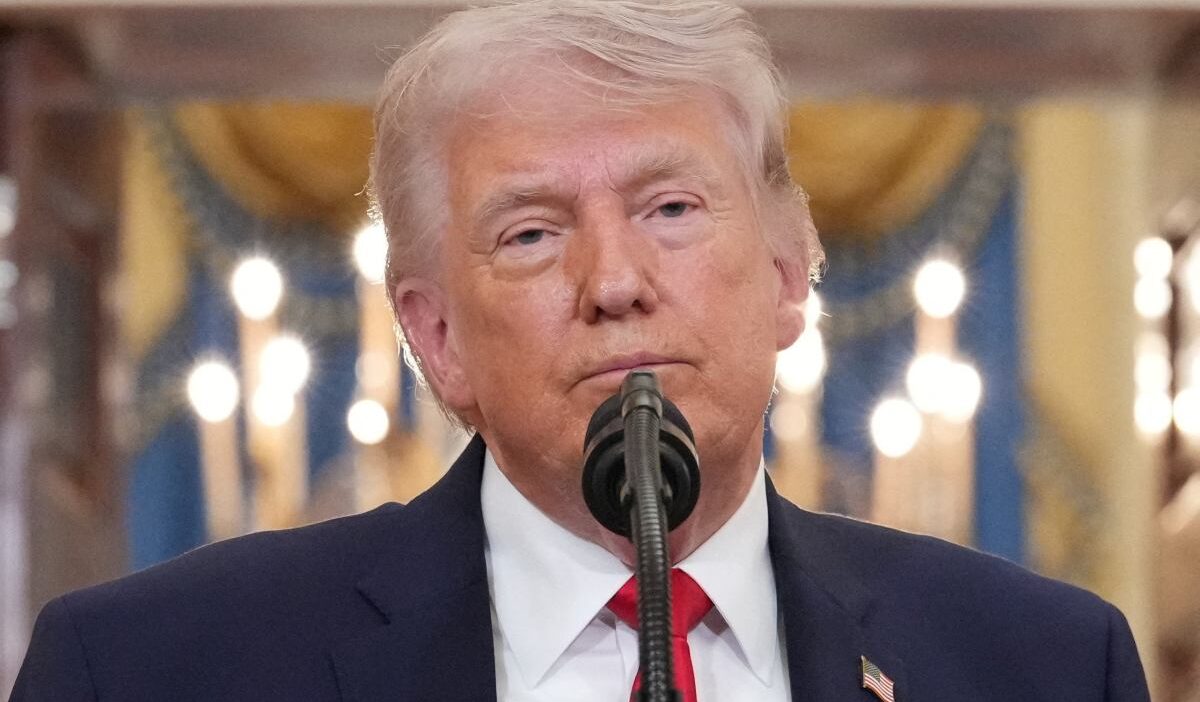
Donald Trump has repeatedly criticized NATO and labeled its allies “cowards,” recently intensifying his rhetoric following resistance to U.S. involvement in a potential conflict with Iran.
Despite not yet taking steps to formally leave NATO – which would require Congressional approval – Trump’s language, distancing the U.S. from the alliance, and past proposals like annexing Greenland suggest a diminished commitment.
Potential Pathways to Disrupting the Alliance
According to Politico, Trump has several options to harm NATO without outright withdrawal, with escalating rhetoric being the most likely. He has consistently questioned NATO’s collective defense clause and hinted at not defending allies.
Trump stated in an interview with “The Telegraph” that he has “never been a fan of NATO” and believes it is a “paper tiger,” a sentiment he claims Vladimir Putin shares.
Erosion of NATO’s Credibility
Gerlinde Niehus, a security expert and former NATO official, warned that undermining NATO’s credibility invites aggression. If perceived as weak, it could embolden adversaries like Putin and Xi Jinping to test the alliance’s resolve.
Budgetary and Procedural Challenges
The U.S. could alter NATO rules for countries failing to meet budgetary goals, potentially restricting their participation in joint missions and Article 5 invocations. While lacking enforcement mechanisms, political pressure could be applied.
Trump’s administration reportedly considered a model where allies not meeting spending targets would lose voting rights on common missions.
Troop Deployment and Military Planning
While a full troop withdrawal from Europe (currently 67,500-85,000 across 31 bases) is limited by a 2025 law requiring 76,000 troops unless a withdrawal is shorter than 45 days or approved by Congress, it remains a possibility.
Ed Arnold, an analyst at RUSI, believes Trump values maintaining troops in Europe for rapid deployment to other conflict zones, such as Iran, arguing that removing them would hinder U.S. operations.
Disrupting Military Planning Cycles
The U.S. could withdraw from NATO’s four-year military planning cycle, freezing American commitments and forcing European nations to quickly fill gaps in areas like air defense, intelligence, and aerial refueling.
Paralysis Through Boycotts
The U.S. could boycott NATO meetings or withdraw its delegation, effectively paralyzing the alliance which requires unanimous decisions. Trump could also withdraw from integrated NATO command, as France did in 1966 and Greece in 1974.
Arnold stated this would likely entail withdrawing all U.S. troops assigned to NATO and forcing the resignation of the current Supreme Allied Commander, General Alexis Grynkewich.
U.S. Commitment and Future Uncertainty
A high-ranking NATO diplomat acknowledged that a failure by the U.S. to fulfill its obligations would create serious problems, but currently does not represent a major concern.
Formally withdrawing from NATO would require a two-thirds Senate vote and a year-long process, but Trump could unilaterally withdraw from treaties, as he did with the Open Skies Treaty in 2020.
Such a move would likely face legal challenges from Democratic states, potentially joined by Congress if the November elections shift the balance of power.
Another high-ranking NATO diplomat emphasized the difficulty of imagining NATO without U.S. participation, stating that this should influence every decision Washington makes.