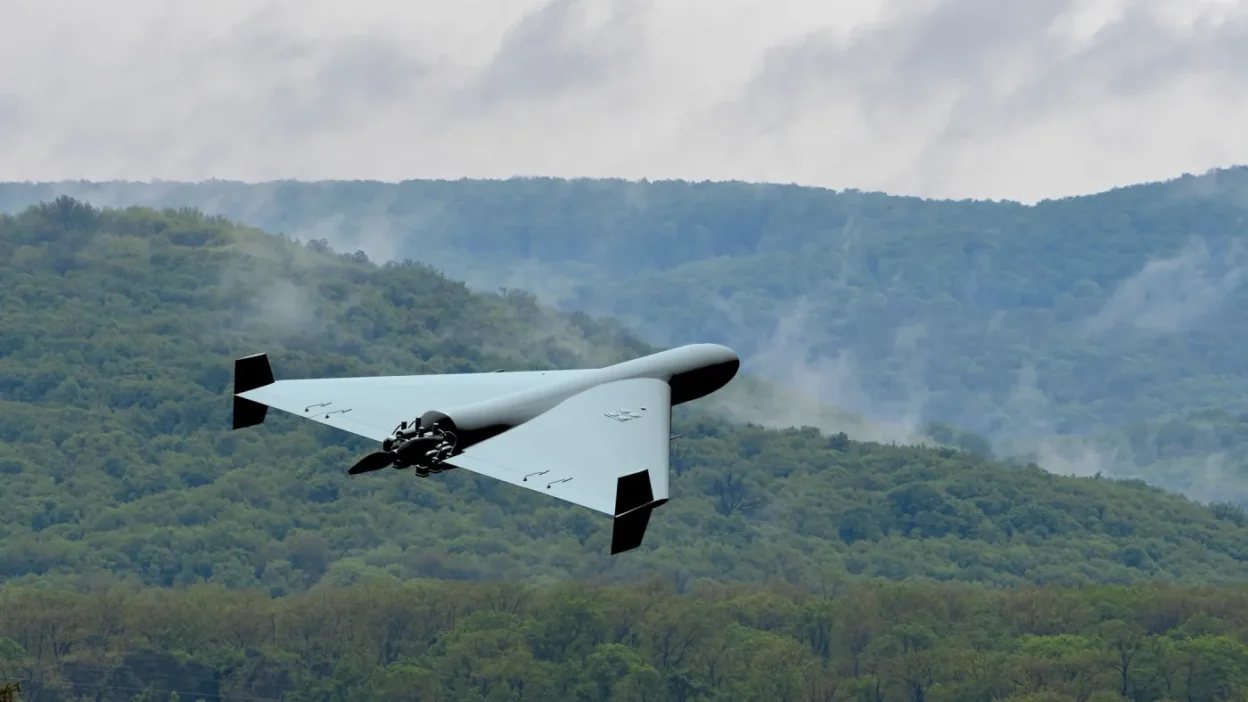
Baykar, a Turkish defense firm, unveiled the K2 drone, a reusable system combining loitering munition and classic UAV capabilities, on March 14th.
Turkish Drone Sector Accelerates Development
The Turkish defense sector is accelerating the development of unmanned systems. Baykar has presented a new design – the K2 drone, which the manufacturer says combines the characteristics of a loitering munition with the capabilities of a classic UAV.
The machine is designed not only to strike targets but also to return to base if an attack does not occur, representing a clear departure from the previous philosophy of “kamikaze” drones.
K2: A Reusable System
The premiere of the design took place on March 14th and was illustrated by a recording showing five machines flying simultaneously in various formations. Even at this stage, the key feature of the system – the ability to operate in a so-called swarm, i.e., a coordinated group of drones cooperating in real-time – was emphasized.
Unlike many similar systems that are disposable after launch, the K2 can return to its starting point if it does not complete its combat mission. This allows for reuse, significantly impacting cost and operational efficiency.
Technical Specifications: Range and Endurance
Available data indicates the K2 has a range of up to 2,000 kilometers. The maximum takeoff weight is 800 kg, with a payload of approximately 200 kg. These values significantly exceed most currently used kamikaze drones.
The drone also has an endurance of up to 13 hours, placing it closer to medium reconnaissance-strike UAVs than classic disposable systems.
Operational Flexibility
The design is also intended to operate from short runways and unpaved roads, increasing the system’s mobility and making it more difficult to detect and destroy by the enemy.
K2 vs. Shahed-136: Key Differences
Analyses published by Turkish industry media indicate clear differences between the K2 and the Iranian Shahed-136, widely used in the war in Ukraine.
The K2 is a much larger design – its wingspan is estimated at around 10 meters, while the Shahed-136 reaches about 2.5 meters. Larger size translates to greater payload, range, and the ability to install advanced onboard electronics.
The key difference lies in the method of operation. Iranian drones rely primarily on programmed target coordinates and lack sophisticated obstacle detection or target identification systems, leading to numerous strikes on civilian objects.
The K2 will utilize systems supported by artificial intelligence for navigation, reconnaissance, and target selection, potentially increasing precision and the ability to react to changing battlefield conditions.
Swarm Capabilities and AI Integration
One of the most advanced elements of the project is the concept of swarm operation. This assumes that some drones will be equipped with more advanced sensors – electro-optical and radar – and will function as “leaders.”
The remaining, simpler units will use their data, allowing them to break through air defenses and increase the effectiveness of the attack. This approach aligns with the global trend of developing autonomous combat systems, where the cooperation of multiple platforms plays a key role.
Experts emphasize that such solutions could significantly change the nature of modern conflicts, particularly in the context of saturating attacks on air defense systems.
Potential Buyers and Future Prospects
Analyses also suggest potential interest in the new system from countries cooperating with Turkey, including Azerbaijan, Qatar, and Poland.
The scenario assumes that the first units could go to these countries for operational testing. The experience gained would be used by the manufacturer to further develop the design and adapt it to the requirements of different armies.
Poland has already decided to purchase Turkish Bayraktar TB2 drones, which could facilitate further technological cooperation.