


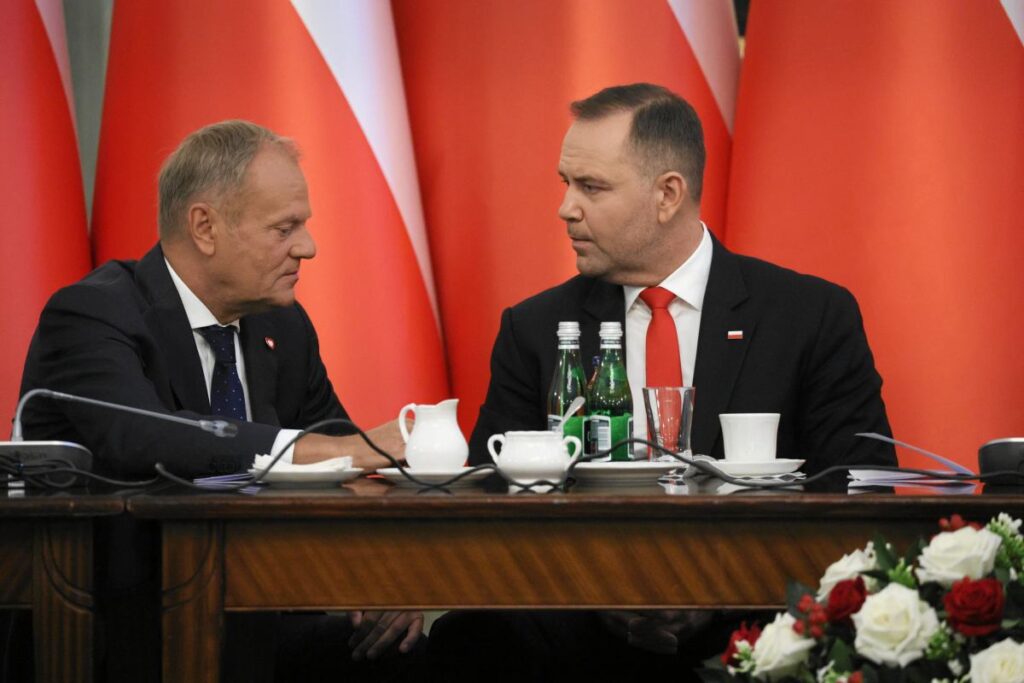
Following the signing of a major Polish-British security and defense treaty on May 27 in London, Prime Minister Donald Tusk sharply criticized President Karol Nawrocki for suggesting he might block the agreement.
A New Security Partnership
Polish Prime Minister Donald Tusk and British Prime Minister Keir Starmer signed a treaty on security and defense partnership in London on Wednesday, May 27. The agreement encompasses 14 joint projects between the two nations.
The treaty includes plans to maximize the capabilities of Forward Land Forces on NATO’s eastern flank and the creation of a group to counter risks associated with hostile drone operations.
Presidential Doubts and Government Response
President Karol Nawrocki, addressing the ratification process, stated he would not disclose his intentions until he has thoroughly reviewed the matter. He remarked that the government should have consulted with the Presidential Palace before committing the Polish nation to such obligations.
In a Thursday interview with TVN24, Prime Minister Tusk dismissed the possibility of a presidential block, calling it an “unwise” idea that would jeopardize Poland’s security. Tusk warned that obstructing the treaty would be a serious error similar to the president’s previous veto of the EU’s SAFE program.
The Division of Constitutional Roles
Tusk emphasized that the government is responsible for negotiating and signing treaties, while the president’s role as the final arbiter is to ratify agreements that benefit the country. He criticized the president’s repeated complaints about being left out of the process as unserious.
Presidential spokesperson Rafal Leskiewicz responded on the X platform, accusing the government of failing to inform the President about the treaty’s content in advance. He characterized Tusk’s actions as political pettiness intended to manipulate the narrative regarding the president’s future signature.