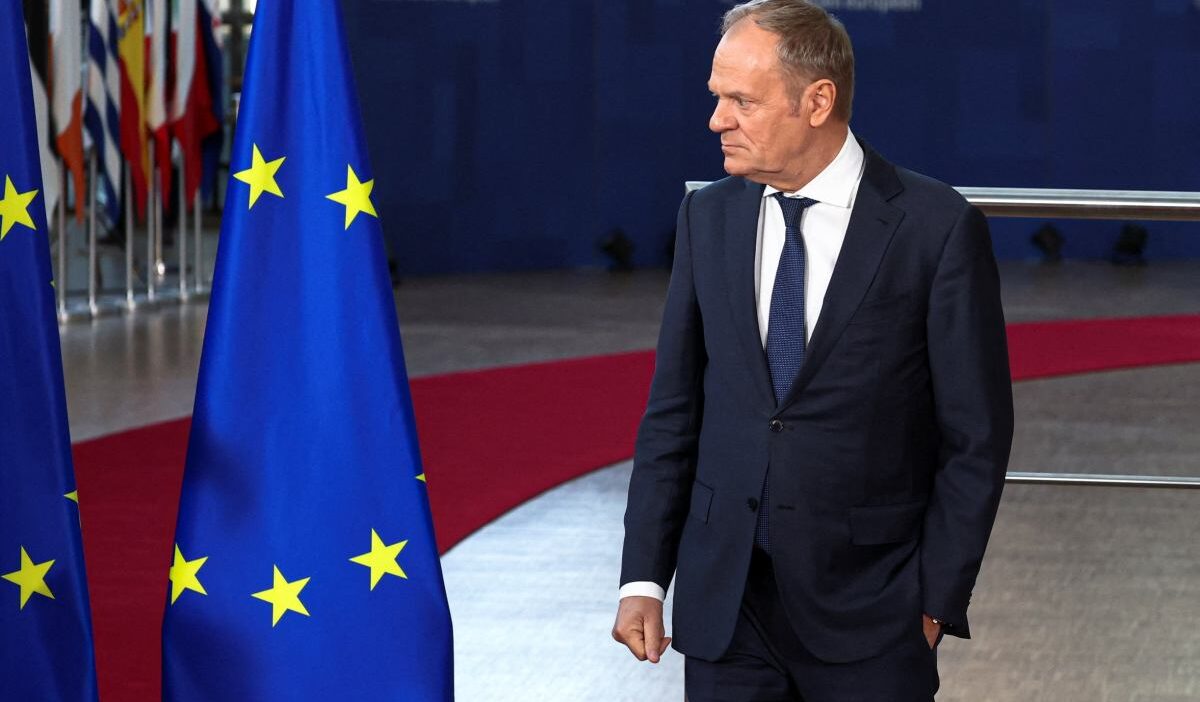
Polish Prime Minister Donald Tusk affirmed his commitment to securing funds from the EU’s SAFE program, even after President Duda vetoed implementing legislation.
SAFE Program and Presidential Veto
President Karol Nawrocki vetoed the law implementing the EU’s SAFE mechanism last week. In response, the Council of Ministers adopted a resolution concerning the Polish Armed Forces Program, authorizing relevant ministers to sign agreements related to the SAFE loan from the Bank Gospodarstwa Krajowego (BGK) for the Armed Forces Support Fund.
The financial obligations of BGK related to the SAFE loan will be guaranteed by the State Treasury.
Alternative “Polish SAFE” Proposal
President Nawrocki and National Bank of Poland (NBP) Governor Adam Glapiński proposed an alternative, dubbed “Polish SAFE 0 percent,” in early March. Glapiński suggested revaluing the gold reserves held by the NBP, potentially generating significant profits.
According to Glapiński, unrealized gains from the gold revaluation amount to 197 billion złoty, which could be paid out as profit over several years, earmarked exclusively for defense.
Tusk Criticizes Motives Behind Veto
Tusk expressed skepticism regarding the NBP’s ability to generate such profits, questioning how a 100 billion złoty loss could suddenly turn into a gain. He believes the proposal aimed to discredit the original, EU-funded SAFE program and promote their alternative.
Tusk asserted that President Nawrocki’s motivation was “political,” intended to provide an alibi for the veto. He stated that the only document he has from Glapiński indicates a cumulative loss of 100 billion złoty for the bank over three years, with further losses expected.
Concerns Over Poland’s EU Membership
Tusk suggested that President Nawrocki’s opposition to SAFE stems from his dislike of the European Union. He noted growing concerns that SAFE, as a long-term credit, could serve as a further anchor tying Poland to the EU.
He described SAFE as a “white-and-red project” within the EU, implying strong Polish involvement, and argued that the only change has been the attitude in the Presidential Palace.
SAFE Funding and Polish Beneficiaries
The law implementing the SAFE mechanism would have created a Financial Instrument for Increasing Security, managed by BGK, allowing the government to access funds from SAFE—EU instrument for low-interest loans to rapidly increase the defense capabilities of EU countries.
The government stated that 89 percent of these funds would go to Polish arms companies, with support also extended to the army, police, and border guard. Poland’s 43.7 billion euro application was approved by EU institutions, making it the largest beneficiary of the 150 billion euro program.
Information Warfare and Disinformation
Professor Przemysław Sadura, speaking to Wyborcza.pl, explained the difference between propaganda and disinformation, noting that while propaganda aims to build belief in a specific “truth,” disinformation seeks to destroy faith in objective truth, creating cognitive chaos and decision paralysis.