


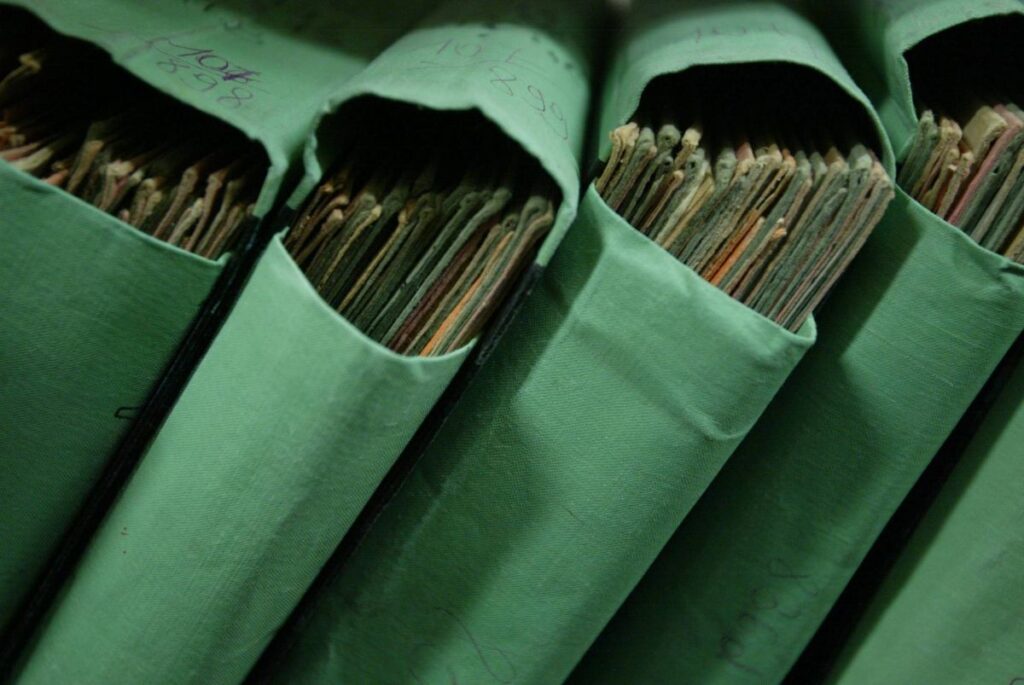
The U.S. National Archives has released millions of digitized Nazi party membership records online, predating German access due to data privacy laws.
Nazi Membership Files Unveiled
Long-guarded records of Nazi party members are now publicly accessible through the U.S. National Archives. The archive has released a largely preserved collection of NSDAP (National Socialist German Workers’ Party) membership cards online.
The release is being described as a “historical sensation,” offering insight into the individuals who supported the Nazi regime up to 1945.
Millions of Records Available
The archive contains millions of cards detailing names, dates of birth, membership numbers, dates of joining, and, in some cases, portraits of Nazi party members. Access to the site has been reportedly difficult due to high traffic.
Historical Significance and Data Preservation
Approximately 8.5 million Germans joined the NSDAP between 1920 and 1945. The party maintained multiple records for each member, including central and local registrations.
The survival of these records is attributed to Hanns Huber, a paper mill director in Munich-Freimann, who defied orders to destroy the files before the end of the war, instead hiding them amongst waste paper.
Around 80% of the records, particularly those from local territorial units (“Gau”), were preserved. After the war, they were seized by the U.S. Army and transferred to the Berlin Document Center for denazification procedures.
German Access and Privacy Concerns
In the 1990s, the documents were returned to Germany and are now held at the Federal Archives in Berlin-Lichterfelde. While the German Federal Archives has digitized the records, public online access has been restricted due to privacy laws protecting former NSDAP members.
These protections expire 10 years after a person’s death or 100 years after their birth, meaning the last restrictions will lift in 2028 for the youngest members.
U.S. Archives Take the Lead
The U.S. National Archives circumvented these restrictions by creating microfilm copies in the 1990s and subsequently digitizing and releasing them online in late February. The U.S. archive did not publicize the release as extensively as anticipated, despite the collection’s size—nearly 16.3 million digitized documents.
Challenges in Searching the Records
While a search function is available, navigating the archive is not straightforward. Historians caution that the system is not user-friendly.
Martin Clemens Winter, a historian at the University of Leipzig, successfully used the digitized records to identify previously unknown workers and supervisors from the HASAG armaments company and its forced labor camps.
Interpreting the Data with Caution
Historians emphasize the need for careful interpretation of the data. Membership date is particularly significant, with those joining before 1933 likely being more committed Nazis.
The absence of a membership card does not necessarily indicate non-involvement, as approximately 20% of local registration documents are missing, and not all nationalists or antisemites joined the party.
Researchers stress that this archive is a starting point for investigation, and further research and consultation with experts are necessary to draw accurate conclusions.