The U.S. is deploying additional troops and naval assets to the Middle East amid heightened tensions with Iran, including the mining of the Strait of Hormuz.
U.S. Military Buildup
The Pentagon has initiated procedures for deploying additional forces near Iran, though a formal decision to send ground troops has not yet been made. This mobilization represents a significant shift in U.S. strategy, previously focused on remote operations.
U.S. military command has begun deploying additional units to the Middle East, confirmed by sources close to the Pentagon. The 82nd Airborne Division, a rapid-response force, has been placed on high alert and had planned exercises cancelled, signaling preparations for regional operations.
Airborne and Naval Assets
The 82nd Airborne Division, based in Fort Bragg, North Carolina, is a key component of U.S. rapid-response capabilities. Its potential deployment allows for large-scale airborne operations, including securing key facilities or supporting offensive actions.
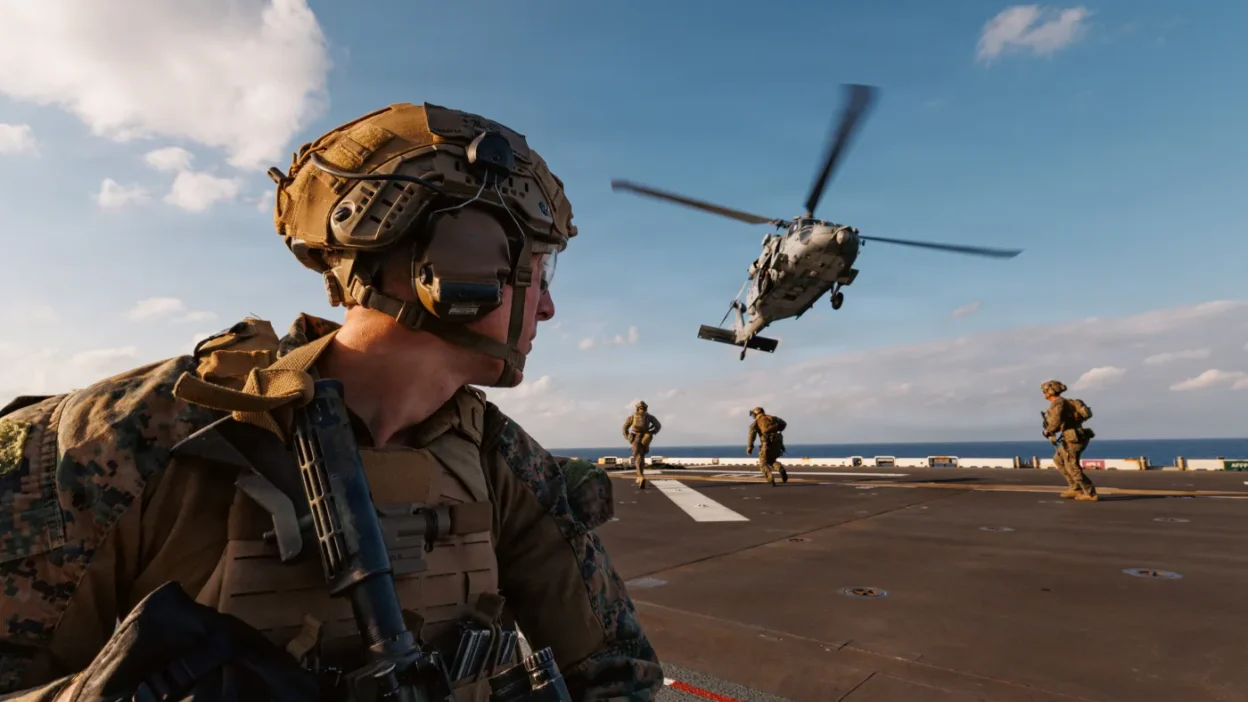
Simultaneously, the U.S. is increasing its naval presence in the region, deploying the USS Boxer amphibious assault ship with an escort. The ship carries approximately 2,500 Marines, F-35 fighters, missile weaponry, and amphibious operation equipment.
Scale of Deployment and Strategic Uncertainty
Reuters reports that the number of additional troops being sent to the Middle East could reach several thousand. Specific deployment locations and schedules remain undisclosed, maintaining strategic ambiguity and pressure on Iran.
Ongoing Conflict and Regional Destabilization
The ongoing conflict, since late February, involves both the United States and Israel, focusing on limiting Iran’s military capabilities and its ability to destabilize the region. Washington retains a range of options, from deterrence to potential offensive operations.
Iran’s Mining of the Strait of Hormuz
Alongside U.S. actions, Iran is implementing its own defensive-offensive strategy, notably mining the Strait of Hormuz. U.S. intelligence indicates the presence of anchored floating mines in this critical waterway.
These include the Mahan 3 mine, with a 300-kilogram payload and acoustic sensors, and the Maham 7 bottom mine, deployable from ships and helicopters, operating at depths of 3 to 91 meters. Iran’s mine inventory is estimated between 2,000 and 6,000 units, including domestically produced and imported systems from China and Russia.
Strategic Importance and U.S. Response
The Strait of Hormuz is vital to the global economy, handling nearly 20% of the world’s oil and gas supply. Even a limited minefield could disrupt transport, causing energy price spikes and market instability.
The U.S. is actively countering this threat by destroying Iranian units capable of deploying mines, utilizing AH-64 Apache helicopters and A-10 support aircraft. President Trump has demanded the immediate removal of all mines from the Strait.