


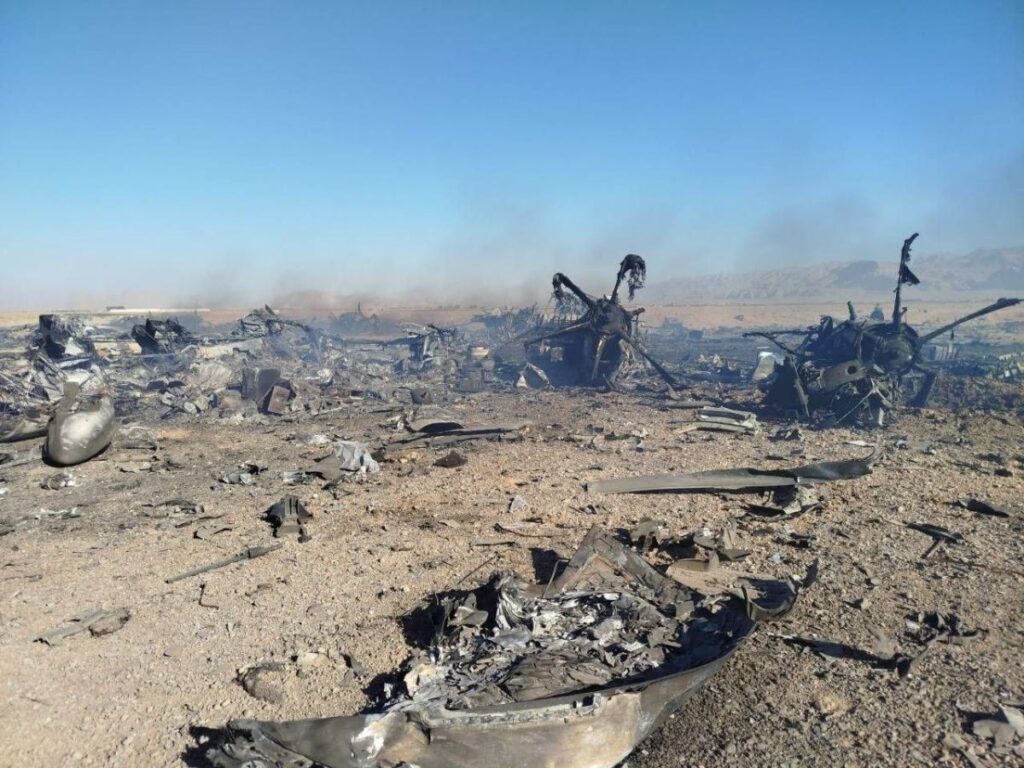
A daring American operation to recover downed pilots deep inside Iran over Easter weekend resulted in the loss of several aircraft but no personnel casualties.
Complex Rescue Operation Unfolds
The mission began after an American F-15E fighter jet was struck by a MANPADS missile over Iran’s Isfahan province, approximately 400 kilometers from the Iraqi border. Both crew members ejected, triggering a Combat Search and Rescue (CSAR) operation.
CSAR missions prioritize the recovery of downed personnel, reflecting a strong military ethos of leaving no one behind. The operation involved a significant commitment of resources, including specialized aircraft and hundreds of soldiers.
Initial Response and Challenges
The initial response team comprised an HC-130 Combat King for refueling and command/control, and two HH-60 Pavehawk helicopters for recovery. The team flew at low altitude, facing the risk of interception, as the Iranian military had already downed a faster, more maneuverable fighter jet.
Despite the risks, the team successfully reached the area, with footage of the aircraft circulating online. An A-10 Thunderbolt II providing cover was hit during the operation, and its pilot safely ejected and was rescued.
Locating and Extracting the First Pilot
The first pilot’s location was quickly established, allowing the helicopters to land and extract him. He was equipped with a survival radio to transmit his position via satellite.
During the rescue, the helicopters came under fire from Iranian forces, resulting in injuries to some crew members. However, the team successfully evacuated the pilot from Iran.
A More Complicated Second Rescue
The second crew member, the weapons systems officer, was injured during ejection and landed separately. He initially struggled to transmit his location, possibly to avoid detection by nearby Iranian searchers.
He reached a mountainous area south of Isfahan, where he hid and eventually transmitted his position after 14 hours. Verification of his status involved the CIA utilizing an undisclosed system to confirm he wasn’t part of an ambush.
Deployment of Special Forces and Landing Difficulties
Due to the circumstances, a mixed group of special forces was deployed, utilizing two modified Hercules aircraft to deliver MH-6 Little Bird helicopters near the weapons systems officer’s location. The team numbered around 100 soldiers.
A provisional landing zone was established, but the terrain proved challenging. One or both Hercules aircraft became bogged down in the sandy soil, hindering the evacuation process.
Nighttime Operations and Support
The operation continued under the cover of darkness, with air support bombing roads to impede Iranian military movement. Electronic warfare assets were deployed to jam communications.
Simultaneously, a strike targeted underground facilities of the Islamic Revolutionary Guard Corps near Tehran, potentially to distract Iranian forces.
Egress and Equipment Loss
Attempts to recover the stranded Hercules aircraft failed, leading to a decision to abandon them and evacuate personnel using three C-295 aircraft. The abandoned equipment was destroyed to prevent capture.
The C-295s successfully evacuated approximately 100 personnel, including the rescued airmen, to Kuwait. Iranian state media subsequently released images of the damaged Hercules aircraft.
A Costly but Successful Mission
The operation, following a similar rescue in Venezuela earlier this year, was a complex undertaking conducted 400 kilometers inside Iran, near sensitive nuclear facilities. Despite the loss of an A-10, two HC/MH-130s, and potentially several MH-6 helicopters, the mission was deemed a success.
The successful recovery of both pilots, without any loss of life, was considered a significant achievement, mitigating a potential propaganda and bargaining chip for Iran.