


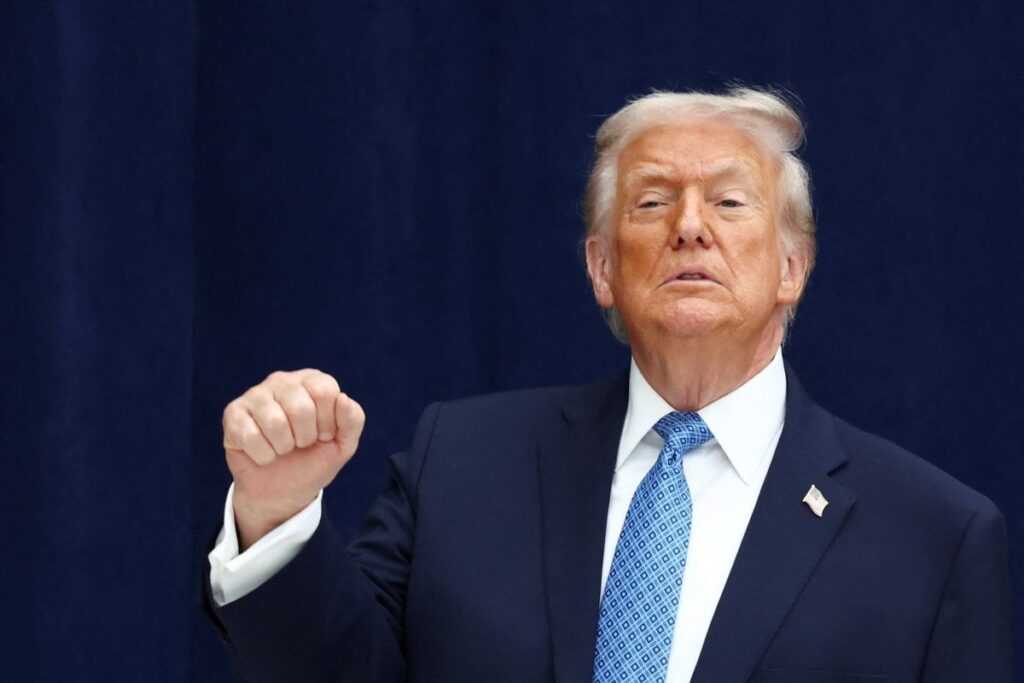
The U.S. White House released an updated national security strategy that outlines its handling of NATO, Russia, and global security priorities amid rising tensions.
U.S. White House on NATO Policy
The strategy highlights former President Donald Trump’s approach to NATO, noting that some member states may, within a few decades, transform into nations whose majority population originates outside Europe. It questions whether such countries will see themselves as part of a global order that includes alliance relations with the United States. The document frames the prospect of NATO as a continually expanding alliance that must be managed carefully.
Strengthening Europe’s Economic and Political Resilience
Europe is described as facing significant economic challenges, with potential “civilizational peril” within the next twenty years. The report criticizes European Union and other transnational bodies for undermining political freedom and sovereignty, while a migration policy is said to reshape the continent and spark conflicts. Censorship of free speech, a falling birth rate, and loss of national identity are also cited as key concerns. A lack of confidence—particularly in Europe‑Russia relations—echoes deeper instability.
While European military power is portrayed as surpassing Russia’s, many Europeans view Russia as an existential threat. U.S. diplomatic engagement is portrayed as essential to maintain strategic stability across Eurasia and to reduce the risk of conflict between Russia and European states.
Managing U.S.–Russia Relations
The strategy urges intensified U.S. diplomatic involvement to preserve strategic equilibrium in Eurasia and to mitigate the likelihood of confrontation with Russia. It emphasizes that military superiority alone cannot secure peace and that sustained dialogue is necessary.
South Korea and Japan’s Role in Taiwan Defense
Beyond its focus on Latin America and anti‑migration measures, the strategy calls for a realignment of U.S. military presence to address emerging threats on the western hemisphere. The Trump administration specifically urges South Korea and Japan to increase defense expenditures and prioritize deterrence capabilities against China.
U.S. Strategy on European Integration
Political scientist Jarosław Wolski interprets the strategy as a deliberate effort by the United States to curb European integration. He claims the U.S. aims to support Central‑Eastern European nations, especially Poland, to be “pulled out” of the EU, a move that would weaken the bloc. Wolski also argues that the United States seeks to influence European politics by fostering American‑aligned parties across the continent.
Political Commentary
Wolski’s remarks, published on X, frame the strategy as a tool for U.S. geopolitical influence, noting that U.S. engagement could be seen as a form of “reliable patronage” that encourages pro‑American shifts in European governance.