


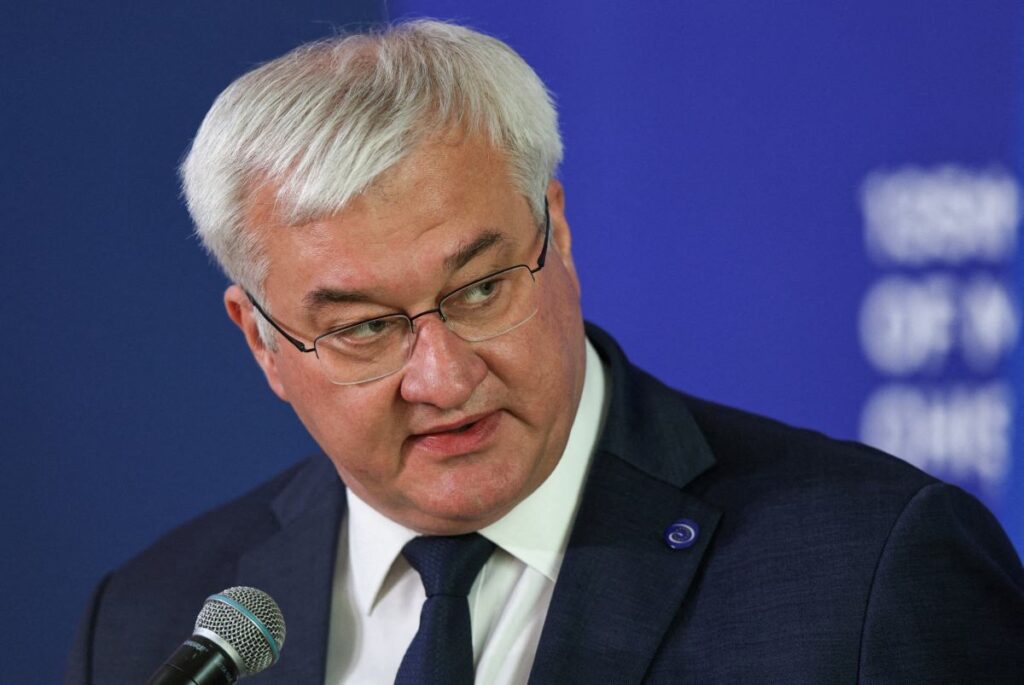
Following the NATO-Ukraine Council meeting in Helsingborg, Foreign Minister Andriy Sybiha declared the war at a critical juncture, urging allies to address increasing military risks emanating from Belarusian territory.
A Critical Phase in the Conflict
Andriy Sybiha stated that the war has reached a turning point where Moscow’s numerical superiority is no longer the decisive factor. He emphasized that Ukraine continues to hold its defensive lines against Russian forces.
Sybiha outlined a strategy for peace based on three pillars: diplomacy, pressure, and strength. He called for a new impetus for peace efforts alongside intensified Ukrainian long-range strikes against targets deep within Russia.
Security Risks from Belarus
The Ukrainian minister warned allies about escalating threats from Belarus, calling for effective deterrence measures to prevent the expansion of Russian and Belarusian aggression. He noted that Ukraine has evolved from a recipient of support into a security co-creator and partner.
President Volodymyr Zelensky recently confirmed discussions regarding Russia’s attempts to pull Belarus into the conflict. Reports suggest Moscow is considering operations from Belarusian territory toward the Chernihiv-Kyiv axis or against a NATO member state.
Defensive Posture and NATO Support
Zelensky has instructed Ukraine’s Defense and Security Forces to strengthen the border direction and prepare a comprehensive response plan. He warned that if Alexander Lukashenko chooses to support Russian aggression, Ukraine will defend itself without hesitation.
The NATO foreign ministers’ meeting in Helsingborg, attended by Poland’s Radosław Sikorski, focuses on finalizing preparations for the upcoming summit in Ankara. Key agenda items include increasing defense expenditures and maintaining robust support for Ukraine.