


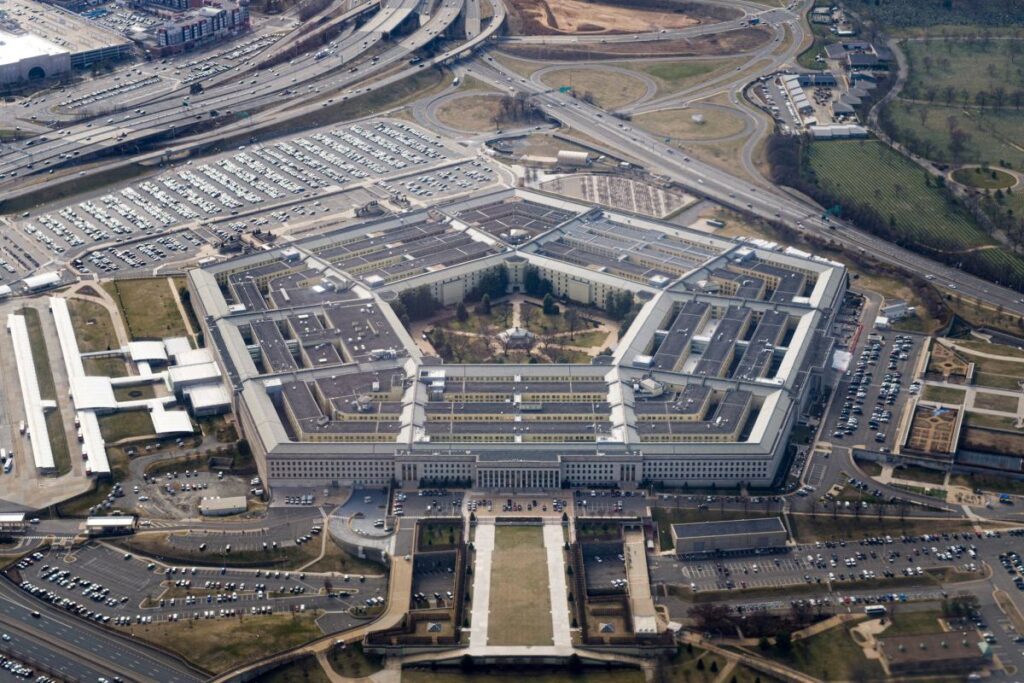
US and Israeli military leaders held a secret meeting at the Pentagon amid rising tensions with Iran, according to sources in the US administration.
Meeting at the Pentagon
According to Reuters, General Dan Cane, Chairman of the Joint Chiefs of Staff, and Eyal Zamir, Chief of Staff of the Israel Defense Forces, met at the Pentagon. Journalists cite sources in the US administration. Details of the secret meeting are not known. Reuters connects it with tensions in the Middle East.
The United States has recently increased its military presence in the region. On Saturday, Defense Blog reported that the US sent HC-130J Combat King II and C-17 Globemaster III aircraft toward Europe and the Middle East. Journalists suspect that the latter aircraft carries equipment and personnel from the 41st Rescue Squadron.
Unofficially: Trump Received Scenarios
On Friday, the Wall Street Journal reported that Donald Trump received several scenarios for potential military actions against Iran from the Pentagon and the White House. According to the newspaper, among the options presented to Trump are both limited, pinpoint strikes, and a wide-ranging bombing campaign targeting the Iranian regime and the Islamic Revolutionary Guard Corps.
The newspaper also describes action variants in cyberspace, including attacks on Iran’s banking sector as a means of pressuring Tehran over its nuclear program.
Increased US Presence
According to media reports, this week the USS Delbert D. Black missile destroyer was sent to the region, increasing the number of US destroyers in the Middle East to six. The USS Delbert D. Black docked at the port of Eilat on the Red Sea.
According to the Israeli army, this was a previously planned action and part of ongoing cooperation with the US. Israeli media emphasize that US ships rarely dock in Eilat. In recent days, there has also been a concentration of reconnaissance and command assets.
Analysts point out that such “completing the package” is typical when armed forces prepare for operations, although it does not necessarily mean they have begun. Some movements may be related to planned exercises.
US Not Abandoning Diplomacy
The White House and US regional partners simultaneously signal that diplomatic channels are being attempted in the background. Donald Trump himself said that the US would prefer to avoid an attack but sets conditions for Tehran regarding its nuclear program.
The balance of power in the region and the transfer of additional resources are meant to increase pressure on Iran and give Washington a real choice between escalation and returning to talks, as the risk of disruptions in the Strait of Hormuz is already causing nervousness in the energy market.