


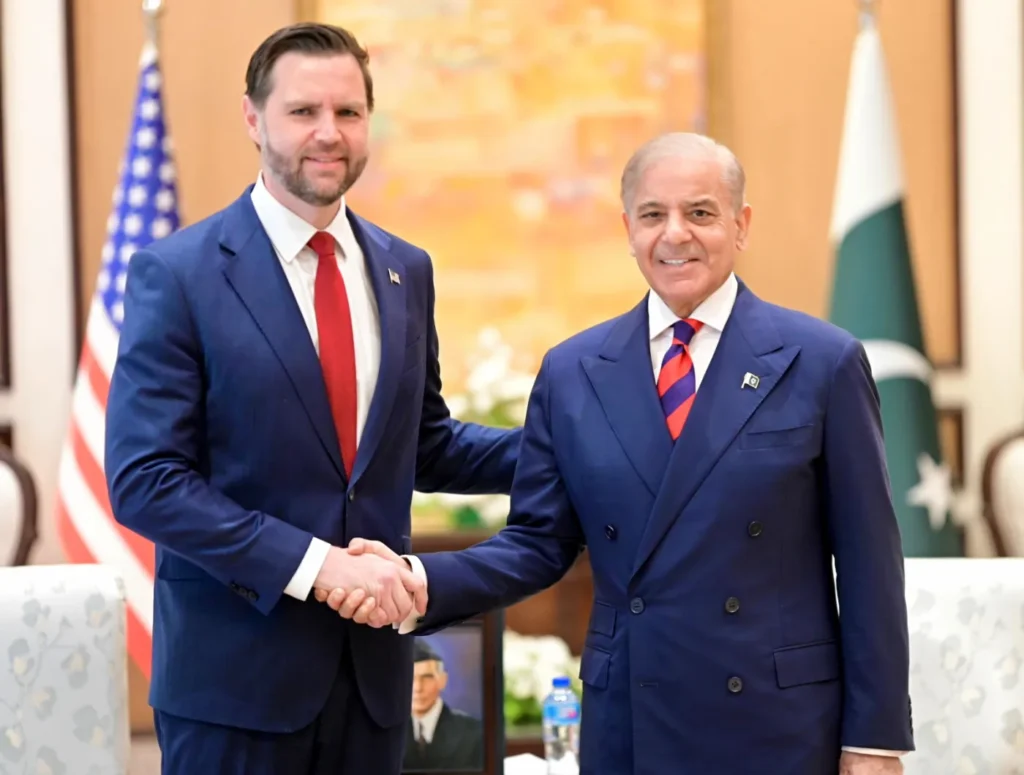
US Vice President J.D. Vance departed Islamabad Sunday following 21 hours of unsuccessful peace talks with Iran, mediated by Pakistan.
US and Iran Fail to Reach Agreement
The United States and Iran concluded negotiations in Islamabad without reaching an agreement after 21 hours of discussions focused on Middle East peace. Vice President J.D. Vance left Islamabad on Sunday, with his plane departing the Pakistani capital after 7:00 AM local time (4:00 AM Poland time).
Vance stated during a press conference that he was “returning to the United States without an agreement,” characterizing the outcome as a greater setback for Iran than for the US. He emphasized that the US clearly defined its red lines and areas of potential compromise, but Iran chose not to accept the proposed conditions.
Dispute Over Iran’s Nuclear Program
A central point of contention revolved around Iran’s nuclear program, with the US demanding a firm commitment from Iran to refrain from pursuing nuclear weapons and the means to quickly acquire them. Vance noted a lack of willingness from the Iranian side to fully abandon its nuclear ambitions.
Iranian Response and Points of Disagreement
Iranian media confirmed the lack of an agreement in Islamabad, attributing the failure to what they described as excessive demands from the US side. Iranian Press TV identified issues such as the Strait of Hormuz and Iran’s nuclear program as key points of disagreement during the talks.
An anonymous source cited by Tasnim news agency stated that the situation in the Strait of Hormuz would not change unless the US agreed to a “reasonable agreement,” adding that Iran was not in a hurry to negotiate.
Iranian state television IRIB criticized the “unreasonable demands” of the US, stating that the Iranian delegation had engaged in 21 hours of intense negotiations defending Iran’s national interests, but the US demands prevented progress.
Background and Mediation Role of Pakistan
The US-Iran peace talks in Islamabad began Saturday afternoon, with Pakistan acting as a mediator. Pakistani Prime Minister Shehbaz Sharif held separate meetings with the Iranian and US delegations before the talks commenced. Vance praised the Pakistani hosts, stating they bore no responsibility for the failure of the negotiations.
Delegation Composition
The Iranian delegation was led by Parliament Speaker Mohammad Bager Ghalibaf and included Foreign Minister Abbas Aragchi. The US delegation comprised Vice President J.D. Vance, Donald Trump’s special envoy Steve Witkoff, and Jared Kushner, the President’s son-in-law.
Context of Recent Conflicts
The negotiations took place six weeks after the start of the conflict between Israel and Iran, followed two days later by an Israeli military operation in southern Lebanon aimed at dismantling Hezbollah, a group financed by Iran.
A two-week ceasefire agreed upon by Iran and the US on Tuesday and Wednesday paved the way for the commencement of the peace talks.