


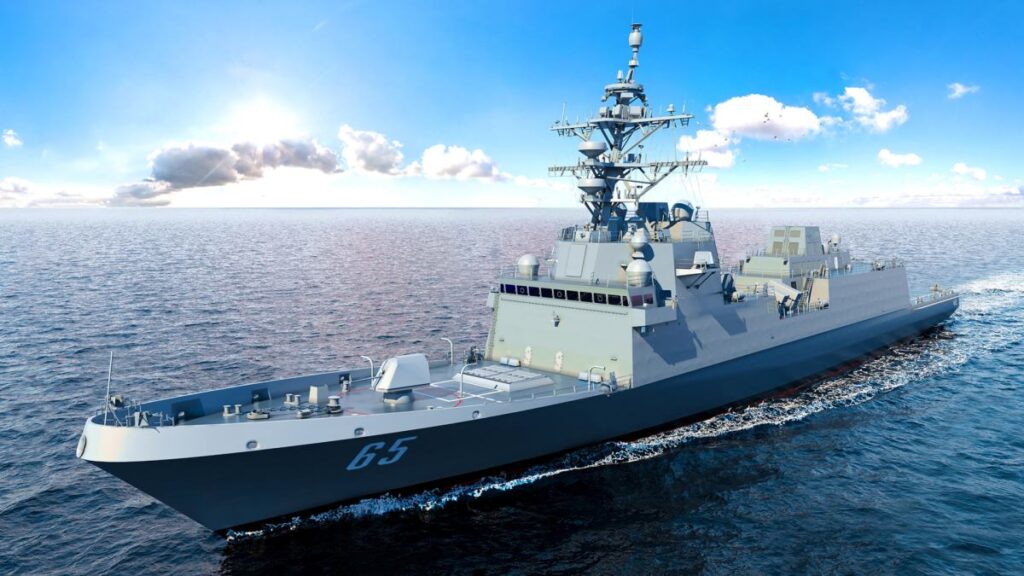
The U.S. Navy has decided to cancel the Constellation frigate program, leaving only two ships— a blow to naval modernization that comes as China rapidly expands its surface fleet.
Cancellation of the Constellation Frigate Program
John Phelan, the civilian chief of staff of the U.S. Navy, announced the cancellation on Tuesday. Only two first‑phase frigates will be built; four previously ordered units were scrapped. Initially, 20 ships were planned for the first phase, with larger long‑term numbers intended. The decision follows a pattern of U.S. warship programs that have repeatedly failed to meet expectations since the end of the Cold War.
Intended Role and Planned Cost
The Constellation frigates were meant to provide a relatively cheap ocean escort to counter China’s growing fleet. The U.S. Navy already operates numerous large destroyers, chiefly the Arleigh Burke class (74 in service, expected to reach about a hundred). It also retains larger Ticonderoga cruisers, but these are slated for retirement by 2027, leaving the Navy’s surface fleet limited to destroyers and nuclear carriers. While Arleigh Burkes are formidable, they are costly—each exceeding $2 billion—and not optimal for routine escort or patrol roles. Constellations were projected at around $1 billion per ship, with crews of about 200 versus 300 on destroyers.
Challenges with European Design Integration
The program, dubbed FFG(X) in 2017, sought to purchase an existing frigate design—Freem from Italy’s Fincantieri— and adapt it to U.S. requirements. However, the European hull and propulsion system required extensive changes: only about 15 % of the original design would remain, far below the initially planned 85 %. The first ship began construction in 2022, but design work was not complete, leading to a delay of at least three years. The prototype USS Constellation was only 12 % finished when the project was halted, and the Navy decided to abandon the program, keeping only the two ordered vessels as experimental prototypes. No alternative solutions were announced.
Historical Pattern of US Shipbuilding Failures
Constructions like the Arleigh Burke destroyers, launched after a 1985 contract, started well but later suffered from costly modernisations. In the 1990s, plans for larger, land‑attack destroyers evolved into the extremely expensive Zumwalt class—three ships out of 32 planned, each costing $7.5 billion including research. Technologically impressive, yet practical failures that never fully entered service. Similarly, the Littoral Combat Ship (LCS) program promised a cheap, modular craft, but modularity proved unworkable, crews were overwhelmed, costs ballooned, and 32 were built with seven retired while spending nearly $60 billion.
Impact on US Naval Capabilities and Future Outlook
While the LCS program was expected to be replaced by the Constellation frigates, the cancellation means the U.S. will continue to confront procurement challenges for several decades. China’s Type 054 frigates have been built since 2005, with nearly 40 in service, and the U.S. Navy will lack the affordable escort that Constellations would have delivered. Only two prototype Constellation ships will remain; no operational fleet is forthcoming.