


The New York Times reports the US has presented a 15-point plan to Iran, involving ballistic missile and nuclear programs, while diplomatic efforts continue through Pakistan and Turkey.
US Presents 15-Point Plan to Iran
The plan addresses Iran’s ballistic missile and nuclear programs – key objectives of the US and Israel since February 28th. It also covers maritime routes, particularly the Strait of Hormuz, through which approximately 20% of global oil and gas supplies pass.
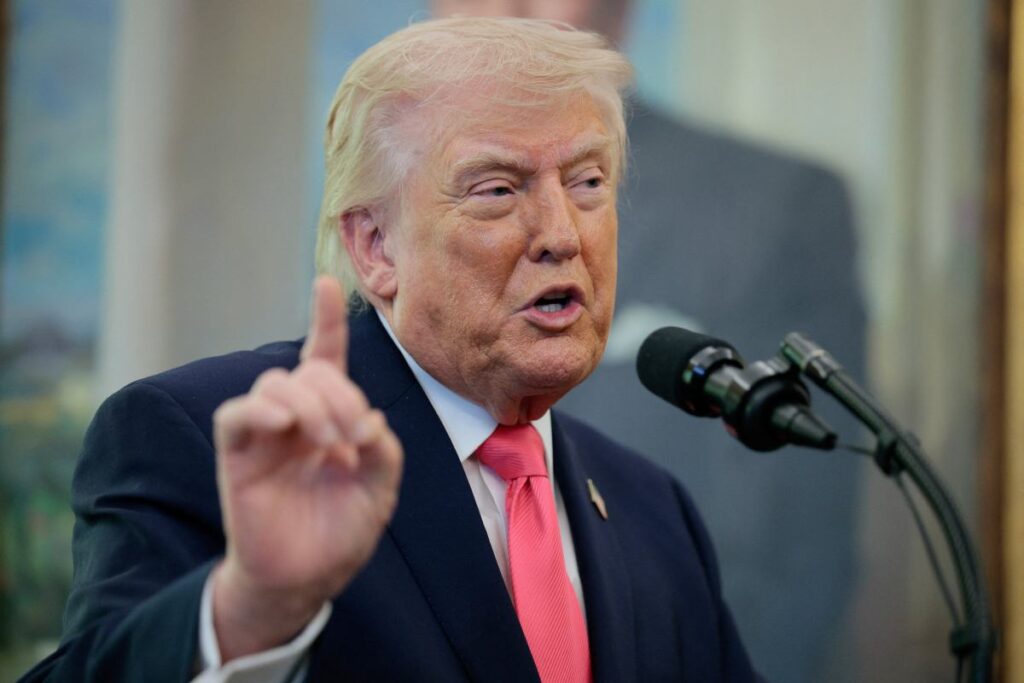
The 15-point plan is reportedly a proposal from the Trump administration. It remains unclear whether Israel, jointly conducting strikes with the US, has accepted the proposal, or how widely it has been distributed among Iranian decision-makers.
Pakistan Emerges as Key Intermediary
White House spokesperson Karoline Leavitt confirmed ongoing diplomatic efforts, but affirmed the US will continue “Operation Epic Fury” to achieve its military objectives.
According to the NYT, Pakistani Army Chief Syed Asim Munir has become a central mediator between Washington and Tehran, with support from Egypt and Turkey, who are encouraging constructive Iranian engagement. Munir reportedly maintains close ties with Iran’s Islamic Revolutionary Guard Corps (IRGC), bolstering his credibility as an intermediary.
Pakistan Offers to Host Negotiations
Iranian and Pakistani officials, cited by the NYT, state Munir recently proposed Pakistan host US-Iranian talks, approaching Iranian Parliament Speaker and former IRGC commander Mohammad Bagher Ghalibaf.
Munir previously held two conversations with Trump, who described him as his “favorite field marshal.” Pakistani Prime Minister Shehbaz Sharif stated his country “fully supports ongoing efforts for dialogue” and is prepared to host discussions.
Challenges to Negotiation and US Intentions
The NYT notes Iran may face difficulties responding quickly to the US proposal due to internal communication challenges. Iranian officials also fear potential Israeli strikes during direct meetings, and uncertainty exists regarding current decision-making authority within the Iranian regime.
The White House’s willingness to negotiate suggests Trump might be open to leaving the current regime in power – at least temporarily – in a weakened and more compliant state.
Escalating Regional Tensions and Saudi Arabia’s Role
The Wall Street Journal reported on March 24th that the Pentagon plans to deploy 3,000 soldiers from the 82nd Airborne Division to the Middle East. Officials indicated no decision has been made regarding a ground invasion of Iran, but the deployment provides Trump with additional options.
The Wall Street Journal also reported that Gulf states are increasingly considering joining military action against Tehran, with Saudi Crown Prince Mohammed bin Salman reportedly urging Trump to continue the war, framing it as a “historic opportunity” for change in the Middle East.
Riyadh recently permitted US forces to use King Fahd airbase in western Saudi Arabia, reversing a previous stance against allowing US territory for attacks on Iran. Saudi Foreign Minister Faisal bin Farhan stated Saudi Arabia’s patience with Iranian attacks is not unlimited.