


US Department of Energy secretly reduced nuclear safety guidelines, raising concerns as America competes with China in nuclear technology.
Secret Modifications Under Trump Administration
Cuts to requirements were in places very drastic. For example, seven previous guidelines on nuclear power plant safety and related facilities, which previously occupied about 500 pages, were shortened to 23. In another instance, instead of an explicit ban on dumping any radioactive materials into public sewers (with few exceptions), the phrase “should be avoided” was left in place.
The changes to regulations were revealed by US public broadcaster “National Public Radio” (NPR). Its journalist Geoff Brumfiel obtained unpublished documents from the Department of Energy, which among other things oversees the nuclear energy sector in the US. This is a new version of internal guidelines concerning broad standards regulating the construction and operation of certain categories of nuclear reactors. They previously numbered over 1,000 pages and now number about 300.
Significant Safety Rollbacks
These changes do not apply to standard commercial nuclear power plants, whether existing, planned or under construction. Over them, partial authority independent of the White House rests with the Nuclear Regulatory Commission (NRC). Any changes to its guidelines and regulations must occur openly and publicly. The changes only affect projects being created in an extraordinary manner under the auspices of the Department of Energy (DoE) itself.
According to Brumfield’s findings, most of the described document modifications took place several months ago. However, this was not made public. After his article was published, DoE announced that it had planned to do so “this year, but later.” The described documents were supposed to be a preliminary version sent to industry to obtain its opinions, and later possibly refined. The journalist claims, however, that on the copies he received, this was in no way marked and they appear to be finished documents.
Push for Experimental Reactors
One of the basic changes in standards is the removal of the ALARA principle (acronym for “as low as reasonably achievable”). It concerns the goal of exposing power plant workers and society in general to as low radiation as possible. Even below legally permissible minimums. The industry for decades complained that this was an overly enforced requirement, leading to the situation where a nuclear power plant worker can receive lower radiation doses than they later receive in the form of so-called natural background radiation when they leave the plant.
The requirement for a specially designated engineer for each of the reactor’s key safety systems was also removed. The assumption was that one person could specialize and focus on one element whose failure could lead to a serious accident. DoE considered this an “unnecessary burden” and that there are other processes ensuring appropriate safety.
US Falling Behind China
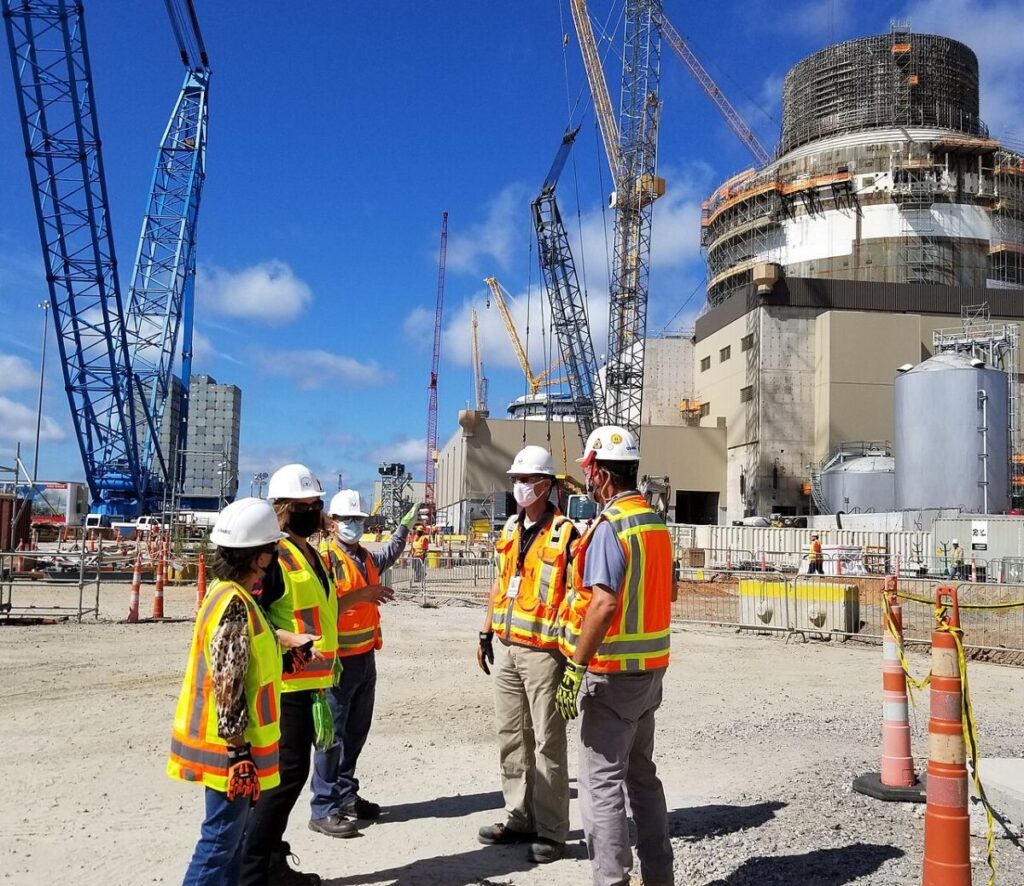
All projects under the Advanced Reactor Pilot Program assume the construction of relatively small devices. Just as standard reactors in modern power plants have a power of about a thousand megawatts, these are supposed to be an order of magnitude smaller. Americans are betting on the development of relatively small reactors that can be built more, faster and easier. This is largely a reaction to the difficulties encountered in building the last large nuclear power plant, Vogtle (specifically its reactors 3 and 4). Construction began in 2009 and was completed in 2024. Costs were exceeded by several billion dollars.
Meanwhile, Chinese are now able to build reactors according to the design used in Vogtle almost in series. By 2030, China will likely generate more energy from nuclear power than the US, the country that developed this technology and long dominated it. The White House hopes that its radical program for building experimental reactors will initiate a revolution in this field and a renaissance of the nuclear industry in the US. Evidently, previous regulations are being sacrificed on the altar of this goal.