


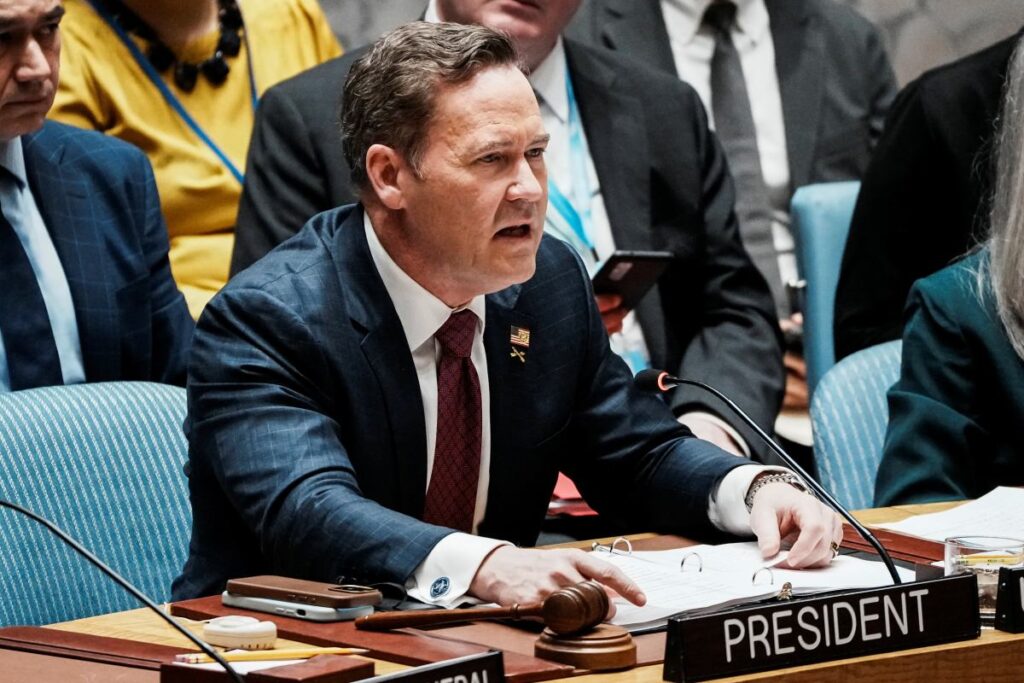
US diplomats pressure allies to join naval mission protecting critical energy route amid rising oil prices and regional tensions.
International Coalition Called for Hormuz
US diplomat Richard Waltz responded to Donald Trump’s weekend announcement that “many countries” should deploy ships to the Middle East to help maintain navigation through one of the world’s most important energy routes. Trump specifically mentioned China, France, Japan, South Korea, and Britain as countries that should engage in this operation.
Waltz did not specify which countries have already committed to participation, explaining that talks are ongoing. He noted that the world has seen a similar scenario in the 1980s during the Iran-Iraq War, when several countries joined in protecting tankers in the Persian Gulf.
The ambassador argued that Iran is holding global economies hostage, and the United States “welcomes, encourages, and even demands” that other countries “save their own economies.”
Energy Markets React to Crisis
Energy Secretary Chris Wright delivered a similar message in an interview with NBC, confirming that the US is in dialogue with countries that could support operations in the region. He noted that Asian economies, particularly Japan, South Korea, China, and India, are especially dependent on supplies through Hormuz.
The crisis in the Strait of Hormuz has already impacted global markets, with oil prices rising sharply in March. Both exports from Gulf countries and security of supplies to Asia are threatened.
The Trump administration hopes that partner participation in the operation will increase pressure on Iran and help restore shipping more quickly. Wright estimated that a war with Iran could end within weeks, which could lead to a drop in oil prices, though he couldn’t guarantee this outcome.
Regional Responses and Key Facts
In response to Trump’s appeal, South Korea stated on Sunday that it is “carefully analyzing” the situation. Meanwhile, Iranian Foreign Minister Abbas Araghchi called on the world to avoid actions that could escalate the conflict, adding that Iran’s retaliatory military targets are not civilian facilities or residential areas.
The Strait of Hormuz normally handles about 20% of global oil and gas trade. The current conflict has paralyzed navigation in the region, with Iran using the closure as a key instrument of pressure against the US and its allies. Recent reports suggest possible mine deployment in the strait, increasing risks for shipping and driving up commodity prices.
The International Energy Agency announced that oil from strategic reserves will soon begin flowing to global markets; reserves from Asian and Oceanian countries will be available immediately, while those from Europe and the Americas will be released by the end of March. The IEA previously announced the release of 400 million barrels of oil from reserves, the largest such operation in history.