


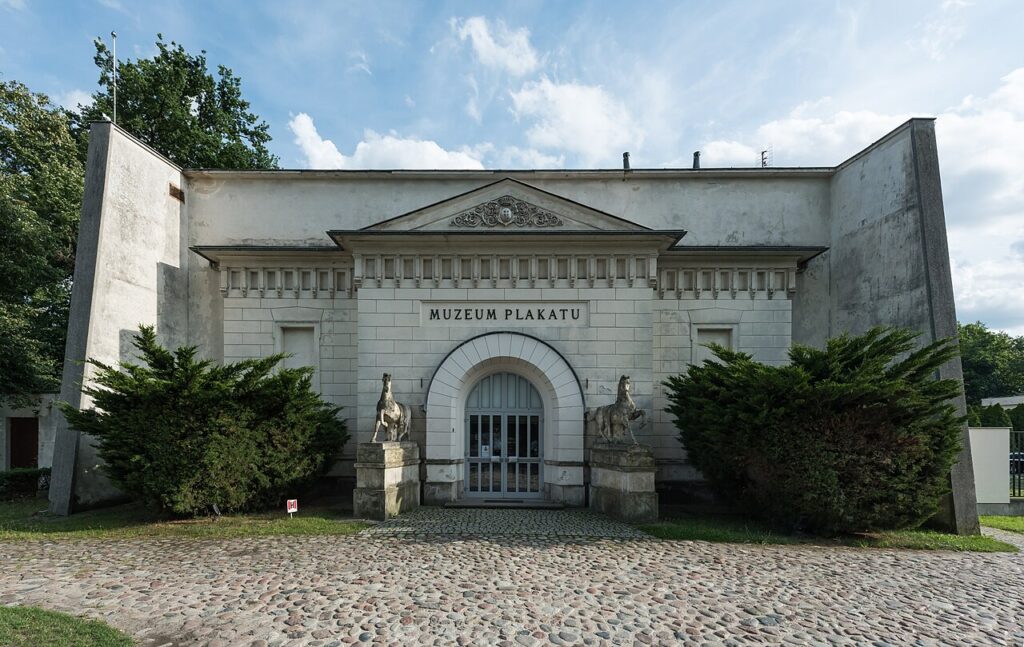
After a multi‑year closure, the Vilanów Poster Museum in Warsaw will reopen on March 14 2026 following a comprehensive restoration funded by the National Museum.
Reopening After Modernisation
The museum, part of the National Museum in Warsaw, will reopen on March 14 2026 after extensive overhauls of its facade, roof, interiors and the arrangement of its permanent gallery.
Historic Location and Legacy
The museum is situated within the palace‑garden complex of Vilanów, near the 17th‑century residence of King Jan III Sobieski, at 10/16 Stanisława Kostki Potockiego. It has long been associated with posters ranging from artistic works to advertising and social campaigns.
Permanent Polish Poster Exhibition
A new permanent exhibition titled “Polish Poster” will display the museum’s 36,000‑piece collection—a first of its kind for a non‑rotating show.
Rotational Display to Protect Originals
To guard against paper degradation, the exhibition will rotate every three months, allowing new works to be presented while preserving the originals.
Six‑Chapter Narrative of Poster History
The permanent display is divided into six sections that trace the evolution of poster styles, techniques, themes and functions, from cultural invitations through advertising to social and political messages.
Birth of the First Poster Museum
The Vilanów Poster Museum, a branch of the National Museum, is recognized as the world’s first poster museum. Its foundations were laid in the early 1960s by curator Janina Fijałkowska, who organized a dedicated team for poster studies.
Early Exhibitions and Biennale Milestones
A 1966 retrospective, “From Young Poland to Our Days,” opened on June 13 1966 with 468 works during the first International Poster Biennale. The museum’s official inauguration took place on June 4 1968, with guests including Culture Minister Lucjan Motyka and an inaugural exhibition by Wojciech Zamecznik.
Location and Expansion
The building, originally a 19th‑century palace riding arena, was expanded over the years to include a New Gallery. The current closure is caused by modernisation works affecting the facade, roof, interiors and the re‑arrangement of the permanent gallery.