


Following the euthanasia of a wild boar on Bemowo, Warsaw officials have approved a plan to cull up to 500 boars by early 2027 due to increasing public safety concerns.
Wild Boar Euthanized in Warsaw Playground
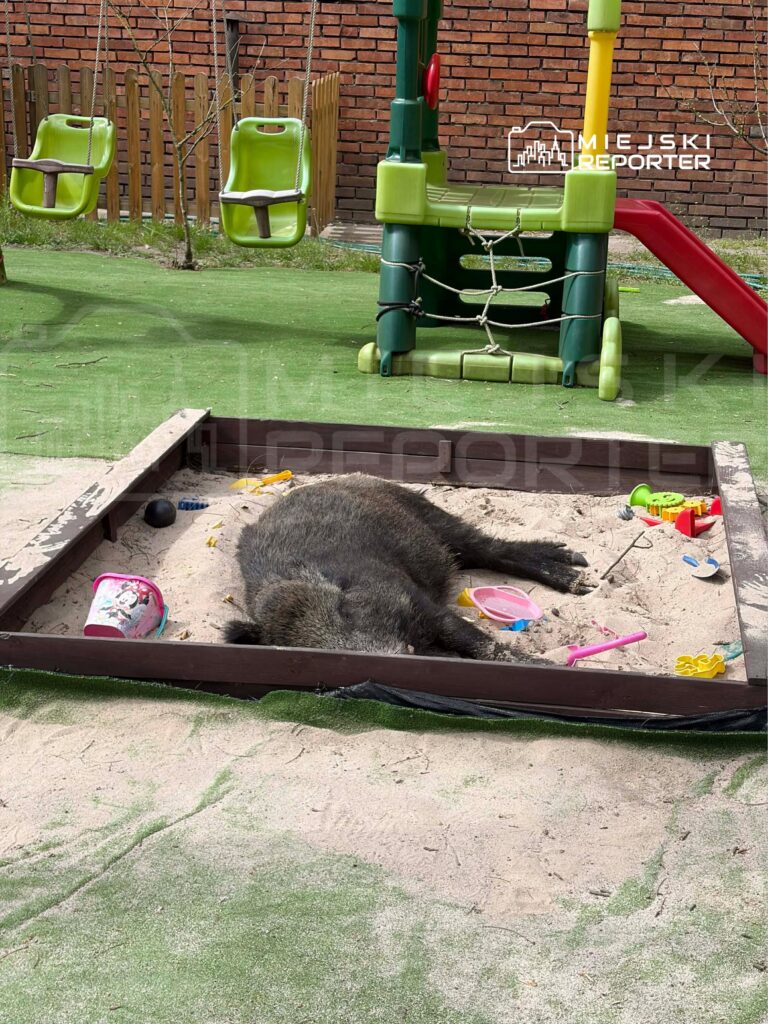
A wild boar was discovered in a playground area of a parish on Bemowo, Warsaw. Police and City Forests employees were called to the scene, and the animal was ultimately euthanized despite protests from some residents who pleaded for its rescue.
The incident involved a boar known locally as “Henio.” Residents attempted to protect the animal and prevent its euthanasia, leading police to establish a perimeter. The event sparked strong reactions, following several recent controversial boar culls in Warsaw.
Previous Incidents and Public Outcry
A similar situation occurred on Wolfkego Street in Bemowo, where a group of adult and young wild boars entered a playground. The subsequent intervention by authorities resulted in the animals’ euthanasia, prompting protests and memorial gestures from residents.
Controversy also arose after interventions on Mokotów. Warsaw City Forests apologized for the public witnessing of boar euthanizations, while emphasizing that public safety remains a priority and future actions will be conducted with greater sensitivity.
Escalating Boar Presence and Related Incidents
The city reports a significant increase in boar-related reports, rising from 423 in 2020 to 8804 in 2025. As of 2025, the estimated boar population in Warsaw is 3031, with 341 road collisions and 121 attacks on people recorded. In 2026, three people required hospitalization after boar attacks.
Restrictions on Relocation Due to Disease Risk
Relocation of boars is currently impossible due to regulations related to African swine fever. Warsaw is within a restricted area, prohibiting boar movement. The city states that euthanasia will only be used as a last resort.
Culling and Reduction Plan Approved
A decision issued on March 20, 2026, authorizes the culling of up to 400 boars by March 31, 2027, and a reduction cull of up to 100 boars by December 31, 2026. This decision is justified by the threat posed by boars to industrial and public facilities.
Challenges of Intervention in Urban Areas
Authorities emphasize the difficulty of intervening in densely populated areas of Warsaw, where boars appear between buildings, on streets, in playgrounds, and near heavy traffic. Forcing the animals to move could endanger both people and the boars themselves. The city does not use firearms; a pneumatic applicator delivering a pharmaceutical agent is used instead.
Causes of Increased Boar Presence
The presence of boars in residential areas is attributed to easy access to food sources, such as garbage and unsecured waste. Human feeding of wild animals and the reduction of natural barriers between green spaces and residential areas also contribute to the problem. Districts near large green areas, like Bemowo, are particularly vulnerable.
Public Safety Guidelines
Officials urge the public not to feed boars, approach them, attempt to drive them away, or take close-up photos. Dogs should be kept on leashes to avoid provoking defensive reactions. Sightings should be reported to authorities, especially near playgrounds, schools, busy streets, or if the animal appears aggressive.
Social Opposition to Intervention Methods
The euthanasia of the boar on Bemowo highlights public opposition to intervention methods. Residents seek solutions to reduce human-boar contact without resorting to euthanasia in public spaces.
Recent weeks have also seen attacks by wild boars on people and dogs in Warsaw and surrounding areas.