


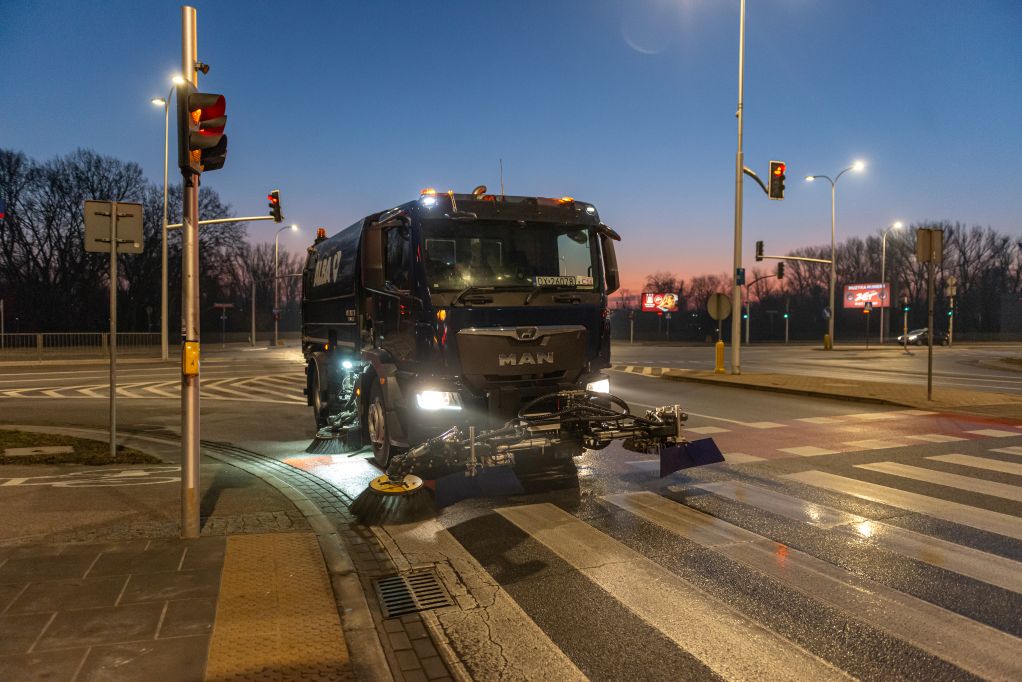
Warsaw has commenced its large-scale post-winter cleanup, scheduled to continue for several weeks depending on weather conditions.
Winter Debris Removal
Following intensive winter operations, significant amounts of sand used for pedestrian walkways remain on sidewalks. Pollution has also accumulated on roads, which were last swept in December. While spring weather favors cleanup efforts, some work depends on stable positive temperatures, especially at night when water-based operations are conducted.
Comprehensive Cleaning Scope
The City Cleaning Authority is conducting thorough post-winter cleanup that encompasses over 4 million square meters of sidewalks, bus stops, and parking lots. These areas are being swept of sand while typical waste such as paper, bottles, and plastic packaging is collected from surfaces.
“Due to the very large scope of our work and the enormous area we cover, comprehensive city cleaning after winter requires time,” said Robert Szymański, director of the City Cleaning Authority. “We act comprehensively, covering streets, pedestrian areas, and small architectural elements. However, weather decisively impacts the timeline since many operations use water, requiring stable positive temperatures, even at night.”
Representative Area Washing
In most representative locations, surface washing is planned. This includes Krakowskie Przedmieście, Nowy Świat, Świętokrzyska Street, Plac Pięciu Rogów, and Chmielna Street. In favorable weather, scrubbers will appear to wet-clean sidewalks in these areas.
Small Architecture and Bicycle Paths
Spring cleaning includes small architectural elements. With suitable weather conditions, washing will cover 1,500 bus shelters and trash cans. The City Cleaning Authority also plans to start removing pseudograffiti from trash cans when temperatures stabilize above 10°C. Bicycle paths are also being cleared of sand and other contaminants to ensure user safety, conducted manually by crews with brooms and using small mechanical sweepers.
Night Operations and Winter Preparedness
Cleaning of approximately 1,500 km of streets after winter occurs at night. Multiple passes with sweepers and scrubbers are needed for effective cleaning, requiring caution and weather adaptation. Sweeper brushes are sprayed with water to reduce dust, while large amounts of water are used during street washing. Due to the risk of ice formation, such operations are only possible when stable positive temperatures persist for several consecutive nights.
Despite the start of spring cleaning, cleaning services maintain readiness for winter actions until mid-April. In previous years, winter maintenance has been necessary as late as April 10 and even May 4 in 2011. Many administrators are responsible for cleanliness in Warsaw, setting their own cleaning schedules for their areas, in addition to the City Cleaning Authority.