


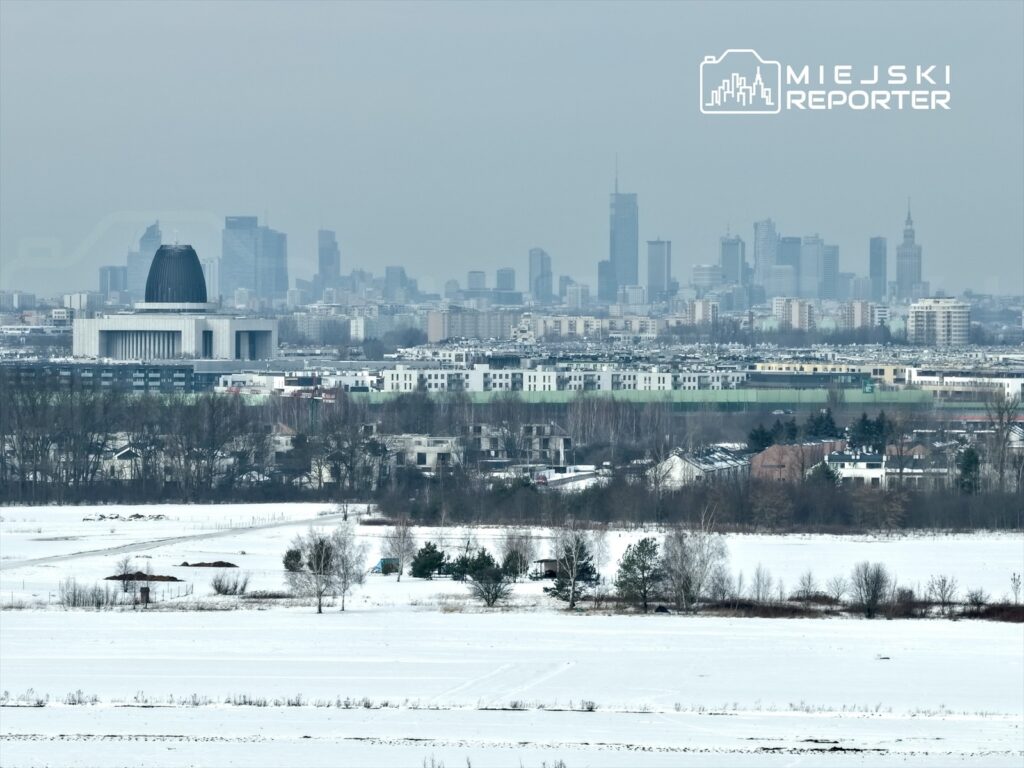
Warsaw’s street cleaning authority concluded the 2025/26 winter season, reporting record expenses of 107 million złoty amid intense snowfall and prolonged cold.
Intense Season and High Costs
The Warsaw City Cleaning Board (ZOM) officially ended the 2025/26 winter season in mid-April. The city unit reported it was the most intense and expensive winter for the capital in 13 years, with 67 snow removal operations, nearly two months of snow cover, and expenditures reaching 107 million złoty.
The 2025/26 season was distinguished by both the scale of weather phenomena and the length of operations. The first salting operation took place on November 21, 2025, and the most demanding period began during the Christmas holidays. Intensive activities lasted almost continuously until February 21, 2026, when salt spreaders worked on Warsaw’s streets for the last time this season.
Snowfall Duration and Temperature Fluctuations
Snow cover persisted in the capital for 57 days, reaching a depth of 25 cm in January. Frequent temperature fluctuations around 0°C posed an additional problem, creating a risk of ice and requiring rapid response from services.
Increased Operations Compared to Previous Years
ZOM emphasizes that the scale of work was the largest since the 2012/13 season. Throughout the 2025/26 season, salt spreaders were deployed 67 times. The previous winter ended with a result of 39 operations, and the record in the unit’s statistics still belongs to the 2012/13 season, when 89 deployments were recorded.
City data indicate that this year’s winter was the most intense in the last decade, and in terms of the number of operations – the largest in 13 years.
Maintenance Beyond Roads
Maintenance efforts extended beyond roadways to over 4 million square meters of pedestrian areas, including public transport stops, stairs, footbridges, metro entrances, pedestrian crossings, and selected bicycle routes. Both manual teams and light sidewalk plows were used on these sections.
ZOM was responsible for 1,500 km of streets served by public transport buses, as well as a portion of pedestrian and bicycle infrastructure during the winter.
Financial Impact and Contractor Penalties
The total cost of the winter season reached 107 million złoty, approximately twice the cost of the previous season, which was 53 million złoty. By early March, the city unit reported that expenses had exceeded 103 million złoty, with the final summary presented after the season ended in mid-April.
The winter also served as a test for companies responsible for snow removal. Penalties were imposed when ZOM inspectors identified irregularities. A contract with one contractor was terminated, and the company servicing Wilanów and Ursynów was changed. The total amount of penalties imposed by ZOM on contractors amounted to 3.5 million złoty. Strict sanctions were previously announced for improper snow removal in pedestrian areas.
Monitoring and Post-Winter Cleanup
Robert Szymański, director of ZOM, noted that Warsaw’s winter maintenance system involves many area managers and work contractors, and each operation directly affects the daily functioning of residents. ZOM monitored forecasts, data from meteorological stations, and the actual condition of surfaces checked by field inspectors around the clock.
Decisions to begin operations were made based on a current analysis of weather and road conditions. After the winter conditions subsided at the end of February, post-winter city cleaning began, lasting over a month due to large amounts of sand accumulated on streets and sidewalks after weeks without standard sweeping and washing.
Following thorough cleaning, the capital entered a regular cleaning mode, which will continue until autumn.
Shared Responsibilities
ZOM is not solely responsible for Warsaw’s winter maintenance. Depending on the type of area, responsibilities are divided among the offices of 18 districts, the Public Land Management Board, the Praga Public Land Management Board, housing associations and estate managers, property owners, the Warsaw Greenery Board, City Forests, and the General Directorate for National Roads and Highways, which maintains express roads and related infrastructure.