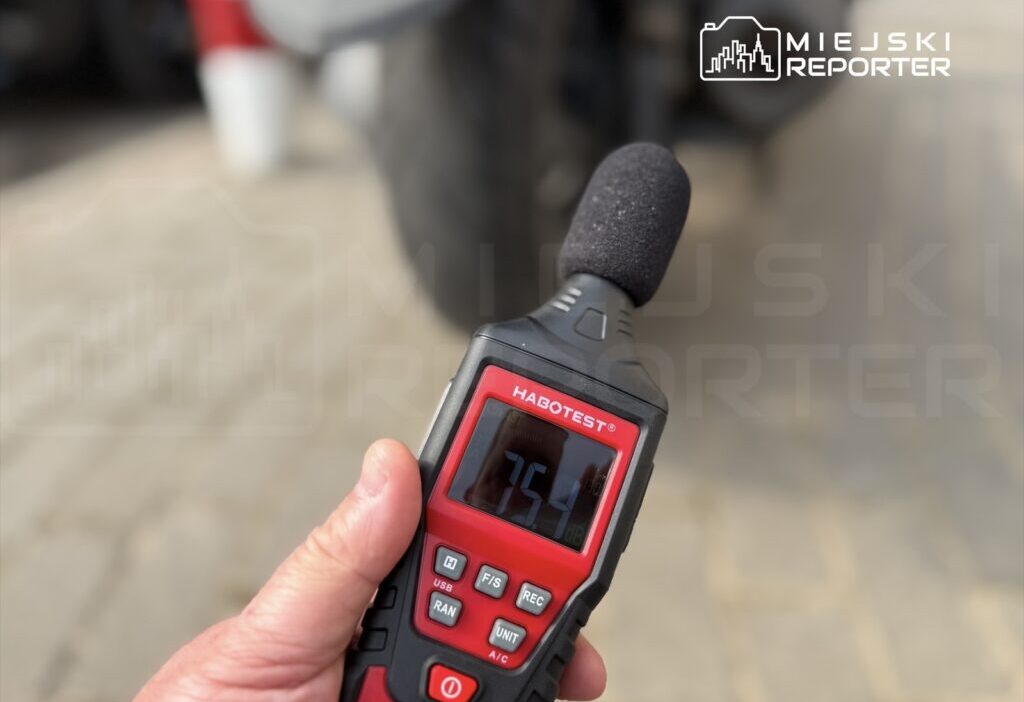
Warsaw traffic police are conducting increased motorcycle inspections, focusing on excessive noise levels and utilizing sound level meters for objective measurements.
Increased Motorcycle Inspections in Warsaw
With the start of the motorcycle season, Warsaw traffic police have initiated intensified inspections of two-wheeled vehicles, including checks for excessive noise. Police reports confirm officers are verifying the technical condition of motorcycles, specifically focusing on loud exhaust systems, and are using sonometers – sound level meters.
Subjectivity vs. Objective Measurement
The direction of these actions is generally accepted, but concerns arise when noise assessment relies solely on an officer’s subjective hearing rather than measurement or verification of manufacturer data. Warsaw police acknowledge that a sonometer provides a more objective assessment than relying on auditory judgment.
Legal Noise Level Limits
Regulations regarding vehicle technical conditions stipulate that external vehicle noise, measured at a standstill from 0.5 meters, cannot exceed the homologation value plus 5 dB(A) for approved vehicles. For other vehicles, limits are defined in regulations: 94 dB for motorcycles up to 125 cm³ and 96 dB for those over 125 cm³.
Importance of Manufacturer Data
Manufacturer data, found on the vehicle’s identification plate, is crucial. Regulations require motorcycles and mopeds to display the homologated external noise level in dB(A) and the engine speed at which it was measured. These two pieces of information should be the primary reference point for assessing compliance.
Proper Measurement Procedures
Reliable measurement requires specific conditions. Technical inspection regulations outline a subjective initial assessment, followed by a static measurement with a sonometer if a violation is suspected. The law governing vehicle inspection stations details conditions for repeatable and comparable results.
Detailed Measurement Parameters
Measurements should be taken with a warmed-up engine on an unloaded vehicle (only the rider present for motorcycles). Background noise must be at least 10 dB lower than the vehicle’s noise. The sonometer microphone is positioned at the exhaust outlet’s height, 0.5m ± 0.1m away, at a 45° ± 10° angle. Engine speed is critical: 75% of maximum power speed for engines up to 5000 rpm, and 50% for higher speeds. At least three measurements are required, with the highest valid value minus 1 dB used as the final result.
The Risk of Subjective Assessments
Auditory assessment alone should not determine non-compliance. An officer’s ear can raise suspicion, but it cannot replace a measurement referenced to manufacturer data and performed at the correct engine speed. Otherwise, a vehicle may seem loud but still be within the permitted limits.
Police Authority to Detain Vehicles
Traffic law allows police to detain a vehicle’s registration document not only after a violation is confirmed but also if there is reasonable suspicion of environmental or safety concerns. This can lead to document detention before a final technical verification of noise levels.
Reclaiming a Detained Document
If a driver believes the detention was unjustified, they should request the document’s return from the vehicle registration authority, providing a receipt for the detention and, if based on technical condition, a positive inspection certificate. The return process is free of charge.
Challenging a Fine
If an officer issues a fine and the driver disagrees with the assessment, refusing to accept the fine is the safest course of action. The case then goes to court, where the driver can demonstrate flawed measurements, incorrect engine speeds, lack of manufacturer data reference, or non-compliance with testing conditions. Challenging an accepted fine is more difficult, requiring a court application within 7 days.
Filing a Complaint
Regardless of the fine, a driver can file a complaint about the intervention’s conduct. Police have a formal procedure for complaints, handled by the appropriate control unit within the Warsaw Police Headquarters. This does not replace the fine process or document return procedure but allows for assessment of the officers’ actions.
The Sonometer as a Dispute Resolution Tool
The sonometer is not merely an addition to inspections but a tool that regulates the entire dispute. A sound level meter, subject to formal metrological requirements, provides a far more objective result than subjective hearing. This protects residents from genuinely noisy vehicles and motorcyclists from arbitrary document detention.