Polish political divisions over the EU reflect a wider European ideological conflict between centralization and national sovereignty.
The European Divide
One of the significant criteria for political division in Poland is the attitude towards the European Union. It is commonly believed that the left side of public debate advocates for the establishment of a centralized European superpower, while the right prioritizes the need to maintain Polish state sovereignty. This division is not unique to Poland, as it reflects disputes throughout the entire European Union.
The Progressive Vision
These disputes partly emerge from ideological battles concerning such issues as: abortion rights, LGBTQ community demands, imposing green restrictions on the economy, and mass immigration of Muslim population from outside Europe. A broad front of left-wing and liberal groups, still dominant in EU institutions and its member states, is trying to push through a project that assumes united Europe will be, whether people like it or not, an ideologically uniform entity shaped by implementing a progressive agenda based on feminism, gender theory, environmentalism, and multi-culturalism.
The National Question
It’s no wonder then that right-wing forces, labeled as “nationalist” and “populist,” oppose this state of affairs. They see maintaining the sovereignty of EU member states as the last chance to stop the ideological mill of the EU mainstream. However, the right mentioned here must face an uncomfortable question: are nation-states not a relic of the past? The answer to this question is not obvious.
Federalism as Alternative
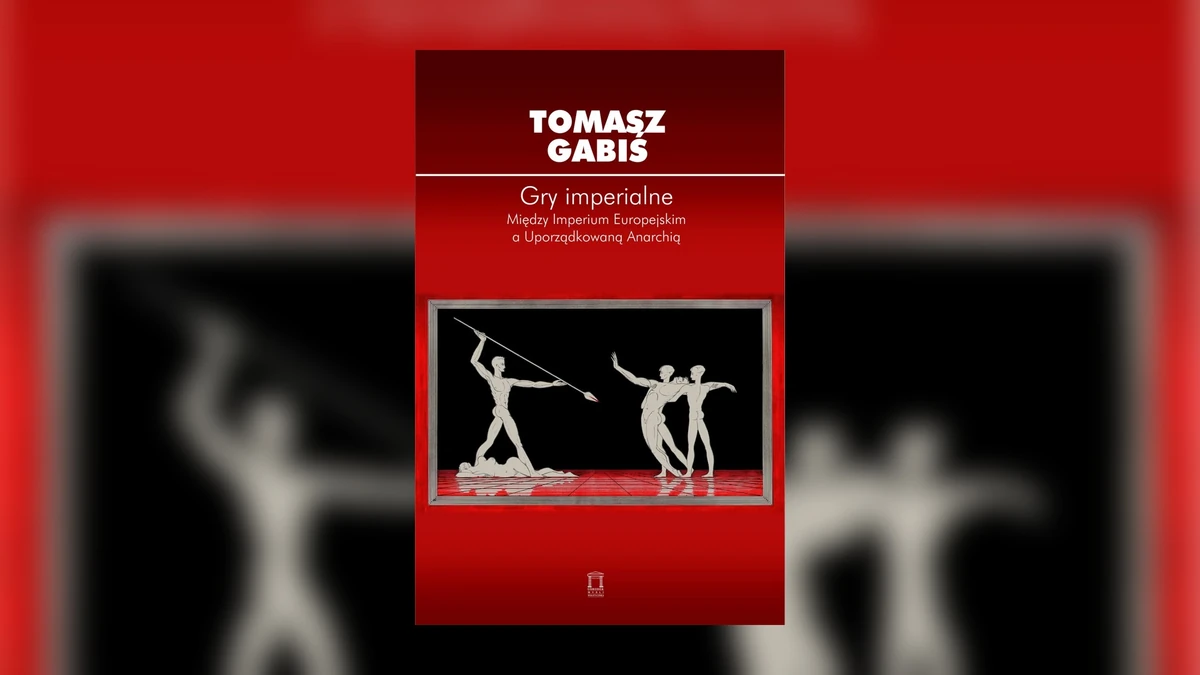
Perhaps the right must consider the possibility that if individual Union countries are to count in the world, their only option remains the strict integration of this organization. Such considerations are prompted by the book “Imperial Games. Between the European Empire and Ordered Anarchy” by Tomasz Gabiś. Recently, a new, expanded edition was published by the Kraków-based Political Thought Center. Gabiś, who in the People’s Republic of Poland was active in anti-communist opposition, and in the Third Republic was editor-in-chief of the “post-conservative” magazine “Stańczyk,” is now an enfant terrible of Polish journalism whose trademark is provocative theses.
The Paradox of Nationalism
In his book, Gabiś considers whether another form of strict EU integration is possible than the one left-wing and liberal forces are trying to impose on the peoples of the Old Continent. The author of “Imperial Games” agrees with the opinion that the time of nation-states has passed and advocates for the strict integration of the Union, but he is opposed to the “Jacobin” centralism adopted by Brussels leadership bodies, which he considers detrimental to the entire project. He indicates federalism as an alternative, which would give considerable autonomy to individual “provinces” of the European superpower (current EU member states) while effectively binding them into the subtitle empire.
Reading Gabiś’s book, I thought about whether strict integration of the Union is indeed possible without implementing a progressive agenda. The ideological ideas of the left and liberals have indeed weakened the EU, and the natural social experiments aimed at the right are suicidal for the Union. This is not how a European superpower is built. Therefore, it is not inconceivable that paradoxically, those critically inclined towards “uniocracy” and conservative-minded “nationalists” and “populists” are mentally prepared to make Europe great again.