


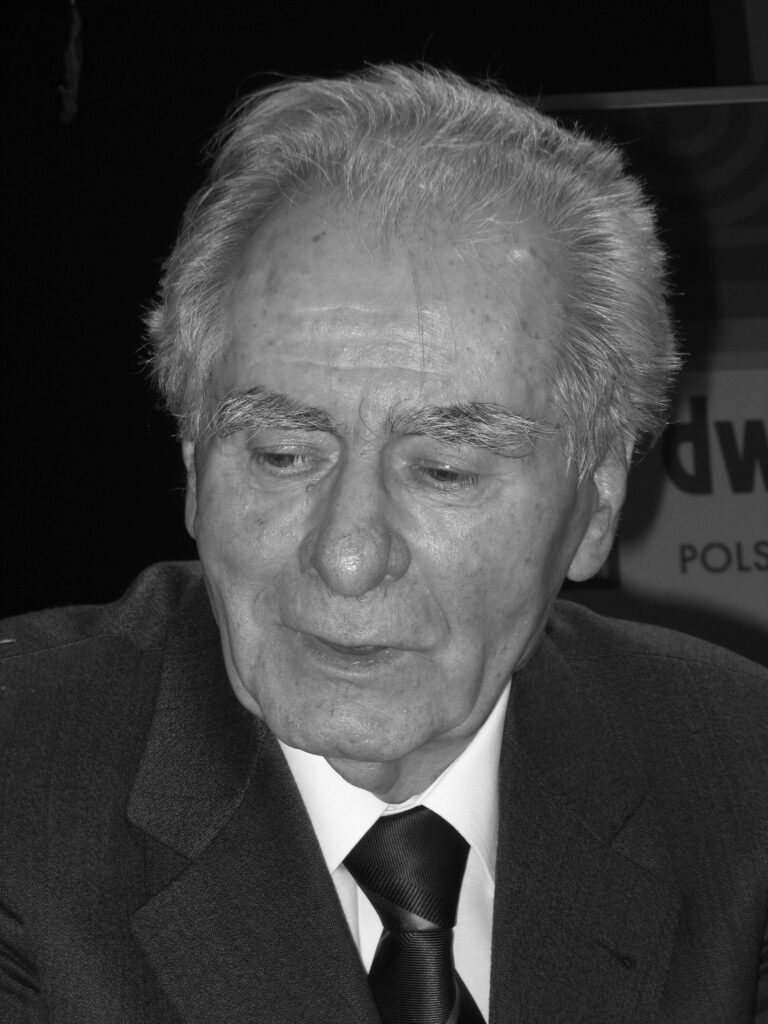
Renowned Polish novelist Wiesław Myśliwski, a two-time recipient of the Nike Literary Award, passed away on March 30, 2026, at the age of 94.
Life and Literary Career
Wiesław Myśliwski, born on March 25, 1932, in Dwikozach near Sandomierz, was a prominent Polish prose writer, playwright, screenwriter, and editor. His work held a unique position in Polish literature for decades.
While often associated with rural literature, his works transcended that label, becoming narratives about memory, fate, transience, and the human condition.
Family Background and Education
Myśliwski’s life was closely tied to the experiences of the Polish countryside and peasant culture. His father, Julian, was an officer in the Polish Army who later worked as a civil servant, and his mother, Marianna, was involved in the peasant movement and the University of the People in Szycach.
He studied Polish philology at the Catholic University of Lublin, graduating in 1956, after attending school in Sandomierz and completing his secondary education in 1951.
Early Career and Editorial Roles
Before becoming a celebrated author, Myśliwski worked at the People’s Publishing Cooperative in Warsaw. He also served as the editor-in-chief of the quarterly “Regiony” and the bi-weekly “Sycyna,” actively participating in cultural institutions.
From 1997, he chaired the jury of the All-Poland Aleksander Patkowski Award in Sandomierz.
Notable Works and Recognition
Myśliwski debuted as a novelist with “Nagi sad” (Naked Orchard) in 1967, gaining recognition. He subsequently published works including “Pałac” (Palace), “Kamień na kamieniu” (Stone upon Stone), “Widnokrąg” (Horizon), “Traktat o łuskaniu fasoli” (A Treatise on Shelling Beans), “Ostatnie rozdanie” (The Last Deal), and “Ucho Igielne” (The Eye of the Needle).
He also authored several plays, including “Złodzieja” (The Thief), “Klucznika” (The Keyholder), “Drzewo” (The Tree), and “Requiem dla gospodyni” (Requiem for the Housewife).
Literary Awards and Style
His greatest acclaim came with “Widnokrąg” and “Traktat o łuskaniu fasoli,” both awarded the Nike Literary Award in 1997 and 2007, respectively. He was one of a very select group of writers to win this award twice.
He also received numerous other awards, including the Gdynia Literary Award, the Władysław Stanisław Reymont Award, the Gloria Artis distinction, and honorary doctorates from several universities.
Legacy and Impact
Myśliwski’s work was characterized by his meticulous use of language and consistent return to a disappearing world. Each new book release was a significant event, often featuring characters from the Polish countryside and peasantry caught up in major historical changes.
He emphasized his interest not in folklore, but in the universal dimension of peasant culture and the experiences embedded within it. Despite publishing relatively few novels over decades, each work was a significant literary event, remembered for its careful language and independence from trends.