


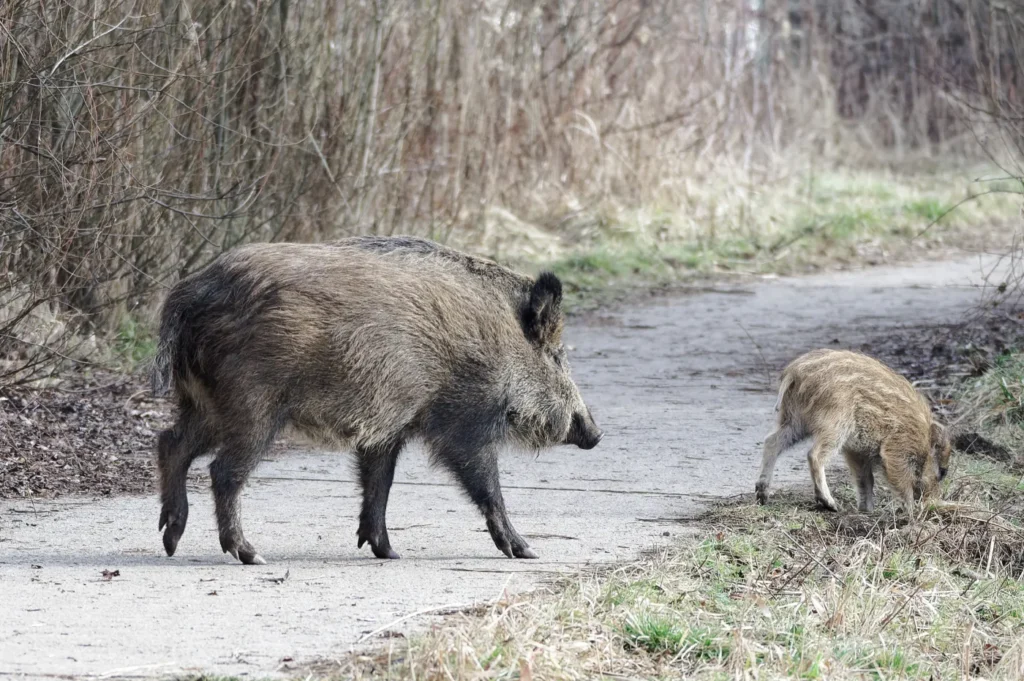
A debate over culling wild boars in Warsaw is escalating, with increasingly extreme language raising concerns about historical comparisons.
Wild Boar Issue and Linguistic Confusion
The debate surrounding wild boars is fraught with linguistic risks. If terms like “execution” and “death penalty” become associated with municipal guard actions, could atrocities like those in Wołyń, the Warsaw Ghetto, and Bucha be redefined as “interventionary culling?”
The Allure of the Wild Boar
Wild boars are captivating creatures, often observed closely. Their eyes, chestnut-brown and framed by thick, grey lashes, and their playful or fearful expressions, are striking. They possess a wet snout and a thin tail, and are often seen with their young.
Wild Boars in the City: A Problem Without an Easy Solution
There is sympathy for the animals, as they are not inherently hostile like rats or disease-carrying mosquitoes. Their habitats have been overtaken by concrete, and they are drawn to human waste.
Without significant investment in land acquisition and habitat restoration, a perfect solution is elusive. Regulations prohibit relocating boars due to ASF concerns, and a pending law offers limited humanitarian measures. The current situation leads to confrontations where individuals “aim between two small eyes.”
A Disturbing Semantic Shift
The use of extreme language is particularly concerning. When Professor Andrzej Elżanowski described culling as “fascist logic of extermination,” it was considered unusual. Now, after a recent culling in Bemowo, similar rhetoric is more common.
Flowers and candles have appeared at the site of the killings, and calls for “peaceful coexistence” and accusations of a “death penalty” for boars are emerging. Some even describe the killings as an “execution of young boars” and “extermination discourse.”
When Language Ceases to Reflect Reality
Philosophers advocating for the equal consideration of non-human entities may see this as a victory, but it is a dangerous confusion of language. If “execution” and “death penalty” define the actions of the municipal guard, then historical atrocities could be similarly framed as “interventionary culling.”
This path leads to further societal division, with some justifying violence and others protesting it. The debate risks descending into familiar patterns of conflict, mirroring disputes over abortion, presidential elections, and other contentious issues.
A Road to Nowhere
This is not about challenging anthropocentrism; it is a destructive path. It fosters another divisive societal conflict, with some advocating for harsh measures and others engaging in protests and accusations.
. **Sources:**