


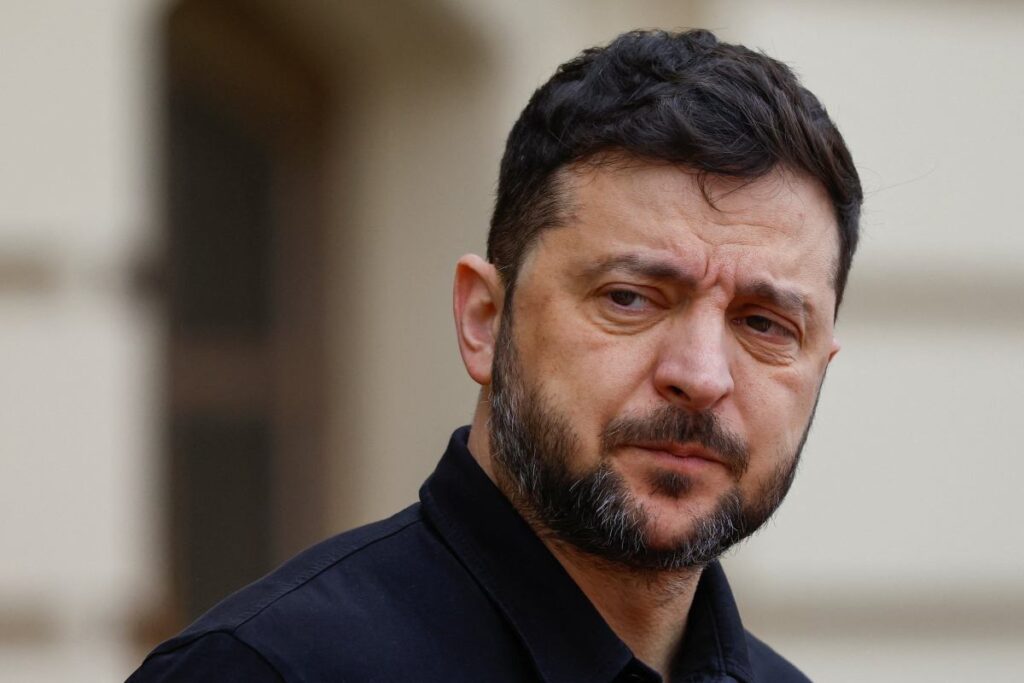
Ukrainian President Volodymyr Zelenskiy has received the U.S. administration’s latest peace proposal, while President Donald Trump insists Ukraine decide on the terms before Christmas.
New U.S. Peace Plan Sent to Ukraine
The U.S. administration has transmitted to Kyiv its most recent draft of a peace plan, according to Axios journalist Barak Rawid, citing sources in Kyiv and Washington. The document was refined during intensive days of diplomatic talks between Zelenskiy and leaders of Britain, France and Germany in London. Kyiv is under increasing pressure from Washington, which expects rapid progress in talks with Russia.
Negotiations and Ukraine’s Rejection of Earlier Offer
Ukraine rejected the U.S. proposal presented in November, arguing that parts of its wording effectively strengthened Moscow’s position and failed to provide real security. Zelenskiy has also held a separate phone conversation with U.S. officials focused on post‑war reconstruction and economic development. A 20‑point framework detailing war‑end conditions—covering the peace plan, security guarantees and an economic recovery program—is still being refined.
Security Guarantees and Donbas Withdrawal
Ukraine insists that any agreement requires solid, enforceable guarantees preventing a new Russian offensive. The U.S. is pressing Kyiv to withdraw forces from portions of Donbas to achieve a swift ceasefire. Ukrainian officials counter that ceding territory won in years of conflict would signal weakness and invite further attacks; about 30% of Donbas remains under Ukrainian control, and Ukraine demands a frozen front line.
Trump’s Call for a Pre‑Christmas Decision
On December 8, President Donald Trump told Politico that his administration’s people were delighted with the plan and that it largely met Russian interests. He also urged Ukraine to decide on the terms before Christmas, warning that a new offensive would test partners’ responses. Trump’s comments came amid mounting pressure for a quick resolution.
Demilitarised Zone, Energy, and Economic Proposals
U.S.-Ukrainian discussions introduced a broad, two‑part demilitarised zone from Donbas to Zaporizhzhia along the Dnipro River, modeled on the Korean DMZ. The plan also includes handing management of the Zaporizhzhia Nuclear Power Plant to the U.S. as a deterrent to Russian re‑invasion, and proposes accelerated EU integration, potentially by 2027. Economically, the draft suggests using frozen Russian assets—over $200 billion—to provide Ukraine with at least $100 billion in reparations and the creation of a Ukraine Development Fund that could gather up to $400 billion through global investors such as BlackRock.
Western Analysts and Ukraine’s Future Path
Analysts offer divergent views on the feasibility of a settlement. David Ignatius of the Washington Post argues a realistic deal exists under strict conditions, envisioning Ukraine with international security guarantees, EU accession and a Western‑financed reconstruction package, but cautions that Trump’s pressure could jeopardise progress.
Polish experts, such as Viktor Szlinczak, assert the current proposal merely freezes the conflict rather than resolves it, giving Russia a pause and allowing the U.S. to focus on China. Political scientist Georgiy Tsyzhov notes that while a formal territorial surrender is impossible, the West could force a silent recognition of occupation, driven by Trump’s business interests and ambition to be remembered as the war‑ending president.
Ukrainian officials maintain they will not cede territory, yet experts warn that even without formal land surrender, hard compromises may surface as the West assesses Ukraine’s diminishing military capacity and the political window narrows.