A poll following Ukrainian President Zelenskyy’s speech reveals deep public skepticism about ending the war in 2026.
Hope for peace is weak. Many don’t believe in a quick end to the conflict
The publication regarding the Ukrainian president’s address and subsequent Russian attacks sparked a strong reaction from readers. Issues of security, winter strikes on infrastructure, and a possible end to the conflict have long evoked strong emotions.
In this context, a question appeared under the article about the chances of ending the war in 2026. The answers show a clear decline in optimism and growing uncertainty.
Uncertainty dominates assessments. Many avoid clear declarations
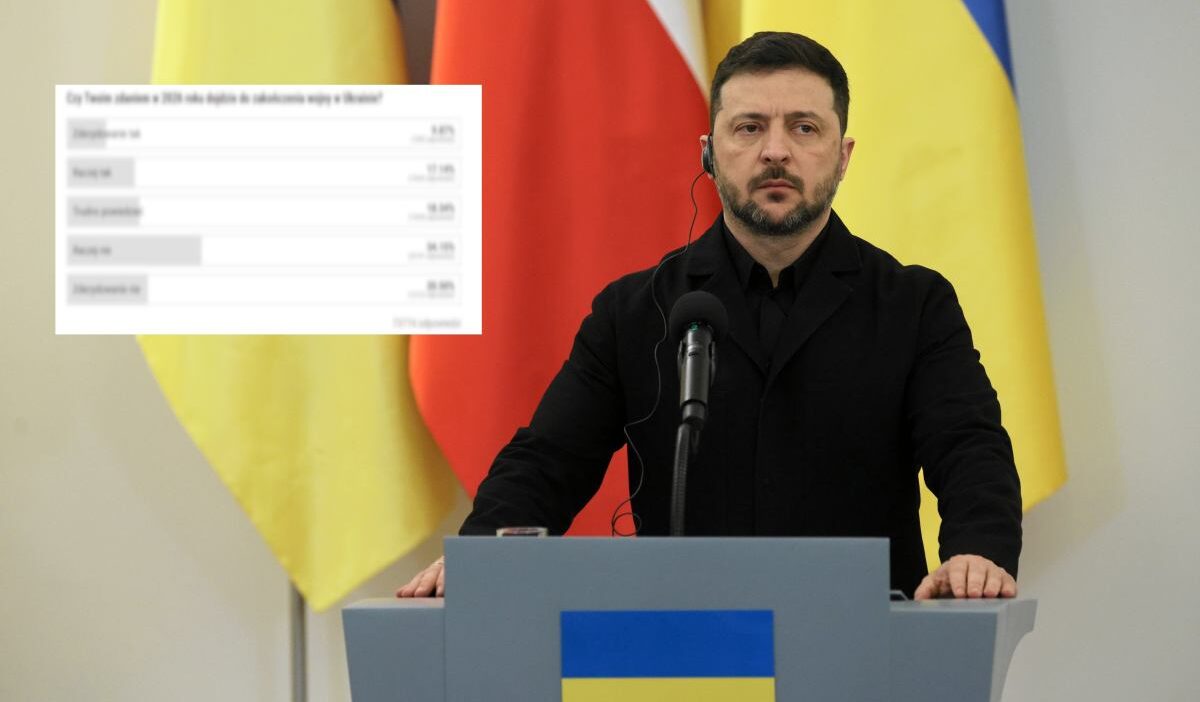
The most selected response was “rather no.” 34.15 percent of voters believed that ending the war in 2026 is unlikely, showing the prevalence of skeptical assessments.
The second largest group consists of people convinced that the conflict will not end. 20.50 percent of voters chose the “definitely no” response.
In third place was the answer “hard to say.” More than 18 percent of people admitted they cannot predict the further development of events today, emphasizing the unpredictability of the situation in Ukraine, especially during the winter period.
There are few optimists. Faith in rapid peace is clearly weakening
The responses “rather yes” and “definitely yes” received a combined total of less than 27 percent of the votes. Only 9.87 percent of participants selected the most optimistic option.
Although some people still count on a political or military breakthrough, skeptical sentiments dominate. The survey results show that warnings from Kyiv and the scale of infrastructure problems have a clear impact on societal assessments of the future of the war.