

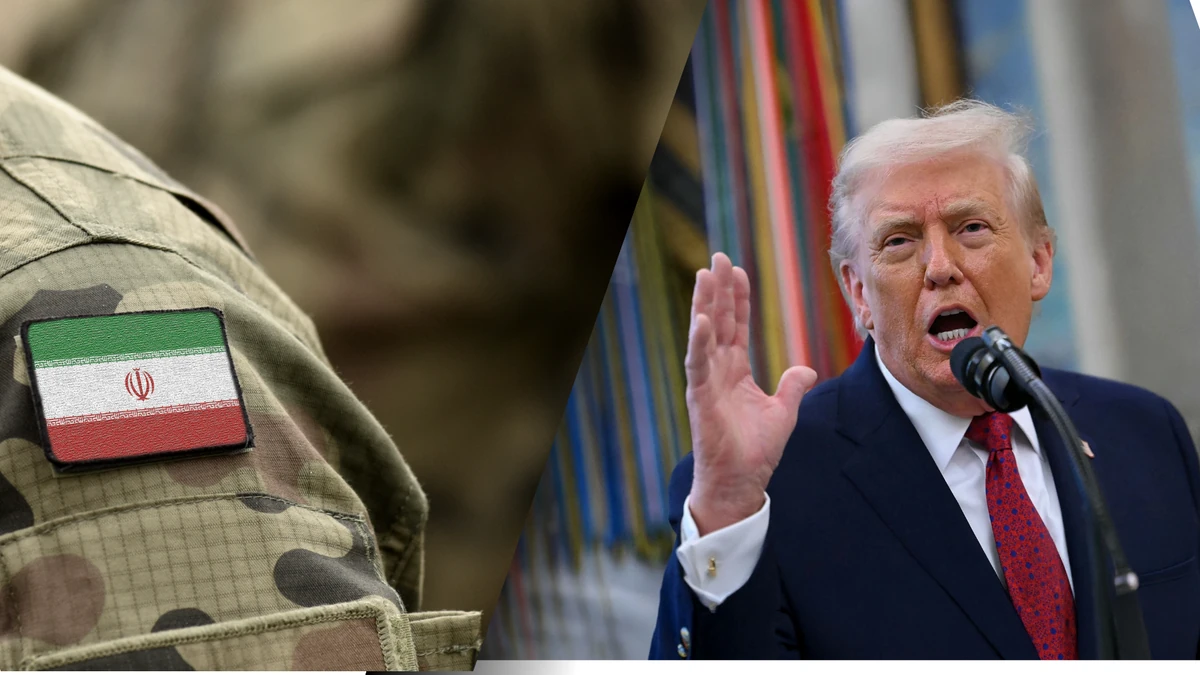
President Trump faces complex strategic considerations regarding potential military action against Iran amid domestic political constraints.
The “No Boots on Ground” Doctrine
I don’t believe Trump has yet decided on war, nor has he completely ruled it out. The powerful dilemmas have not disappeared. The “no boots on the ground” doctrine, with which the current president came to power, remains relevant. It states that America can support parties in a conflict and carry out air strikes, but the military work on the ground must be done by others. Full-scale engagement of American ground forces risks large human casualties that American society cannot tolerate.
In Iran’s case—a vast country historically sensitive to external interference whose regime still enjoys some domestic support—sending US soldiers would be doubly dangerous. The risk of entering either a long, bloody war without clear exit prospects or a humiliating retreat would be enormous.
Regional Destabilization Risks
A broader attack or land operation would mean this entire vital and turbulent region could destabilize suddenly and completely. Most major regional players, including America’s allies such as Saudi Arabia and Turkey, do not want this. An attack on Iran would mean acting against their interests. Even Trump does not believe the US is powerful enough to voluntarily enter a situation of complete geostrategic isolation.
Domestic Political Implications
A possible war with Iran would cause strong disturbances in American domestic politics, particularly within the MAGA movement. The alt-right was built partly on criticism of previous administrations for getting America involved in distant wars that brought no concrete benefits but served abstract ideological purposes. Trump himself promised an end to such interventions. Yet his statement that America would come to the aid of protesters against the Iranian regime strongly resembles nation-building rhetoric.
The MAGA Movement’s Dilemma
While a swift victory could boost Trump’s popularity within MAGA, achieving such a victory is not obvious. Trump has repeatedly shown caution in such matters. Moreover, despite Trump’s pro-Israel stance, an increasing portion of the MAGA movement exhibits anti-Israel attitudes. Starting a war with Iran would be seen in these circles as an action benefiting Israel, increasing disappointment among some MAGA supporters and intensifying centrifugal forces within the movement.
Timing and Political Calculations
These considerations come as “midterm” elections approach, where Republicans will struggle to maintain control of both houses of Congress. Losing this control would fundamentally limit Trump’s political effectiveness at the midpoint of his term. In this situation, Trump has significant reasons to consider a strike on Iran from all perspectives. A serious argument in favor would be hope of reaching an agreement with elements of Iran’s government apparatus, willing to change their foreign policy in exchange for recognition of their rule and non-support of opposition activities.
The Question of Iranian Negotiations
At present, however, there are no facts indicating the reality of such a development with Iran’s leadership. Without concrete evidence of possibilities for negotiation, Trump faces continuing pressure to resolve these complex strategic questions in an election year with significant domestic political consequences.


