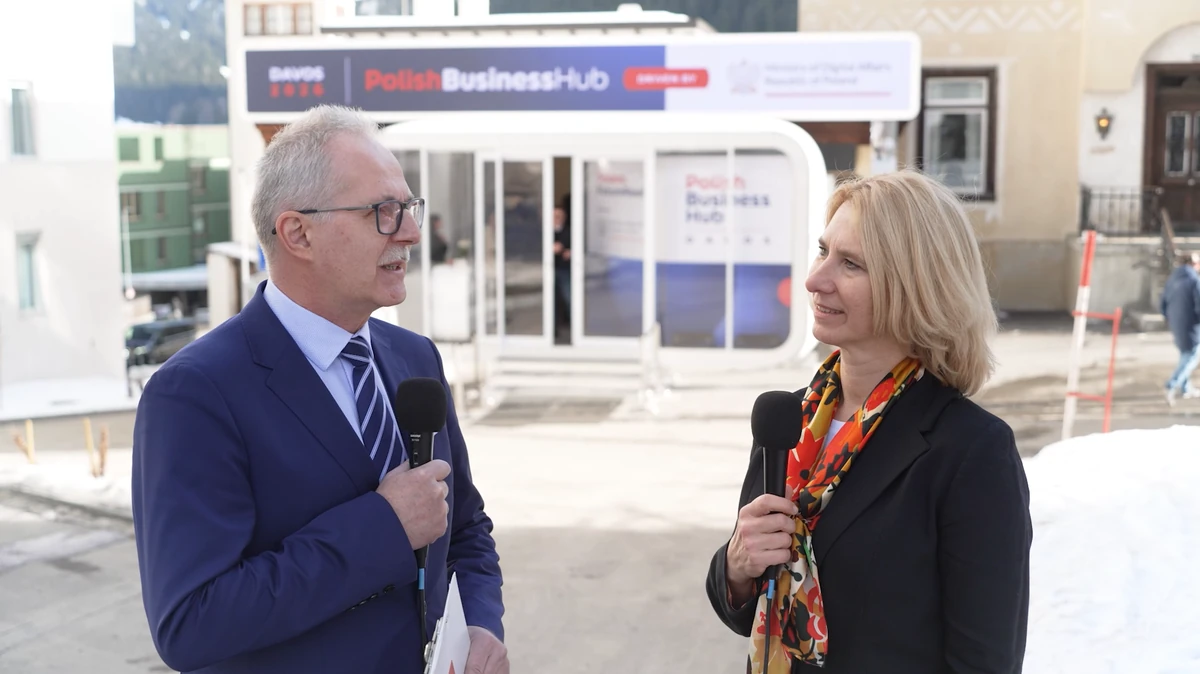
Professor Beata Jaworczyk warns Poland’s current economic growth model based on public investments is unsustainable amid demographic challenges.
Poland’s Economic Performance
As Professor Beata Jaworczyk emphasizes, Poland continues to perform very well compared to the region, with economic growth forecasts for this year being clearly positive. “We look good compared to other Central and Eastern European countries,” she notes.
At the same time, she points out that the current growth dynamics largely rely on public investments, which cannot be a sustainable foundation for development.
Unsustainable Growth Model
“This is not an engine that will work indefinitely,” emphasizes the economist. She reminds that Poland’s success over the last three decades has primarily resulted from the process of catching up with developed economies, based on importing technology, knowledge, and innovations. Today this model is gradually being exhausted.
“To a large extent, we have caught up with developed countries and are entering a much more difficult development stage,” she says.
Innovation Challenges
In Professor Jaworczyk’s view, the key question today is whether Poland and Europe can build growth based on their own ideas. “This does not always succeed,” she admits. The European Union’s ambition is to keep innovation on the continent so that new technologies and business models generate revenue here, not outside Europe. The problem, however, remains access to capital.
“We have too little money for new companies,” evaluates the EBRD’s chief economist. In her opinion, the debate on innovations must translate into concrete actions that will facilitate young entrepreneurs in securing financing and scaling their operations. Without this, Europe will lose its most promising projects to other markets.
Demographic Concerns
The conversation also touches on a topic, as Jaworczyk emphasizes, often pushed to the background by politicians because its effects span decades. This concerns demography. “The median age in Poland is now 32 years. We are as old as developed countries, but still poorer than them,” she notes. “We are aging before we have had a chance to get rich,” she adds.
The shrinking number of people of working age will increasingly affect the pace of growth and the standard of living. “Demography will erode our standard of living,” warns the economist. According to her, the possible scenarios are difficult: counting on artificial intelligence will not fully solve the problem, and mass immigration remains socially and politically controversial.
“According to our calculations, we would have to accept migrants equivalent to 1 percent of the current population annually,” she points out.