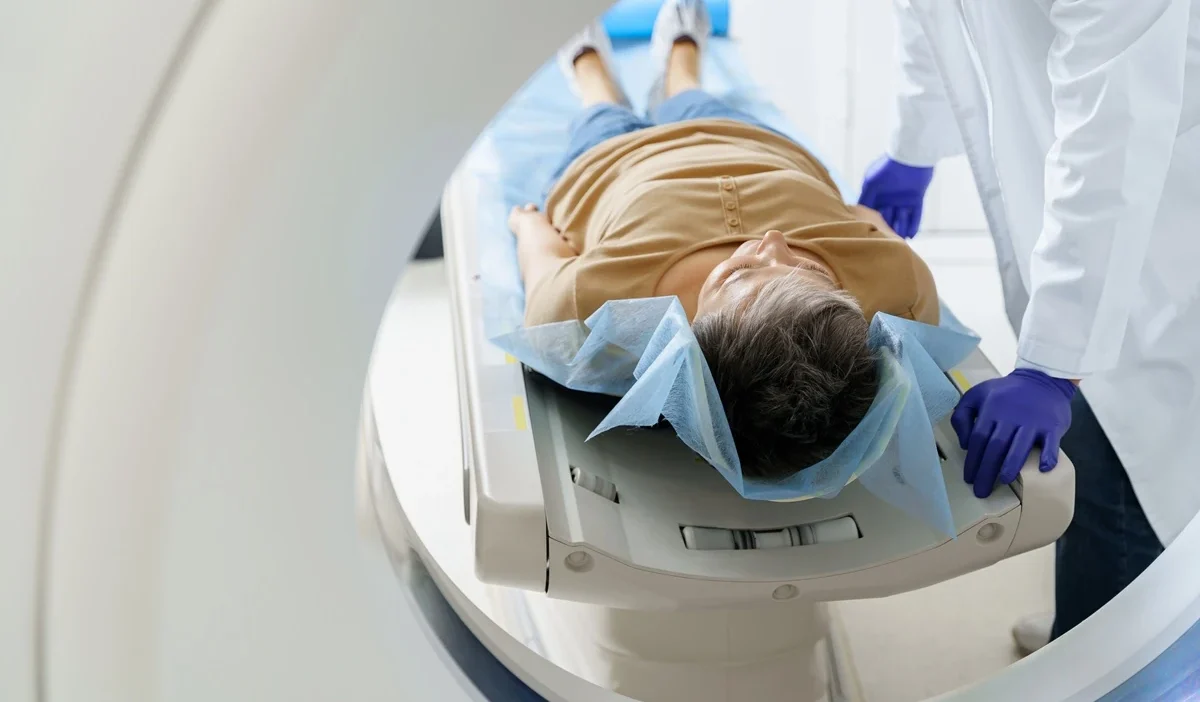
Poland’s 2026 healthcare system establishes priority criteria for MRI access, with regional wait times varying significantly.
NHS MRI Waiting Times in 2026
In 2026, the average waiting time for an MRI under Poland’s National Health Fund is approximately 90 days nationwide, with significant variations between regions. Actual wait times depend on the specific healthcare facility, the number of contracted services, and the patient’s medical category.
The National Health Fund provides a public search tool to check the first available appointment for a medical service.
“Urgent” vs. “Stable” Cases
The basis for determining service order in specialized outpatient care is the division into “urgent” and “stable” cases. These rules stem from regulations governing waiting lists and medical criteria for qualifying patients.
The referring doctor decides the appropriate classification based on the patient’s health condition and the risk of clinical deterioration. Patients classified as “urgent” should be placed on the waiting list before those classified as “stable”.
Patients with Priority Access
Public healthcare legislation specifies categories of individuals entitled to receive services out of regular order. In certain cases, this priority also applies to diagnostic examinations, including magnetic resonance imaging.
Groups with special priority rights include specific professional categories, war veterans and invalids, individuals with specific disabilities, certain social assistance beneficiaries, and others. After presenting documentation confirming their eligibility, these patients can be accepted outside the standard waiting list order.
Cancer Patients and Fast-Track Diagnostics
Cancer patients with suspected malignancies constitute a special category. For them, so-called fast oncological diagnostics and treatment applies, implemented through the Oncological Diagnostics and Treatment Card (DiLO).
Regulations specify maximum timeframes for implementing individual diagnostic stages. If an MRI is part of this diagnostic pathway, it can be performed within the indicated time limits, which typically means significantly shorter waiting times than in standard outpatient care.
Private MRI Costs in 2026
The cost of a private MRI depends on the scope of diagnostics, the location of the facility, and the use of contrast agents. Prices can vary even within the same city. In the second half of 2025 and early 2026, approximate prices range from 490 to 2400 PLN.
For more complex examinations and expanded oncological diagnostics, the cost may be higher. Compared to having the examination performed under the National Health Fund, the financial difference can range from several hundred to over two thousand PLN.
Legal Ways to Speed Up an NHS MRI
From a patient’s perspective, three key elements are crucial: ensuring proper classification as “urgent” by the referring doctor, utilizing the National Health Fund’s appointment search tool, and checking availability at different facilities, including those outside the place of residence.
Selecting a center with a shorter queue remains consistent with the current rules for financing healthcare services through the National Health Fund.
Frequently Asked Questions About NHS MRI Access (2026)
The article addresses common questions regarding MRI access through Poland’s public healthcare system, though specific questions are not detailed in the provided source material.