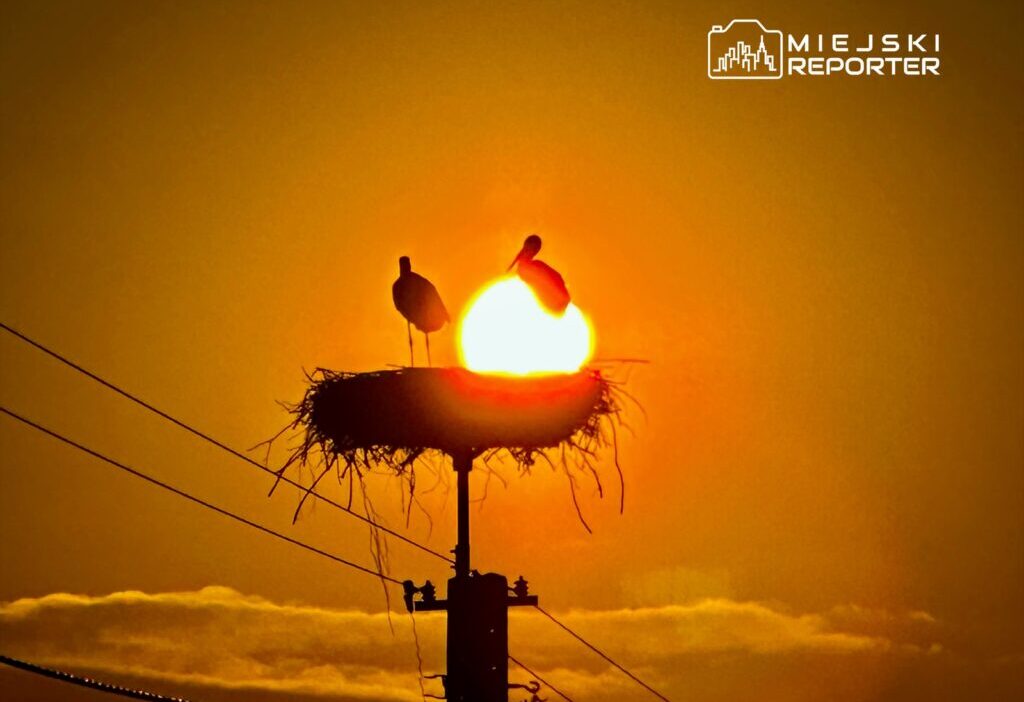
Early stork arrivals in Poland in February 2026 have ignited anticipation of winter’s end, though experts caution that individual birds don’t reflect the full migration pattern.
Early Stork Sightings
Many people at winter’s end look for signs that the coldest period is ending, and for years, the arrival of white storks in Poland has been one of the most recognizable signs of seasonal change. In February 2026, specific information emerged about individual birds heading to the country, triggering the annual anticipation of the first stork sighted in its nest.
Tracking “Krutka’s” Journey
The most closely monitored route is that of the stork “Krutka” from Krutyni, tracked via GPS. According to data from February, the bird was moving quickly northward: it crossed the Bosphorus on February 5 and reached the area of Ianca in Romania by February 16. At this stage, the stork was still approximately 1,200 kilometers from its nest in Krutyni, a journey of 6-12 days depending on flight conditions.
Recovery in Krutyni
According to Mazurski Park Krajobrazowy: “The stork was found by Beata Kołakowska and Sebastian Młynarczyk on one of the roads in Jedwabno (Szczytni County). Thanks to their quick reaction, the bird was secured until the Park Rangers arrived. Currently, Krutka is under observation at the Temporary Stork Rehabilitation Center in Krutyni, where it is regaining strength. If all goes well – it will return to its nest in just a few days!”
Migration Patterns and Public Perception
Such information captures the imagination because it’s easily relatable to daily life: if storks are already in Europe and approaching Poland, “spring must be close.” However, observations from tracking devices also show the other side of this story: the early start of individual birds does not yet mean the majority of the population will behave similarly. Storks wintering deeper in Africa are only now preparing for their journey, and their arrival in Europe is typically expected between March and April.
Comparison with 2025 Migration
Naturally, this leads to a comparison with last season, as in 2025, storks were more associated with delays than “acceleration.” In a March 24, 2025 article, it was described that less than 10% of storks had reached Poland, with the main migration wave having stalled in Turkey. At that time, it was noted that storks – taking advantage of rising air currents over land – avoid flying over open sea, which is why their route includes places like the Sinai, Israel, and Turkey, where they cross the Bosphorus.
Understanding Migration Delays
That article explained delays as due to conditions along the route and the possibility of birds “stopping” in areas where they could assess weather conditions before continuing their journey. Similar themes appeared in other reports from March 2025: it was emphasized that the main return wave began on February 28, and reports of “early” migration were questioned at the time. It was also noted that without thermal updrafts, flying over the sea is energetically unfavorable for storks.
The Variable Nature of Stork Migration
Comparing these two pictures – the end of March 2025 and February 2026 – primarily shows how variable stork migration can be. In one season, the narrative revolves around waiting and empty nests even at the end of March; in another, the clear progress of individual birds northward can already be tracked in February. For the public, the effect is often similar: storks become a “seasonal litmus test” of moods, as they are easy to notice, and their presence – a nest on a pole, a stork in a meadow – is visually unambiguous.
Wintering in Poland
Another factor influencing February observations and their interpretation is the increasing attention being paid to cases of storks wintering in Poland. This means that “a stork in February” doesn’t always necessarily mean an arrival from distant wintering grounds. The Polish Society for the Protection of Birds has described that attempts at wintering occur annually, and in data from AwiBaza from 2008-2012, 53 observations were recorded from the November-February period, with the most reports coming in February.
Dual Meanings of February Sightings
Therefore, the February 2026 signals have two parallel meanings. On one hand, the migrations of monitored storks – as in the case of “Krutka” – realistically show the early stage of returning to Poland. On the other hand, the mere presence of a stork in the country at the winter-spring transition may also result from wintering. For those eagerly awaiting winter’s end, however, the most important thing remains that the moment of “waiting for the first one” has begun: for the photo from the nest, for the first confirmed observations in the area, and for the recurring sign that the season is changing.