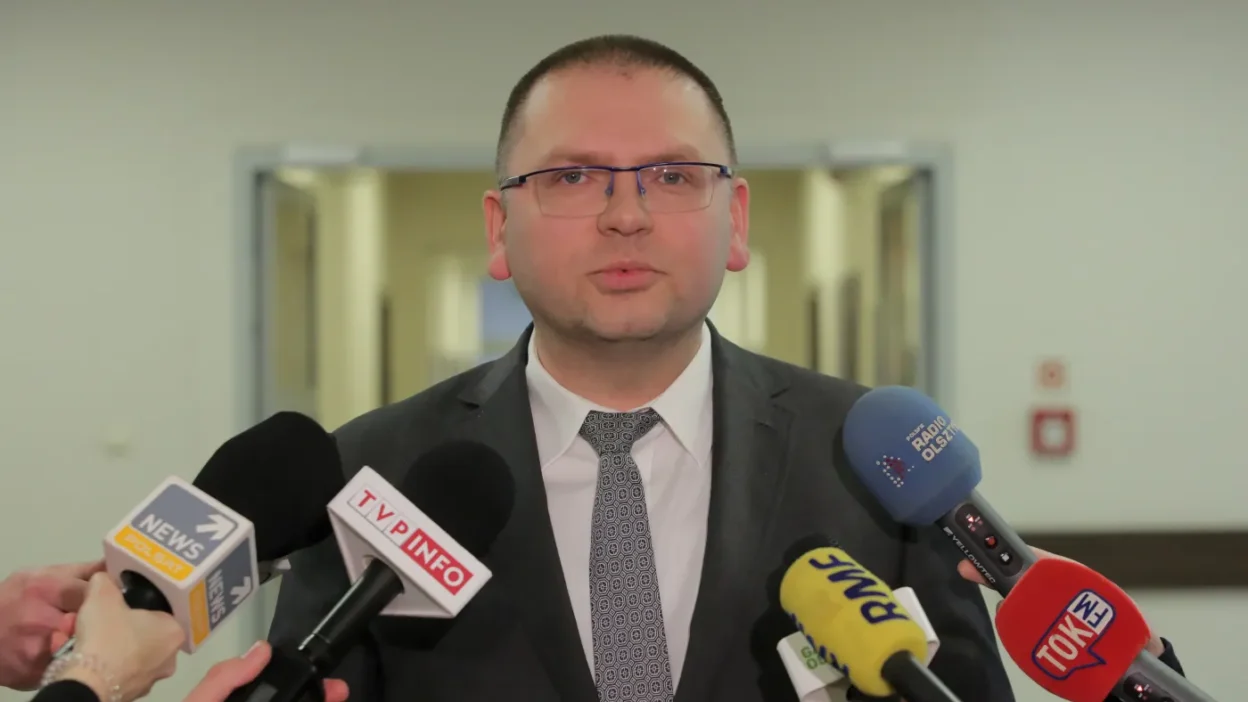
Poland’s state treasury is suing former court president Maciej Nawacki for approximately €23,000, a first-of-its-kind attempt to hold a public official financially responsible for judicial decisions.
State Lawsuit Against Judge Nawacki
The Polish state is pursuing legal action against Judge Maciej Nawacki, seeking nearly €23,000 in damages. This marks the initial instance of attempting to transfer financial responsibility for court decisions to a specific public official.
The regress claim, filed by Krzysztof Krygielski, president of the District Court in Olsztyn, totals almost €23,000. This sum represents the costs incurred by the court due to lost cases linked to decisions made by former court president, Judge Nawacki.
The Mechanism of Regress
The principle of regress allows a public institution that has incurred costs to recover funds from the individual responsible for those costs. In this case, it primarily concerns the costs of legal proceedings, compensation, and back wages paid to Judge Paweł Juszczyszyn.
A Precedent-Setting Case
This case is considered exceptional as previous announcements regarding regress claims against officials and judges have not been implemented. This action represents a potential shift in the state’s approach to accountability for public officials.
The Dispute Over Court Rulings and the CJEU
The core of the conflict revolves around decisions concerning Judge Paweł Juszczyszyn, who was suspended by the Disciplinary Chamber of the Supreme Court. Subsequent rulings by domestic courts and the Court of Justice of the European Union (CJEU) indicated that this body did not meet the standards of an independent court.
Nawacki’s Actions and Juszczyszyn’s Return
Despite these rulings, Maciej Nawacki, as president of the District Court in Olsztyn, did not reinstate Juszczyszyn. After a two-year suspension, Juszczyszyn returned to work but was transferred to a different department and placed on mandatory leave, actions also deemed unlawful.
Juszczyszyn subsequently filed several lawsuits against his employer. The courts ruled in his favor, ordering the payment of back wages, compensation for mobbing, and coverage of legal costs with interest, all funded by the state budget.
Financial Responsibility and Public Finance Discipline
Krzysztof Krygielski, president of the District Court in Olsztyn, emphasizes that the case has both individual and systemic implications, highlighting that a lack of response to legal violations leads to taxpayers bearing the costs of flawed decisions.
“Justice and fiscal discipline require pursuing regress,” Krygielski argued, noting that Nawacki’s actions were intentional and persistent.
Potential Precedent and Legal Implications
Legal experts suggest that a successful lawsuit could set a precedent and open the door to further claims against individuals making decisions contrary to applicable law or court rulings.
Controversies Surrounding Maciej Nawacki
Maciej Nawacki remains a prominent figure in the disputes surrounding judicial reform in Poland. As a member of the so-called neo-KRS and former court president in Olsztyn, he has frequently been at the center of controversy.
A particularly notable event was a meeting of judges in February 2020. After rejecting the president’s report, some judges proposed resolutions, including one to reinstate Paweł Juszczyszyn. Nawacki publicly tore up the documents and ended the meeting, provoking a strong reaction from the legal community.
Following this incident, judges from Olsztyn filed a report alleging the commission of a crime, accusing Nawacki of exceeding his authority and destroying documents.
Immunity and Supreme Court Decision
The issue of Maciej Nawacki’s criminal responsibility remains unresolved. On February 25, 2026, the Chamber of Professional Responsibility of the Supreme Court refused to lift his immunity, preventing criminal charges from being filed.
This decision was criticized by some in the legal community. The prosecutor’s office announced it would file an appeal, meaning the question of potential criminal liability remains open.