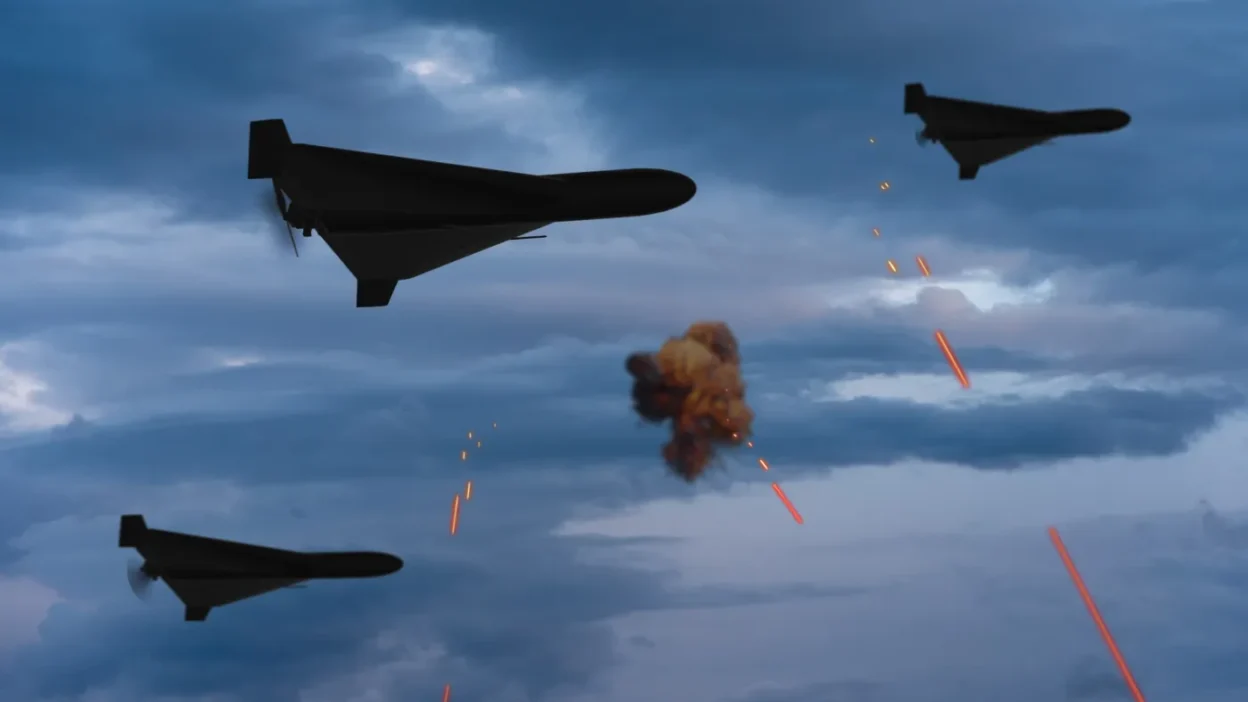
Facing relentless Russian attacks, Ukraine is pioneering a system allowing private companies to independently defend against drones and missiles, a model Poland is considering.
Russia Faces New Adversary: Civilian-Led Air Defense
Russia is now contending with a new challenge as Ukrainian civilians take air defense into their own hands. Companies are proactively establishing their own anti-aircraft and anti-drone defenses, rather than relying solely on military assistance.
This innovative approach, first implemented in Ukraine, is being evaluated for potential adoption in Poland, according to specialists, provided the system proves effective.
Escalating Attacks Drive Civilian Initiative
Russia continues daily attacks on Ukrainian cities, launching dozens to hundreds of drones and missiles. Private firms have increasingly become targets, prompting them to seek independent defense solutions.
Ukraine’s Air Defense Effectiveness Rises
For over four years, Ukraine’s military has been responsible for air defense, continuously expanding its warning and interception systems. The Ukrainian Ministry of Defense reports a growing success rate in downing Shahed drones and missiles, reaching 89.9% in March.
Over the past four months, the efficiency of Ukraine’s air defense has increased by 9.7%. The government aims to achieve a 95% interception rate, and a key component of this plan is the launch of private air defense systems.
Public-Private Partnership for Air Defense
“We have created a model where the state, the military, and business operate as one system,” stated Mykhailo Fedorov, Ukraine’s Minister of National Defense. “We are opening up the air defense market, fostering competition, allowing businesses to develop private air defense and protect their infrastructure.”
Initial Successes in Kharkiv and Beyond
A pilot program launched in Kharkiv saw private air defense systems down several Russian drones on the first day. Similar systems are being established in 13 other regions, with companies in the Zhytomyr region already registering to protect their production facilities as of early April.
Framework for Private Air Defense Systems
Companies seeking to establish their own air defense systems must first sign an agreement with the Ukrainian Ministry of Defense. They are then provided with the necessary equipment and training for personnel. Once operational, these units are integrated into the national air defense system.
Can Poland Follow Ukraine’s Lead?
Poland is considering adopting elements of Ukraine’s approach, but with caveats. While the privatization of certain air defense components is a novel concept, it is not suitable for protecting military installations.
However, it could be effective for safeguarding critical national infrastructure, a challenge even Western European nations are still addressing.
Protecting Critical Infrastructure with Private Security
“I see private air defense protecting civilian objects, such as oil refineries, railway stations, and other critical infrastructure,” noted General Bogusław Pacek. “This is a good idea, as even Western European countries are struggling to secure these assets.”
General Pacek suggests that companies like Orlen could hire private firms to defend their facilities.
Poland’s Existing Air Defense Systems
Poland is currently strengthening its military, layered air defense systems, including Wisła, Narew, Pilica (Pilica Plus), and the San anti-drone system. The Civil Defense Corps is also being established to support the country’s defense efforts.
However, General Pacek emphasizes the value of examining the Ukrainian solution while acknowledging that not all Ukrainian experiences are directly transferable.
Lessons from Ukraine’s Unique Context
“Ukraine is different because of its experience since 2014, when 20 civilian battalions fought,” a military source explained. “People volunteered as civilians, formed regular units, chose their own commanders, and defended the country alongside the military. This experience should not be replicated.”