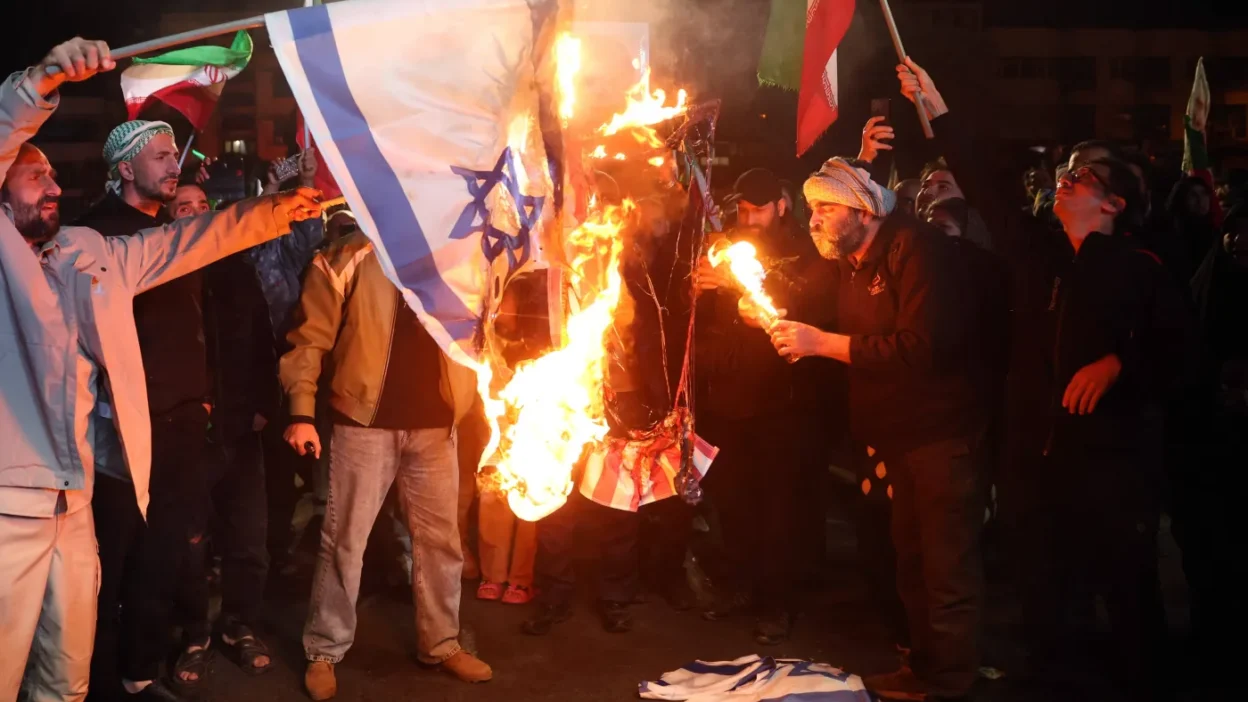
Following a two-week ceasefire announcement between Iran, the US, and Israel, protests erupted in Tehran with demonstrators burning flags amid continued regional attacks.
Rocket Attacks Continue Despite Truce
Despite the formal agreement, the Middle East remains on high alert with ongoing rocket attacks and air raid sirens reported in several countries.
Incidents occurred overnight, signaling the ceasefire’s fragility.
Tehran Demonstrations Express Anti-Western Sentiment
Thousands of Iranians took to the streets in Tehran immediately after the ceasefire announcement, publicly burning US and Israeli flags.
Demonstrators chanted slogans against both countries, highlighting deep-seated hostility.
Ideological Dimensions of the Conflict
The flag burnings symbolize the intense emotional climate in Iran and underscore the conflict’s ideological roots, extending beyond diplomatic solutions.
Iran’s Longstanding Anti-US and Anti-Israel Stance
The demonstrations align with the Iranian government’s consistent portrayal of the US and Israel as primary geopolitical adversaries, a rhetoric that has recently intensified.
Bahrain Declares High Alert
Bahrain has declared a state of heightened readiness, with civil services responding to a fire following an attack described as “Iranian aggression.” No casualties were reported.
Lebanon Sees Deadly Israeli Strike
The situation is further complicated by the involvement of other actors; an Israeli attack in Lebanon resulted in eight deaths.
Israeli Prime Minister Benjamin Netanyahu stated the ceasefire does not apply to Lebanon, contradicting some regional politicians’ statements.
Iraqi Militia Temporarily Halts Attacks
An Iranian-backed militia in Iraq announced a two-week suspension of armed actions, directly linked to the ceasefire and intended to de-escalate tensions.
Strategic Control of the Strait of Hormuz
The Strait of Hormuz, a crucial oil transport route, remains a key point of tension, with restricted movement in the area.
Analysts believe shipping companies and insurers will not immediately resume normal operations, citing the need to rebuild trust.
Iran’s control over the Strait of Hormuz gives it significant influence over global energy prices.
International Reactions and Appeals for Peace
UN Secretary-General António Guterres appealed for adherence to the ceasefire terms and an immediate end to hostilities, prioritizing civilian protection.
Japan, Egypt, and Iraq expressed positive stances toward the ceasefire, with Japan emphasizing the importance of securing navigation in the Strait of Hormuz.
Australian Prime Minister Anthony Albanese supported the ceasefire but criticized Donald Trump’s inflammatory rhetoric, warning it could destabilize the situation.
Trump Declares “Golden Age” for Middle East
Donald Trump hailed the ceasefire as a breakthrough, claiming Iran “has had enough” and the region could enter a period of economic recovery.
This optimistic assessment contrasts with reports of continued attacks and demonstrations in Tehran.