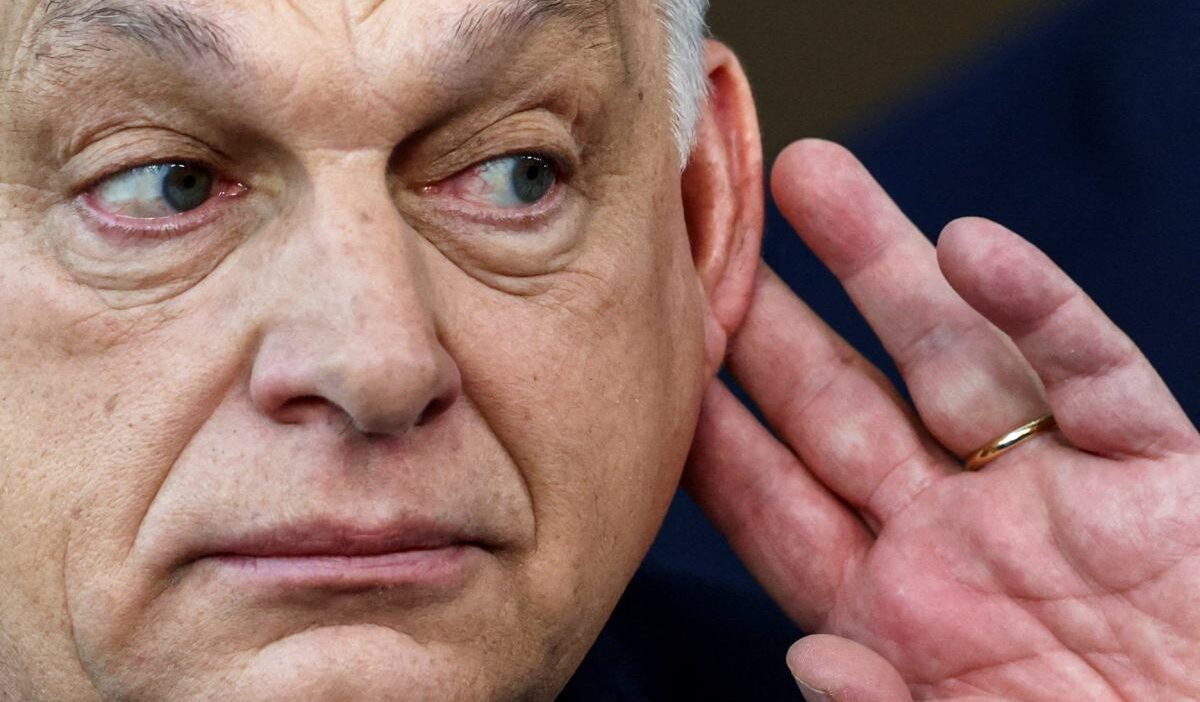
Hungarian Prime Minister Viktor Orbán’s government alleges Facebook’s algorithm favors the opposition ahead of Sunday’s parliamentary elections.
Government Claims Algorithm Works Against Ruling Parties
A spokesperson for Hungarian Prime Minister Viktor Orbán stated to Politico that the algorithm of a major American technology company is “fundamentally working against the governing parties.”
Tight Race and Competing Narratives
The campaign leading up to Hungary’s parliamentary elections is dominated by two narratives: Orbán’s focus on the threat of war and the opposition TISZA party’s promises of national reconstruction. Polls have consistently favored the opposition for months, presenting Orbán with an unprecedented challenge after 16 years in power.
Polls Indicate Opposition Lead
Recent independent polls show support for the opposition TISZA ranging from 49 to 58 percent among decided voters, while support for Fidesz fluctuates between 35 and 38 percent. Opinion research also indicates growing support for the opposition and declining popularity for the ruling party.
Orbán’s Broad Accusations
Orbán is accusing various entities, including the opposition (of attempting to falsify Sunday’s elections) and Meta – the owner of Facebook – of favoring the Magyar party. Orbán has 1.6 million followers, while the opposition profile has 930,000. However, the opposition profile has seen greater user engagement in the form of comments and likes.
In March, the Magyar profile published 287 posts, generating 14,077,000 interactions, while Orbán’s 342 posts received “only” 7,868,000 interactions.
EU Regulations Impact Fidesz’s Strategy
In October 2025, Meta will prohibit political advertising on its platforms according to new EU regulations. This impacts Fidesz’s strategy, which heavily relied on such advertising. Orbán’s party was the largest investor in political advertising in the EU during the 2024 European Parliament election campaign, spending 5.4 million euros on Meta and Google, while opposition parties spent “only” 1.4 million euros.
Disparities in User Profiling
According to Orbán’s spokesperson, the opposition profile’s success stems from Meta’s use of different user profiling systems. Kovacs believes this system disadvantages Orbán.
Kovacs claims Facebook’s algorithm is “more restrictive” regarding the number of people who can see a politician’s page compared to their professional profile. He stated that the Prime Minister must have a political profile with obvious limitations, while the opposition leader’s profile is managed by a different algorithm. Magyar operates a professional profile in the “public figure” category, while Orbán is categorized as a “politician,” which is believed to be detrimental.
Meta’s Response
Orbán’s camp claimed in mid-March that Facebook began limiting the Prime Minister’s posts, following a campaign by the opposition to report content from Fidesz’s Facebook posts.
A Meta spokesperson denied the allegations, stating, “Our systems do not treat professional profiles differently than Pages when it comes to distribution on Facebook. There are no restrictions on the Prime Minister’s account, and no posts have been removed. Our standards and community policies apply to everyone, and we have implemented systems to detect any coordinated actions aimed at abusing our reporting systems.”