A new Hungarian government poised to dismantle Orbán’s policies is expected to unblock EU aid for Ukraine and release funds for Poland’s armed forces.
Unblocking Key Funds
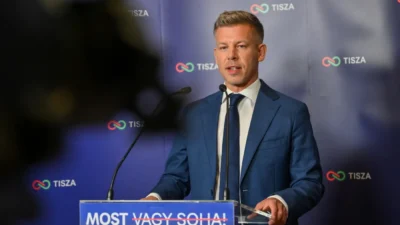
A victory for TISZA party, under the leadership of Péter Magyar, with a constitutional majority in parliament, signals a dismantling of the system established during Orbán’s decade-long rule. A significant change will be in Hungary’s foreign policy.
Hungary, formerly Russia’s closest partner within the EU and a blocker of key initiatives for Ukraine, is expected to adopt a more balanced approach, though not necessarily a friendly one.
EU Aid Package for Ukraine
The most crucial outcome will be the lifting of the veto on a massive €90 billion EU loan for Ukraine, approved at the end of 2025. This loan is vital for sustaining the Ukrainian budget in 2026-27.
Without it, Ukraine would face severe financial difficulties as early as this month, as its regular revenues cover only about half of its needs. Planned expenditures for this year total €97.5 billion (with military spending accounting for approximately half), while revenues are projected at only €59 billion.
According to Sławomir Matusek of the Centre for Eastern Studies, the budget is unrealistic, assuming lower military spending than actually occurred in 2025 – essentially anticipating a cheaper war than last year.
Financing the Loan
The EU loan is intended to cover two-thirds of Ukraine’s needs in 2026-27, with the remaining funds to be provided by the G7 nations. Initially, the EU considered funding the €90 billion primarily by seizing frozen Russian state assets.
This plan failed due to opposition from several EU countries concerned about the legal and financial consequences. The current solution involves borrowing the €90 billion on the market, with the EU guaranteeing repayment and covering interest costs, to be repaid post-war through Russian reparations.
Orbán’s Previous Stance and TISZA’s Commitment
Orbán initially agreed to this mechanism, securing an exemption with the Czech Republic and Slovakia, relieving Hungary from bearing the loan’s costs. This was a key concession in exchange for a commitment not to veto the solution.
However, in March, Orbán vetoed it, claiming Ukraine indirectly attacked Hungary by halting Russian oil deliveries via the “Friendship” pipeline. While deliveries did stop due to a damaged pumping station, Orbán alleged Ukrainian delays in repairs, expected “in spring.” Orbán also used anti-Ukrainian rhetoric during his failed election campaign. TISZA has preliminarily pledged to quickly withdraw the veto.
Increased Funds for the Polish Military
Similar relief is expected for the smaller European Peace Facility (EPF), created before the war to support conflict prevention. After Russia’s invasion, Ukraine became its priority recipient, including funding for member states to reimburse them for older military equipment transferred to Ukraine.
Funding was to come from interest on frozen Russian assets. Hungary opposed this and filed lawsuits to block disbursements, hoping for a ruling allowing a permanent veto. No rulings have been issued yet.
Delayed Reimbursements for Poland
Poland has not received approximately €2 billion due to this blockage, as stated by Prime Minister Donald Tusk in March. These funds are for older, Soviet-era military equipment transferred to Ukraine in 2022-23, intended for new arms purchases.
While not critical given Poland’s current €44 billion arms spending in 2025, the funds could more than double the existing order for 111 Polish Borsuk infantry fighting vehicles (valued at 6.57 billion złoty in 2025).
Implications for Russia
A significant indirect benefit to Ukraine will be a substantial shift in Hungary’s stance towards Russia, particularly regarding EU sanctions. Orbán has consistently hindered stricter EU action in this area.
In February, he vetoed the 20th round of additional sanctions on Russia, though he did not block the cyclical renewal of existing sanctions in March. This renewal requires unanimous agreement from all 27 member states, providing an opportunity to negotiate removals from the sanctions list.
An investigation by “Vsquare” revealed that in 2024, Hungarian Foreign Minister Péter Szijjártó coordinated with his Russian counterpart, Sergey Lavrov, to remove the sister of a close associate of Vladimir Putin, Alisher Usmanov, from the sanctions list, succeeding in early 2025.
Transit and Information Flow
The new government in Budapest may also lift the blockade on transit of material aid to Ukraine. While Hungary is not a key supply route (Poland and Romania are), another open border would be beneficial.
The departure of the Fidesz government will also cut off a valuable information source for the Kremlin regarding events in the EU and NATO. “Vsquare” published recordings indicating Szijjártó, and even Orbán, readily shared the latest developments from Brussels negotiations with Russia.
While no evidence suggests they leaked secrets, even fresh reports from closed meetings are valuable to Russia, allowing for quicker and more effective responses to Western events.
Cautious Support and EU Accession
The new Hungarian government is unlikely to become openly pro-Ukrainian. Years of propaganda from state-controlled media have fostered a negative attitude among Hungarians, who generally prefer to stay distant from the conflict, according to Dr. Andrzej Sadecki of the Centre for Eastern Studies.
Tisza is unlikely to challenge this public sentiment, stopping the blocking of EU aid and distancing from Moscow, but Budapest will not become a genuine ally of Kyiv, maintaining merely correct relations.
EU Accession Negotiations
This cautious approach will also be reflected in negotiations regarding Ukraine’s EU accession. The Fidesz government previously blocked the start of these negotiations. Tisza will likely lift the blockade, but not as a supporter of Ukraine’s EU vision.
Rather, a skeptical and protectionist stance is expected. Nevertheless, the mere commencement of real negotiations and the initiation of the accession process will be a significant boost for Kyiv, bolstering Ukrainian morale.
Overall Impact
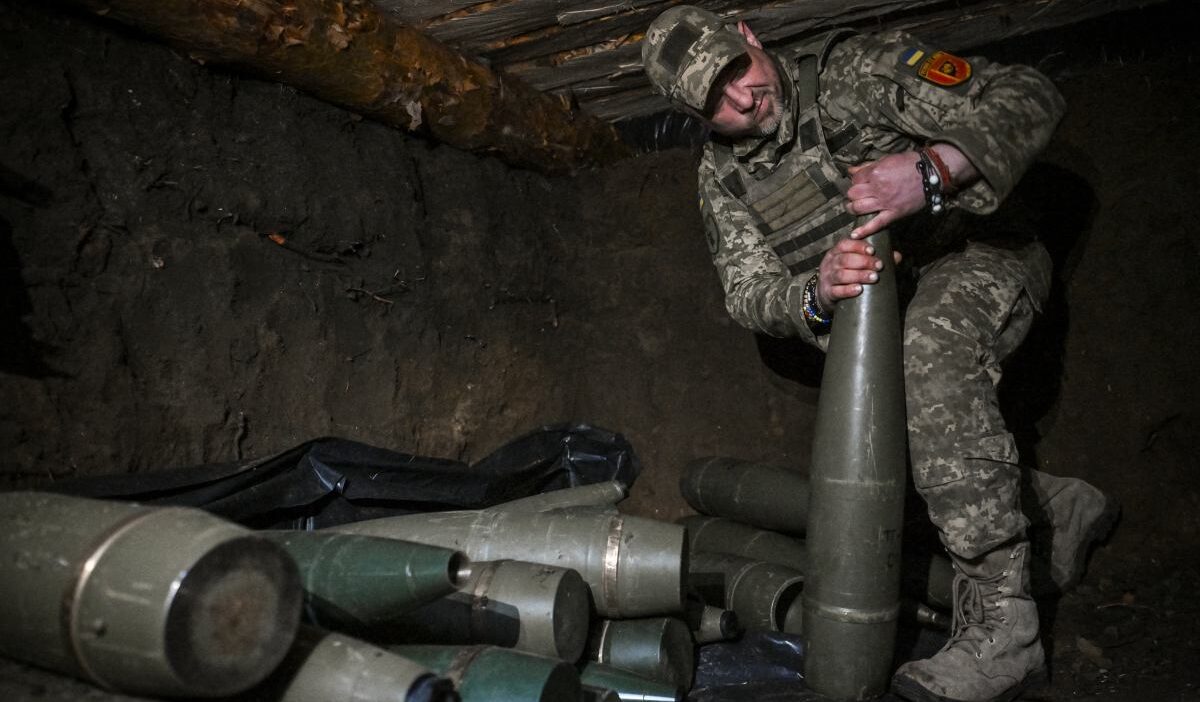
Overall, Orbán’s electoral defeat significantly improves Ukraine’s war situation, primarily by ensuring financial stability for two years and greater predictability of EU support. These are crucial factors given the challenging position of Ukrainian forces, which has shown some improvement in recent months.
Unblocked EU support will undoubtedly increase the chances of further stabilization.