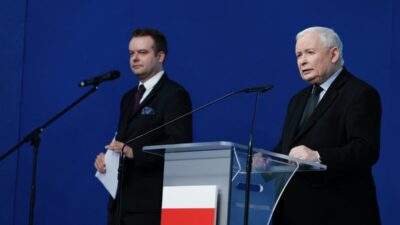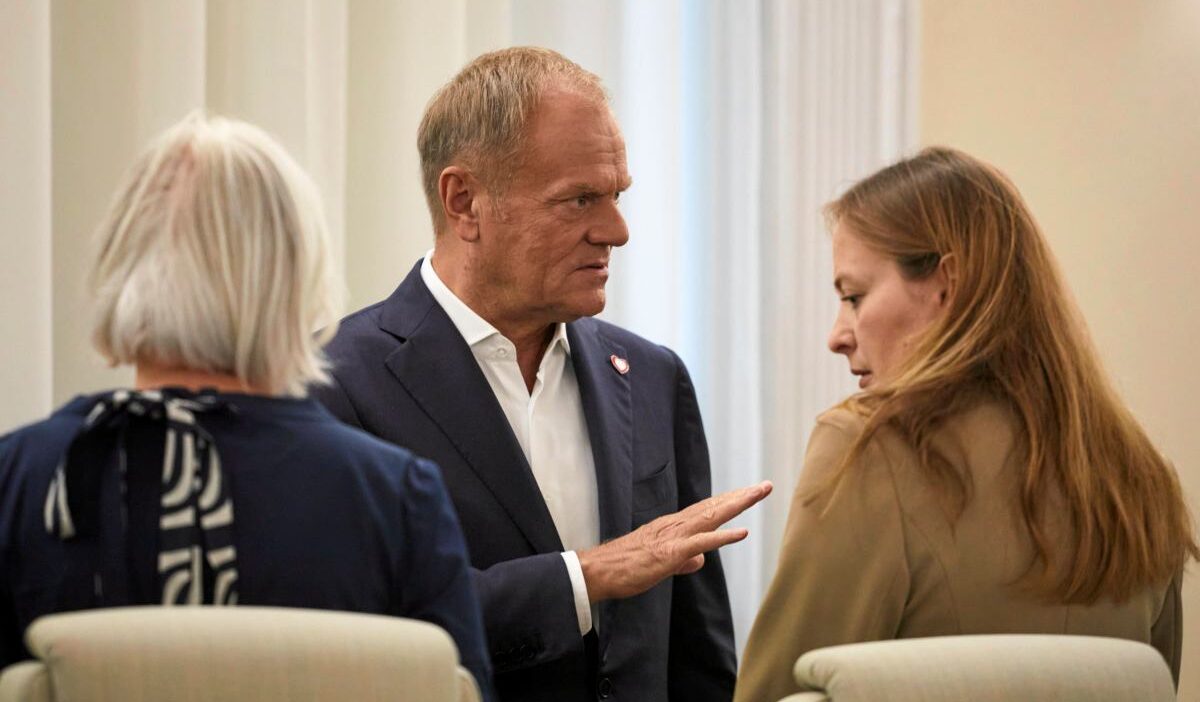
Polish Prime Minister Donald Tusk reportedly threatened to remove Poland 2050 from the governing coalition if they support a motion of no confidence against Climate Minister Paulina Hennig-Kloska.
Tusk-Pełczyńska-Nałęcz Meeting
A meeting between Prime Minister Tusk and Poland 2050 leader Katarzyna Pełczyńska-Nałęcz lasted approximately one hour, during which they discussed the implementation of the National Recovery and Resilience Plan (KPO).
The vote of no confidence against Minister of Climate and Environment Paulina Hennig-Kloska was also a key topic of discussion.
Tusk’s Ultimatum
Sources indicate that Tusk warned Poland 2050 that supporting the motion to dismiss Hennig-Kloski would result in their exclusion from the coalition government.
Minister of Funds and Regional Policy Pełczyńska-Nałęcz reportedly stated her party would not support the motion filed by Konfederacja and PiS.
Defense of Hennig-Kloska
A TVN24 journalist reported, citing a source within Poland 2050, that Tusk “defended Hennig-Kloska as if she were his own.”
Pełczyńska-Nałęcz stated her party would vote “responsibly,” but the club’s decision would depend on Hennig-Kloski’s actions before the vote, denying reports of an ultimatum from the Prime Minister.
Coalition Tensions
During the conversation, the Prime Minister reportedly criticized the state of the coalition, blaming coalition partners for the issues.
Pełczyńska-Nałęcz disagreed, arguing the Prime Minister was responsible for the coalition’s condition. A source close to the Prime Minister’s office described the conversation as “sharp and unambiguous,” reiterating the ultimatum.
Konfederacja’s Motives and Internal Divisions
Tomasz Nyczka of Wyborcza.pl suggests Konfederacja aims to disrupt coalition unity, despite the likely outcome of the vote.
The motion has resurfaced tensions between Poland 2050 and Centrum, with Centrum members criticizing Poland 2050’s leadership.
Vote of No Confidence Details
The motion of no confidence against Paulina Hennig-Kloska alleges a lack of action to mitigate the negative impacts of EU climate policy on Poland, chaos surrounding the “Clean Air” program, neglect in preparing the energy and forestry sectors for the 2025/26 heating season, and an attempt to base the country’s energy sovereignty on renewable energy sources.
Hennig-Kloska’s Meeting with Coalition Clubs
On April 16th, Hennig-Kloska invited representatives from coalition parliamentary clubs to a meeting to present information regarding her ministry’s activities.
Hennig-Kloska previously belonged to Poland 2050 and received her ministerial position through the party before leaving after losing an internal leadership election to Pełczyńska-Nałęcz, subsequently forming the Centrum parliamentary club.