Over a dozen nations are preparing a mission to secure the Strait of Hormuz, while Germany debates its role and divers monitor whales in the Baltic Sea.
German Participation in Strait of Hormuz Mission Under Debate
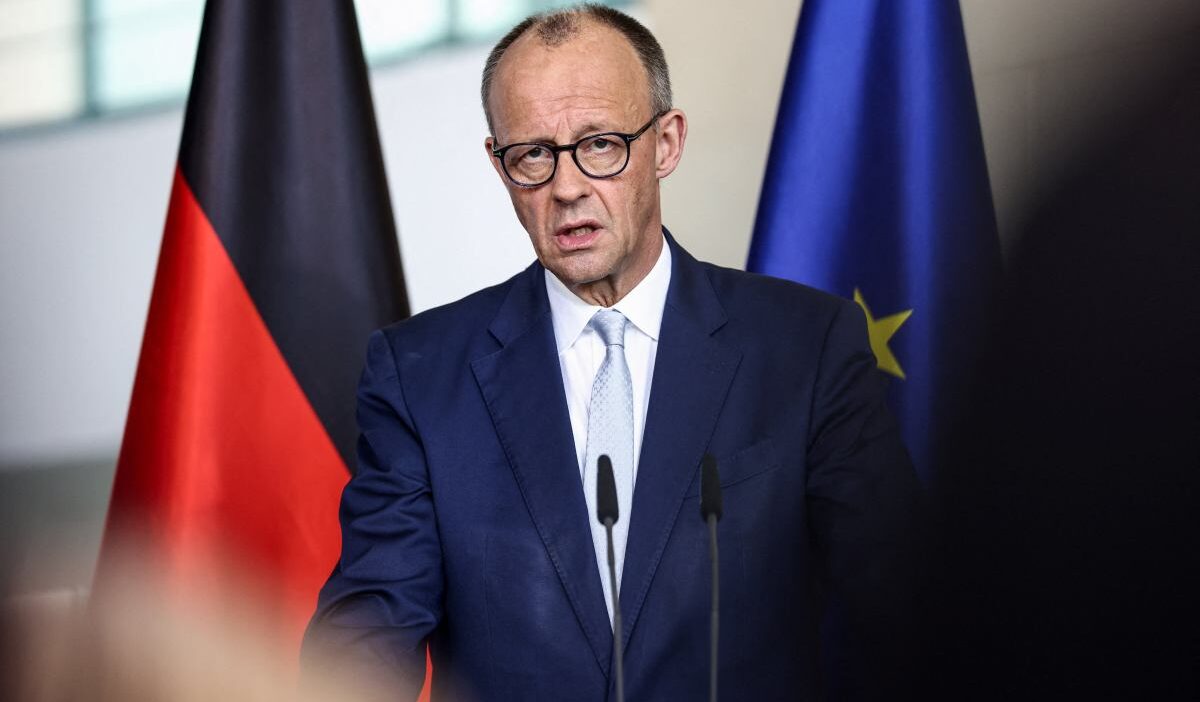
More than a dozen countries have agreed to an international mission to secure the Strait of Hormuz following the cessation of hostilities. German Chancellor Friedrich Merz announced on Friday, April 17th in Paris, the potential participation of the Bundeswehr in mine clearance and maritime reconnaissance.
Merz stipulated the end of hostilities and “a secure legal basis, such as a UN Security Council resolution” as conditions for the planned international mission. He added that a decision from the Bundestag is also required to deploy the Bundeswehr abroad.
France and UK Offer Leadership
France and Great Britain have expressed their willingness to lead the multinational mission. France has already dispatched an aircraft carrier, ten warships, and 50 aircraft to the Mediterranean Sea and the Middle East regions.
However, the potential deployment of the Bundeswehr is sparking controversy within Germany.
“Frankfurter Allgemeine Zeitung” Criticizes Conditions for Deployment
“Frankfurter Allgemeine Zeitung” criticizes the Chancellor’s conditions, stating that waiting for a peace agreement between Trump, Netanyahu, and Khamenei is unnecessary; an extended ceasefire should suffice. While a stronger mandate beyond the existing UN resolution would be desirable, it is not essential—unless the aim is to completely block German participation in the mission.
The paper argues that if Paris, London, and other European capitals decide to send naval forces to the Persian Gulf to address the global energy and economic crisis, Berlin cannot claim its military divers trained in mine clearance are only available to monitor whales in the Baltic Sea (provided they have Greenpeace approval).
“Badische Zeitung” Highlights Bundeswehr Expertise and Domestic Concerns
“Badische Zeitung” supports the Chancellor’s offer regarding Bundeswehr mine detection and clearance, citing the Navy’s experience with millions of tons of WWII explosives in the North and Baltic Seas. The Bundeswehr is recognized for its high level of professionalism in deep-sea operations.
Despite this, many Germans are critical of foreign missions. Supporting Ukraine’s defense against Russia already presents a significant challenge, and willingness to assume greater global responsibility diminishes as domestic prices rise and prosperity declines. The paper concludes that failing to act will only increase the threat to Germany’s economy and peace.
US-Iran Tensions Remain High
Hopes for peace between the US and Iran are mixed with uncertainty. Donald Trump threatened that if Tehran does not surrender its enriched uranium, the US will seize it “in a much less friendly way.”
European Strategic Thinking and US Influence
“Lausitzer Rundschau” notes that dozens of nations, led by France and Great Britain, have gathered to discuss the uncertain future of protecting ships in the Strait of Hormuz after a ceasefire. The paper questions whether the ceasefire between the US, Israel, and Iran will be extended beyond the coming Wednesday.
The coalition may need to act sooner than expected. While it’s positive that Europe is finally thinking strategically in its own interest, Europeans must avoid becoming slaves to the constantly changing goals of the US President or other actors, and avoid reacting to Trump’s constant alarmism.
The Importance of Mediation and Long-Term Negotiations
“Rhein-Zeitung” emphasizes the need for commitments to become binding obligations. A meeting alone does not resolve the conflict. Peace, as Trump likes to write in capital letters, does not come from internet posts.
Negotiations require patience and often take years—failures are more common than successes. Therefore, mediators with a longer-term perspective than the US President should be involved, and forces that desire an end to the ongoing violence should be supported. Europe could play a greater role, supporting long-term negotiations with Arab countries, Pakistan, and Turkey through initiatives, targeted pressure, and incentives. The consequences of the war are already being felt in Europe, making stability in the Middle East a matter of European interest.