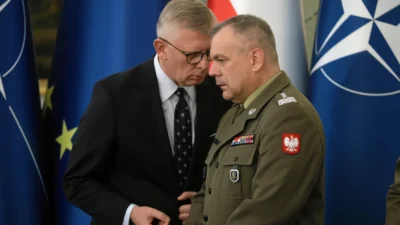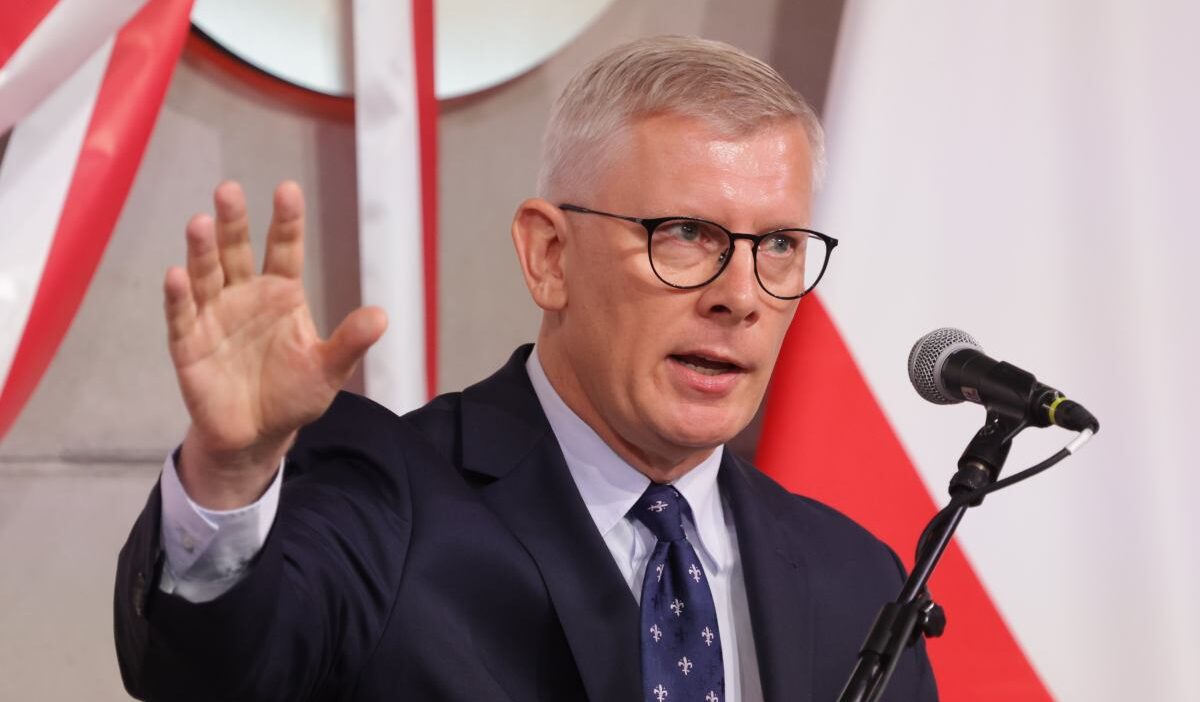
Sławomir Cenckiewicz unexpectedly resigned as head of Poland’s National Security Bureau following months of conflict over access to classified information.
Internal Conflict and Information Access
Sławomir Cenckiewicz announced his resignation on Thursday, stemming from a prolonged dispute with the government regarding access to classified information, which the Military Counterintelligence Service revoked in 2024.
The issue originated with the disclosure of fragments of Poland’s 2014 defense plans by then-Defense Minister Mariusz Błaszczak the previous year, documents Cenckiewicz’s Military History Office had provided (and for which he faces related charges).
Palace Disputes and Limited Influence
Lack of access to classified information and disagreements with key figures within the Presidential Palace – including Marcin Przydacz, Zbigniew Bogucki, and Paweł Szefernaker – contributed to the resignation.
Sources within PiS describe Cenckiewicz as lacking political experience and being a “solitary” figure, contrasting with the established relationships of Przydacz and Bogucki, both from the West Pomeranian region.
New Role and Limited Authority
Despite resigning from the BBN, Cenckiewicz will continue to work within the Presidential Palace, having been appointed to lead the newly established Security and Defense Council in March.
However, this council is purely consultative, lacking constitutional basis or significant influence on state policy, and primarily comprises PiS politicians and allies like Mariusz Błaszczak, Michał Dworczyk, and Piotr Pogonowski.
Ambitions and Future Prospects
Despite his ambitions, Cenckiewicz’s options are currently limited, with little chance of becoming the head of the Institute of National Remembrance in the current political climate.
Alliance with Czarnek
Cenckiewicz is reportedly seeking an agreement with PiS presidential candidate Przemysław Czarnek, hoping Czarnek will wield influence after potential right-wing electoral victories.
He is expected to join Czarnek’s advisory team and potentially appear on PiS electoral lists.
A Key Figure for PiS
Cenckiewicz has held several important state positions under PiS governments, including leading the commission for the liquidation of WSI in 2006 and the commission investigating Russian influence in Poland in 2023.
The latter commission was established to target the then-opposition PO party and its leader, Donald Tusk, issuing a report shortly before parliamentary elections alleging improper oversight of the services and recommending against Tusk holding public office.
Potential Alternatives
While valued by party leader Kaczyński and PiS voters, some within the party suggest a role similar to that of Marek Magierowski – a diplomatic posting as an ambassador – might be more suitable for Cenckiewicz.
Minister of Special Services? Doubts Remain
Some within PiS are skeptical about the idea of Cenckiewicz becoming the minister coordinating special services, questioning whether a theorist is suited for such a political role.
Concerns were also raised about his perceived lack of scrutiny regarding Russian influence within the Konfederacja party.
The IPN Possibility
The possibility of Cenckiewicz leading the Institute of National Remembrance may resurface after the parliamentary elections, particularly as the selection of a new director appears unlikely in the current parliamentary term.
Dr. Mateusz Szpytma has been recommended for the position, but securing parliamentary approval is considered improbable due to the current political composition of the Sejm and Senate.
Remaining in the Palace for Now
Sławomir Cenckiewicz is expected to remain within the Presidential Palace until the upcoming elections.