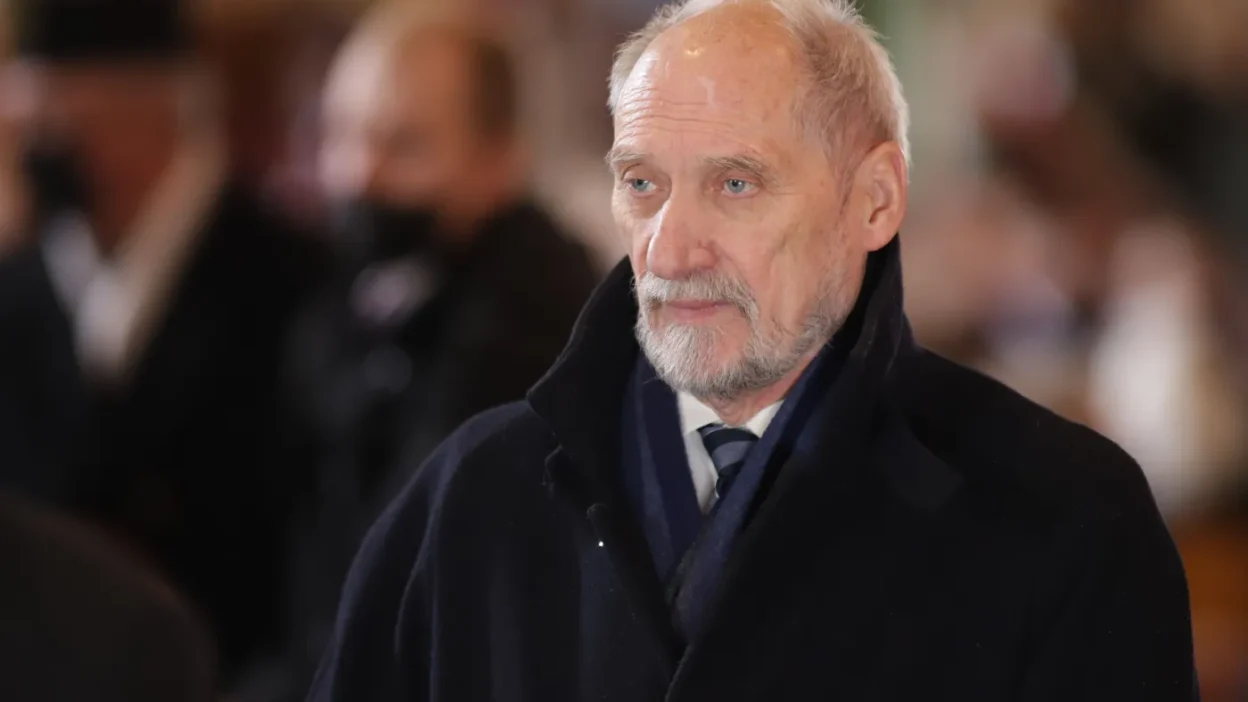
The Polish Sejm voted to lift the parliamentary immunity of Antoni Macierewicz, paving the way for a criminal investigation into his statements.
Parliamentary Decision on Antoni Macierewicz
The Sejm has agreed to allow criminal prosecution of Antoni Macierewicz. The vote to lift the immunity of the Law and Justice (PiS) MP passed with 242 votes in favor and 208 against, exceeding the required statutory majority of 231.
This decision allows prosecutors to investigate statements made by Macierewicz that sparked a significant political dispute and prompted a response from special services.
The Core of the Dispute
The case stems from a statement made by Antoni Macierewicz on September 11, 2025, during a parliamentary debate concerning the violation of Polish airspace by Russian drones. During his speech, the MP leveled serious accusations against the leadership of the Military Counterintelligence Service (SKW).
Accusations of Russian Agents
Macierewicz claimed that “the leadership of the Military Counterintelligence Service still consists of Russian agents, appointed by Donald Tusk in 2011.” These words immediately drew reactions from politicians and special services representatives, who deemed them unfounded and damaging to the reputation of the state institution.
Prosecutorial Investigation into Defamation of SKW Leadership
Following the statement, the head of the Military Counterintelligence Service, General Jarosław Stróżyk, filed a notification to the prosecutor’s office. The proceedings were initiated by the Regional Prosecutor’s Office in Warsaw, which is investigating whether defamation and slander of the SKW leadership occurred.
Prosecutor’s office spokesman Mateusz Martyniuk stated that the investigation was conducted “into an event,” not against a specific person.
Legal Threshold for Criticism
From a legal standpoint, it was crucial to determine whether the MP’s statement exceeded the limits of permissible criticism and whether it could undermine public trust in the state institution and its leadership. Polish law stipulates that defamation of a state body or its representatives can result in criminal liability, especially if it involves accusations of cooperation with foreign intelligence services.
Parliamentary Immunity Explained
As an active MP, Antoni Macierewicz previously enjoyed parliamentary immunity, protecting him from criminal responsibility without the Sejm’s consent. Lifting this immunity means prosecutors can now formally file charges and conduct further procedural actions, including potential questioning as a suspect.
Additional Investigations Involving Macierewicz
This is not the only case in which prosecutors are interested in the activities of Antoni Macierewicz. Previously, the National Prosecutor’s Office, acting on the findings of Investigative Team No. 4 established in November 2024 by Prosecutor General Adam Bodnar, submitted a request to the Sejm to lift the MP’s immunity.
In this case, the charges relate to the suspicion of disclosing classified information, which was allegedly a state secret. According to investigators, this information may have been disclosed during the work of the Smolensk sub-commission, chaired by Antoni Macierewicz. This case is also ongoing and could have serious legal consequences.
Legal and Political Implications
The Sejm’s decision is significant both legally and politically. It enables law enforcement agencies to take concrete action against one of the most recognizable politicians of Law and Justice. It also fits into a broader context of accountability regarding the activities of public officials in previous years.
There is also public discussion about possible further motions to lift the immunity of other MPs, which could lead to further tensions between the government and the opposition. The case of Antoni Macierewicz has become one of the most striking examples of the political conflict surrounding responsibility for statements made in the Sejm.