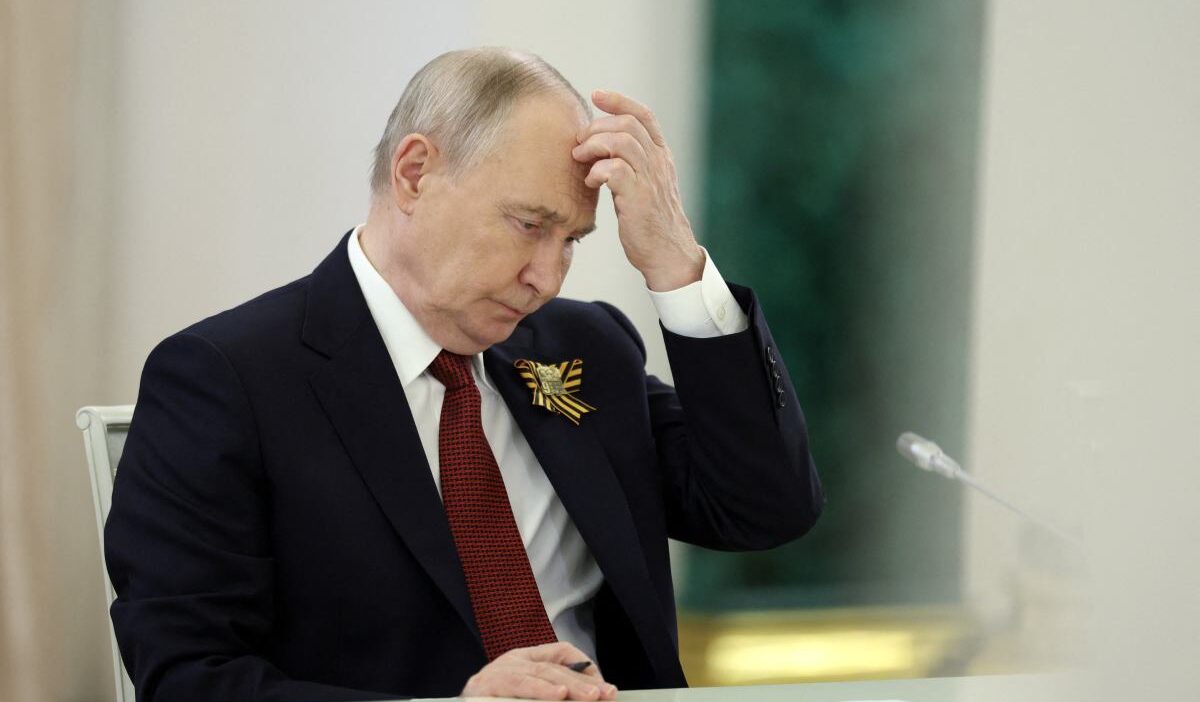
Reports from European intelligence agencies suggest Vladimir Putin has tightened security amid fears of a coup, sparking a debate over whether the threat is real or a psychological operation.
Security Tightening and Conflicting Theories
The Kremlin has significantly increased security measures around President Vladimir Putin due to rising fears of assassinations and a coup. These findings, reported by “Important Stories,” CNN, and the Financial Times, stem from a report by a European intelligence agency.
Observers are divided: some believe the threat is real, citing successful Ukrainian special operations, while others view the reports as a campaign intended to destabilize the Russian elite. Most experts agree that Putin is concerned about his safety and that tensions within the elite are rising due to economic problems and pressure on technocrats.
Sergey Shoigu’s Role as a Destabilizing Factor
Former Defense Minister Sergey Shoigu has been classified as a “potential destabilizing factor.” Roman Anin of “Important Stories” suggests that while Shoigu has lost his former influence, he remains a threat to the power system amidst growing clan conflicts and tensions between security agencies.
Shoigu previously led a powerful clan with extensive corruption networks. Despite a long friendship with Putin, he was replaced by Andrey Belousov in 2024, likely due to failures on the Ukrainian front. He may now fear the same fate as his former deputies, such as Ruslan Calikov, Timur Ivanov, and Pavel Popov, who have faced arrest or imprisonment on corruption charges.
Fear of Drone Attacks and Restricted Movement
Intelligence reports indicate Putin fears the use of drones in potential assassination attempts. In April, the Telegram channel VCHK-OGPU reported that the Kremlin feared internally organized drone attacks in Moscow, which nearly led to the cancellation of the traditional Victory Day parade.
Security in the capital has been bolstered with electronic warfare systems and communication disruptions. Politologist Yekaterina Schulmann notes that Putin is limiting public appearances to prioritize safety over image, suggesting that the safest course of action is to avoid appearing in public.
Prospects of a Coup
Abbas Galliamow observes that while conflicts between security services are intensifying and clans are acting more independently, elites generally avoid open confrontation. He views Shoigu as too weakened and lacking the necessary resources to lead a coup.
Mark Galeotti describes the reports of a conspiracy as “deliberate disinformation” and a psychological operation designed to fuel paranoia among the Russian elite. He asserts that Shoigu lacks the sufficient authority and trust among the leadership to execute a coup.
The Stability of Putin’s Power System
Aleksandra Prokopienko explains that the Russian elite is not a unified group, which prevents coordinated coup attempts. The system consists of pyramids around patrons linked to resource distribution; as long as participants receive more from Putin than they would without him, there is no motivation for open conflict.
However, sanctions and war have reduced the available resources, sharpening competition between influential groups. Prokopienko argues that the current ambiguity of rules serves Putin by forcing elites to demonstrate loyalty and reminding them that property rights in Russia depend on the political will of the Kremlin.