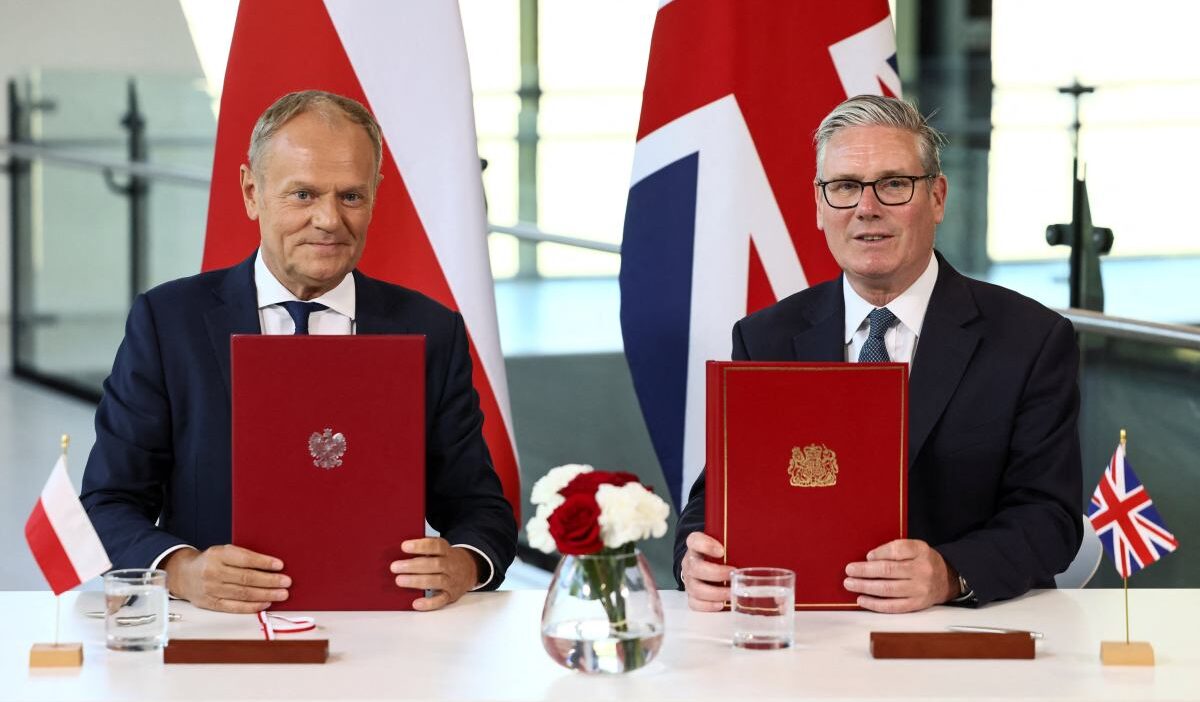
British media highlight a new defense treaty signed by Donald Tusk and Keir Starmer on May 27, marking a generational shift in security cooperation between Poland and the United Kingdom.
A New Pillar of European Security
Analysts note that Central and Eastern Europe is emerging as the focal point of continental security policy. The Telegraph reports that the agreement encompasses missile production, intelligence cooperation, and joint efforts to combat organized crime and hybrid threats posed by Russia. The Times also notes plans to advance regional air defense systems.
Strategic Realignment Post-Brexit
According to the Financial Times, the United Kingdom is actively strengthening its position through strategic military alliances following its departure from the European Union. Poland has emerged as a key partner for London, driven by its geographic location, rising military expenditures, and consistent support for Ukraine.
Symbolism and Historical Context
Tusk and Starmer signed the treaty on May 27 at a museum dedicated to the Battle of Britain, a site commemorating Polish pilots who fought alongside British forces. Commentators emphasize the symbolic significance of the venue, suggesting that the partnership is anchored in a deep historical connection rather than just immediate mutual interests.
Expanding Defense Cooperation
Downing Street describes the treaty as the most significant step forward in bilateral security relations in a generation. The framework includes the development of next-generation medium-range air defense missiles, large-scale military exercises, and the design of advanced air defense ammunition.
Countering Hybrid Threats
Beyond traditional military hardware, Polish officials confirmed that the treaty mandates cooperation in countering disinformation, illegal migration, and hybrid warfare. Prime Minister Donald Tusk underscored the necessity of these measures to protect the shared values and interests of both nations.