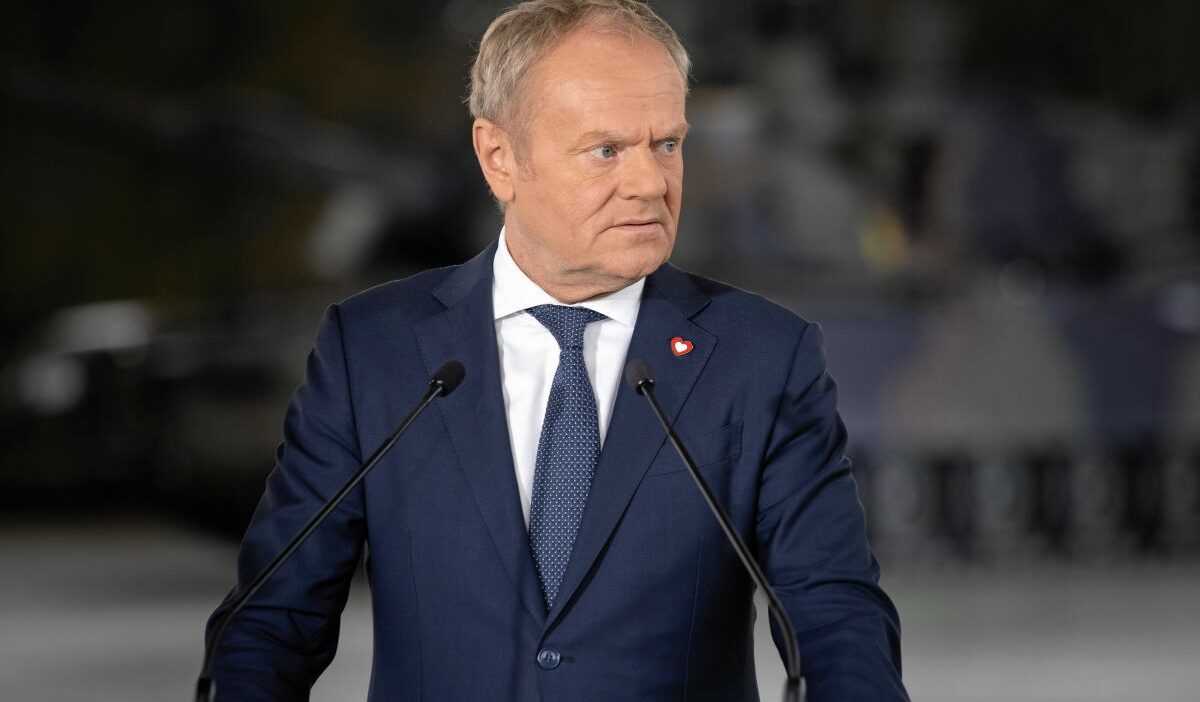
Polish officials signed the first defense procurement contracts under the EU’s SAFE program in Legionowo on May 28, with the country set to receive an initial €6.5 billion installment from the European Commission.
New Contracts for Cyber Defense
The first agreements funded by the SAFE program were signed on Thursday, May 28, in Legionowo. The contracts cover supplies for the Cyber Defense Forces, including cryptographic systems, mobile cybersecurity laboratories, and secure data exchange platforms from domestic suppliers such as Enigma, Krypton Polska, Filbico, and Media sp. z o.o.
The signing ceremony took place at the Cyber Defense Forces Component Command in the presence of Prime Minister Donald Tusk and Defense Minister Władysław Kosiniak-Kamysz. Tusk noted that the funding for the program is guaranteed, with agreements totaling 100 billion PLN to be signed with ten thousand companies by May 30.
Investment in Deterrence
Prime Minister Tusk emphasized that military spending is a necessary measure to avoid conflict, stating that the government aims for full national security through modernization. He addressed public concerns regarding the high cost of defense, framing the investments as a vital effort to ensure the country is never attacked.
Implementation of the SAFE Program
Poland, the largest beneficiary of the EU’s SAFE program, is eligible for 43.7 billion EUR in low-interest loans. The program prioritizes European-made military equipment, requiring that procurement contracts be finalized by May 30 to qualify under the “single procurement” rule; subsequent purchases must involve at least two participating states.
Government representative Magdalena Sobkowiak-Czarnecka announced that 40 contracts will be finalized by the end of May. Planned acquisitions include infantry fighting vehicles, naval vessels, and projects under the “East Shield” border defense initiative, such as reconnaissance drones and mine-laying systems.
Strategic Defense Acquisitions
The modernization plan extends to artillery enhancements, including the procurement of Krab howitzers and Rak mortars. Significant investments are also earmarked for international equipment, specifically aerial refueling tankers, alongside expanded capabilities in cybersecurity and space operations.