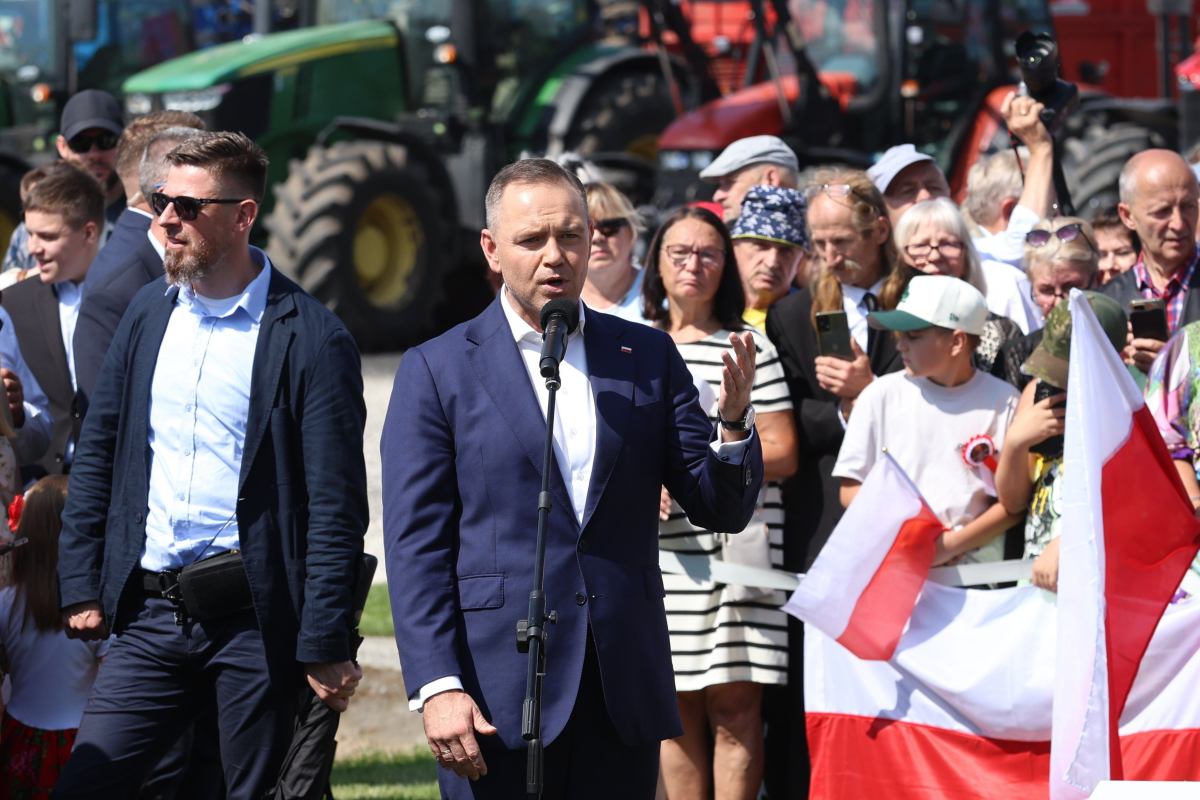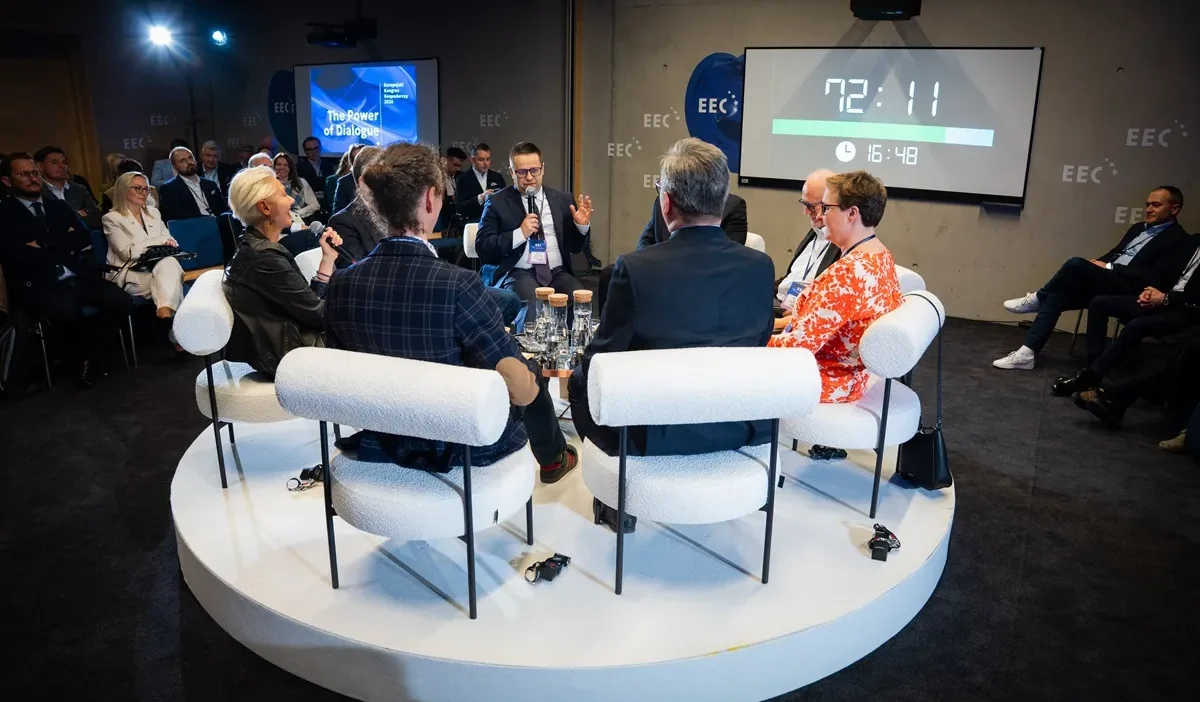
A panel at the European Economic Congress in Katowice discussed the opportunities, risks, and ethical implications of artificial intelligence’s growing role in creative fields.
AI’s Incursion into Creative Territory
Artificial intelligence is generating content faster, cheaper, and at an unlimited scale, offering potential liberation from tedious work for some, but posing an existential threat to others. The consequences will extend beyond the labor market, impacting social structures, the political sphere, and fundamental questions about control of the digital world.
Authenticity vs. Algorithm
Karol Kościński, Director General of ZAiKS, noted that AI is now entering areas previously exclusive to humans, with creation being the most fundamental. He emphasized that whether this change is liberating or imprisoning depends on society’s ability to maintain critical thinking and conscious decision-making.
Kościński warned that distinguishing authentic content from AI-generated content is becoming increasingly difficult, and imagining the situation in fifteen years is currently abstract, similar to early discussions about social media’s impact.
The Fate of Functional Music
AI is already capable of effectively replacing humans in functional music—music for television, advertising, and public spaces—potentially impacting composers who often work as freelancers with unstable incomes.
However, Kościński highlighted the ethical dimension: AI systems generate new works based on existing creations, often without the knowledge or consent of the original authors, effectively using their work to displace them.
He believes a need for authenticity may protect creators, as audiences, especially younger generations, will continue to seek genuine emotions and experiences that AI cannot replicate.
Job Market Shock and Political Repercussions
Kościński cautioned against downplaying the social consequences of automation, arguing that the often-cited figure of 15-20% job displacement is misleading when considering the impact on families and professional networks. He also noted that retraining isn’t equally accessible to everyone.
He drew a historical parallel to the transformations of the early 1990s, whose effects are still felt today in societal attitudes, fears, and political choices, warning that economic marginalization will lead to similar consequences and provide fuel for political movements.
Copyright Law and the Need for Activism
Kościński stated that copyright law has historically adapted to technological changes, citing the successful implementation of streaming royalties as an example. A similar process is expected regarding the use of copyrighted material to train AI models.
Numerous lawsuits are currently underway in the United States against major tech firms, with the outcomes having global implications for creators and the AI business model. He stressed the need for activism and creative solutions, alongside careful regulation of those who benefit from the revolution.
The Business Roots of the AI Revolution
Kościński argued that the AI revolution is often presented as a public issue, but its origins lie in the business policies of a few large technology corporations driven by financial interests. He questioned whether the public sphere should bear the cost of solving problems created by these companies.
He emphasized that decisions about information access and truth should remain within the domain of democratically controlled institutions, not corporations.