Poland’s BGK bank develops financing instruments spanning 40-50 years to fund large infrastructure projects, including the planned Kraków metro.
New Financing Model for Infrastructure
Bank Gospodarstwa Krajowego is creating a financial instrument allowing municipalities to take on debt for 40-50 years, targeting high-cost, long-life infrastructure projects like public transport, water supply, and energy transformation.
Current Polish municipal loans typically offer 10-25 year terms, forcing early repayments that strain local budgets during initial project phases.
Kraków Metro: 13-15 Billion Zł Investment
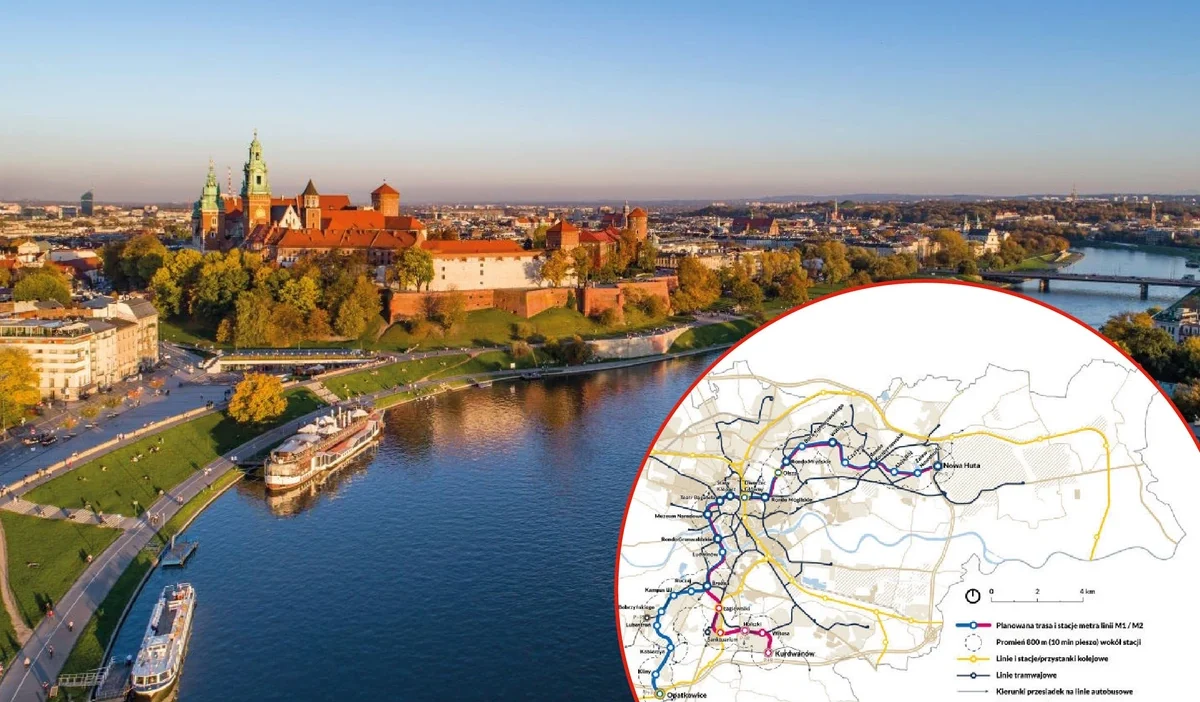
The planned Kraków metro, costing 13-15 billion zł, could benefit from BGK’s new instrument. It will feature two lines spanning 29 kilometers with 29 stations, serving 40% of residents by connecting Nowa Huta with the city center and southern districts.
The project aims to reduce congestion, cut travel times, and limit emissions, aligning with EU climate goals.
Mixed Funding Approach
Kraków’s metro will use a three-pillar financing model: 10-12% from the city budget, 40-50% from EU funds, and the remainder from external financing including BGK loans and private investors.
Long-term repayment periods could cover non-subsidized portions or provide matching funds for EU co-financed projects.
Poland’s Infrastructure Investment Gap
Polish municipalities collectively owe over 100 billion zł, though debt-to-income ratios remain lower than in Western Europe. Long-term loans reduce annual repayment burdens, enabling greater investment without straining current budgets.
Experts warn traditional financing may be insufficient as Poland needs hundreds of billions for transport, energy, and municipal modernization in coming decades.