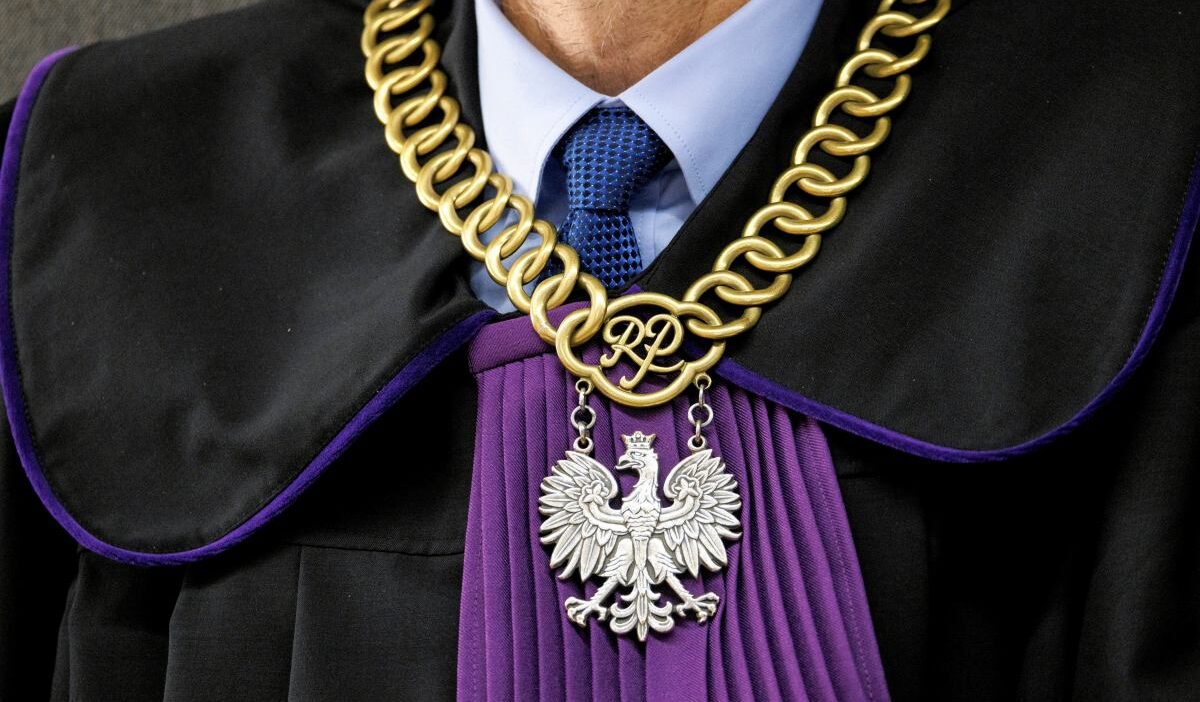
The Court of Justice of the European Union issued a key ruling regarding the validity of judges appointed in Poland through a reformed National Council of the Judiciary.
EU Court Addresses “Neo-Judge” Concerns
The ruling stemmed from preliminary questions posed by the Poznań-Stare Miasto District Court concerning the admissibility of challenging the status of judges appointed in Poland with the participation of the National Council of the Judiciary (KRS) after 2017.
Appointment Process Doesn’t Automatically Disqualify Judges
The CJEU ruled that the involvement of the KRS, reshaped following the Polish judicial system reform, in the appointment process of a judge, along with the lack of an effective legal remedy for non-recommended candidates, does not automatically disqualify that judge.
Entrepreneur Seeks Judge’s Recusal
The case originated with a businessman who requested the recusal of a judge in a payment dispute, arguing the judge was appointed by the KRS after 2018, thus undermining her status. He also cited concerns within the legal community regarding decisions made by “neo-judges” and sought the recusal of other judges appointed by the “neo-KRS” if they were to review his appeal.
District Court Sought Clarification from CJEU in 2021
The Poznań-Stare Miasto District Court initially sought guidance from the CJEU in 2021, questioning whether a single-judge panel, including a judge appointed through a questionable procedure, met the EU requirement of a “court established by law.” The court also inquired about whether a judge should be automatically removed if the appointment process violated the law, or if each case should be assessed individually.
Ombudsman Highlights Legal Flaw in Appointments
The Commissioner for Human Rights intervened, stating that a person appointed as a judge on the recommendation of a flawed KRS is still a judge, but their status is burdened by a legal defect requiring individual assessment.
Ruling Doesn’t Automatically Invalidate Judgments
Referring to a case from Giżycko, where a court refused to divide marital property due to a divorce ruling issued by a “neo-judge” deemed invalid, the CJEU’s Advocate General, Dean Spielmann, stated that simply being appointed with the involvement of the current KRS is insufficient to invalidate a judgment.
Advocate General Emphasizes Contextual Assessment
Spielmann emphasized that the relevant judicial body should consider not only the KRS’s involvement and the lack of effective appeal but also all other relevant circumstances surrounding the appointment that could affect the independence and impartiality of the court.
Broad Disqualification Would Threaten Justice System
Spielmann acknowledged the complexity of the issue, noting that approximately 3000 judges (“neo-judges”) have been appointed through the KRS. He warned that allowing disqualification solely based on KRS involvement would effectively extend the challenge of flawed appointments to all these judges, posing a serious threat to the functioning of the justice system and undermining legal certainty.
Right to Effective Legal Protection Remains Paramount
Spielmann underscored that citizens’ right to effective legal protection includes the possibility of recusal for judges who do not meet the requirements of independence and impartiality, and that rulings by the Polish Constitutional Tribunal cannot override this right.