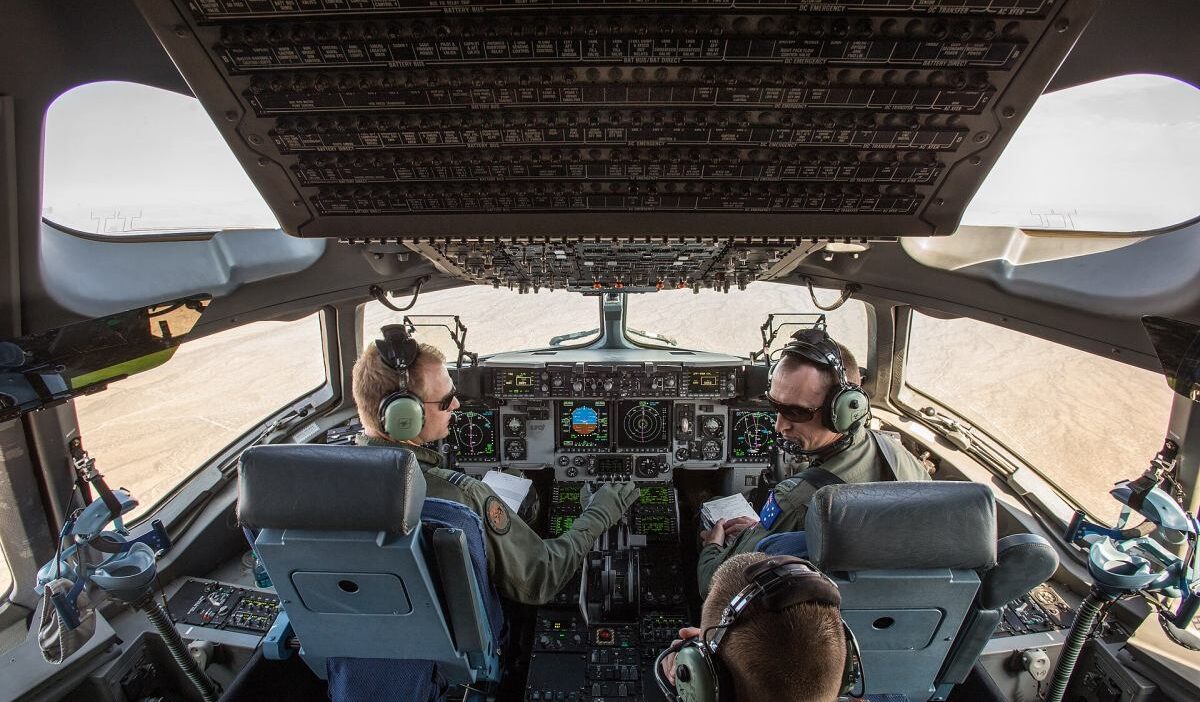
A U.S. C-17 Globemaster III preparing for departure from Qatar was ordered back to its parking spot Wednesday evening amid rising Iran tensions.
Military Movements
The C-17, scheduled to fly from Al-Udeid Air Base in Qatar to Crete, was halted mid-preparation and instructed to stand by. Radio traffic confirmed the sudden recall, coinciding with six KC-135 tankers departing the base, suggesting possible evacuation or combat support preparations.
U.S. media reported heightened Israeli military readiness, including air forces and security services, amid concerns over potential Iranian retaliation. Iran closed its airspace to civilian traffic shortly before midnight local time, lifting the ban five hours later.
Limited Strike Capability
No significant U.S. military buildup is visible near Iran—no carrier groups, no surge of tankers, radar planes, or combat assets like F-22s or F-35s. The nearest carrier is in the South China Sea, requiring weeks to reach Iranian waters.
A large-scale campaign appears unfeasible. While B-2 bombers could theoretically strike, each mission requires months of planning for route security and EW support, involving multiple aircraft types. Rapid strikes risk mission failure.
Diplomatic Pressure
President Trump publicly stated Iran “killing has stopped” and hanging protesters is not planned, citing these as justifications for intervention. U.S. threats now carry more weight post-summer strikes and the Maduro capture.
Tehran faces severe pressure: its economy is collapsing, military power degraded, and China/Russia offer limited support. However, regime change through bombing is unlikely, and redoubling on nuclear targets would contradict claims of its prior “destruction.”