Following vote counts from 98.53% of polling stations, Hungary’s Tisza party has taken the lead over Viktor Orbán’s Fidesz in parliamentary elections.
Parliamentary Election Results
After counting votes from 98.53% of polling stations, the current distribution of seats in parliament is as follows: 138 mandates for Tisza, 54 for Fidesz. The far-right Mi Hazánk party is also expected to secure seven seats.
Voting and Turnout
Polling stations closed at 7:00 PM on Sunday in Hungary’s parliamentary elections. Voters already in line at closing time were permitted to cast their ballots. A record turnout was observed, with 77.8% of eligible voters participating by 6:30 PM. This is higher than the final turnout of 69.59% in the 2022 elections.
Electoral System
Hungarians elected 199 deputies to the National Assembly, a unicameral parliament. 106 are elected in single-member districts, and the remaining 93 are chosen from national party lists. The candidate with the most votes wins in each district, even without a majority.
Voting Rights
Eligible Hungarian citizens voting domestically were entitled to cast two votes: one for a candidate in a single-member district and another for a party or national minority list. Voters abroad cast a single vote, exclusively for a national list.
Mandate Allocation Thresholds
Hungary has a 5% threshold for political parties, 10% for coalitions of two parties, and 15% for joint lists of three or more parties. The D’Hondt method is used to allocate mandates from party lists. Five party lists and 12 Hungarian minority lists were registered to participate in the elections, with the outcome primarily determined between the Fidesz-KDNP coalition led by Prime Minister Viktor Orbán and the Tisza party led by Péter Magyar.
Partial Results and Foreign Vote Count
Vote counting began immediately after 7:00 PM. No exit polls were conducted within the country.
Foreign Vote Processing
Ballots cast abroad must arrive in Hungary by the fourth day after the election and be counted by April 18th. Due to the close race, the final results may not be known until Saturday. This year saw a record number of registered voters wishing to vote at foreign representations – over 90,000. The number of voters casting ballots by mail also reached a record high, at nearly 224,000, according to NVI data.
Election Night Locations
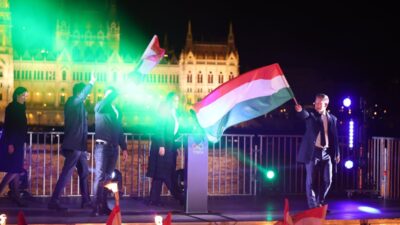
Both main rivals will await results in Budapest. Orbán and Fidesz are hosting an election night event at the Balna complex on the Danube, while Magyar and Tisza members will gather at Batthyány Square, opposite the Hungarian Parliament building.
Statements from Leaders
After casting his vote in Budapest, Prime Minister Viktor Orbán stated that he would respect the election results and congratulate the winner if the opposition were to win. He emphasized that “the people’s decision must be respected,” but added that he “came here to win.”
Magyar’s Confidence and Acceptance Conditions
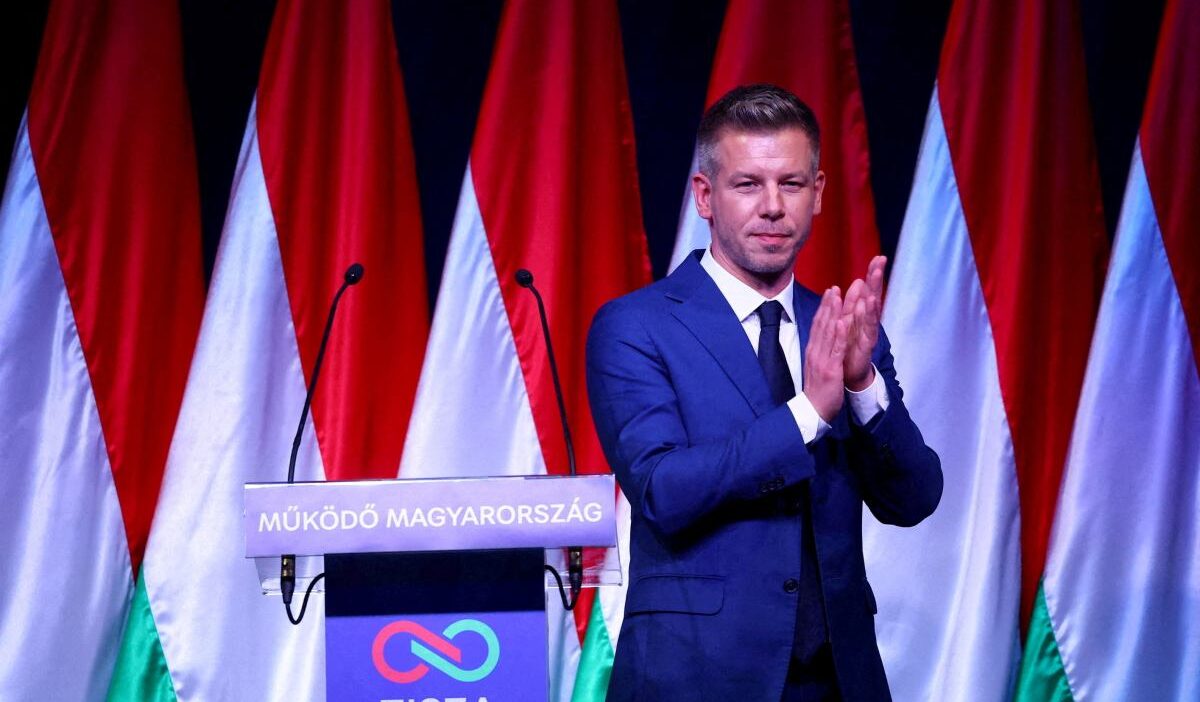
Tisza leader Péter Magyar stated after voting that “no one seriously believes that Tisza will not win the election.” He added that it remains to be seen whether the party will achieve a simple or qualified two-thirds majority, necessary for constitutional changes. He indicated he would accept the results if there were no fraudulent activities that significantly impacted the final outcome.
Profiles: Orbán and Magyar
Viktor Orbán, co-founder and leader of Fidesz, has governed Hungary continuously since 2010. He began his political career in 1989 by calling for the departure of Soviet troops. Since returning to power 16 years ago, he has transformed into an outspoken opponent of liberal democracy, altering the constitution and strengthening government control over the media and judiciary. Under his rule, Hungary has been identified by Transparency International as the most corrupt country in the European Union.
His rival, Péter Magyar, is a former member of Fidesz who previously worked in the Ministry of Foreign Affairs and Hungary’s permanent representation to the EU. He gained wider recognition in 2024 when President Katalin Novák pardoned a person convicted of covering up pedophilia. Following public outrage, Magyar criticized the corruption of Orbán’s power system in a YouTube video, leading to his departure from Fidesz.
The video reached millions of viewers – approximately 10% of the Hungarian population. Magyar subsequently organized the largest protests in years and became the leader of the little-known Respect and Freedom Party (Tisza), achieving the second-best result in the 2024 European Parliament elections.