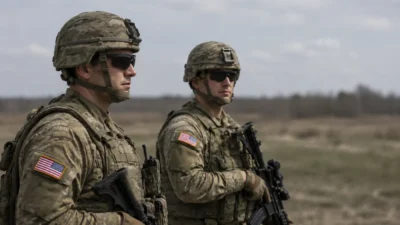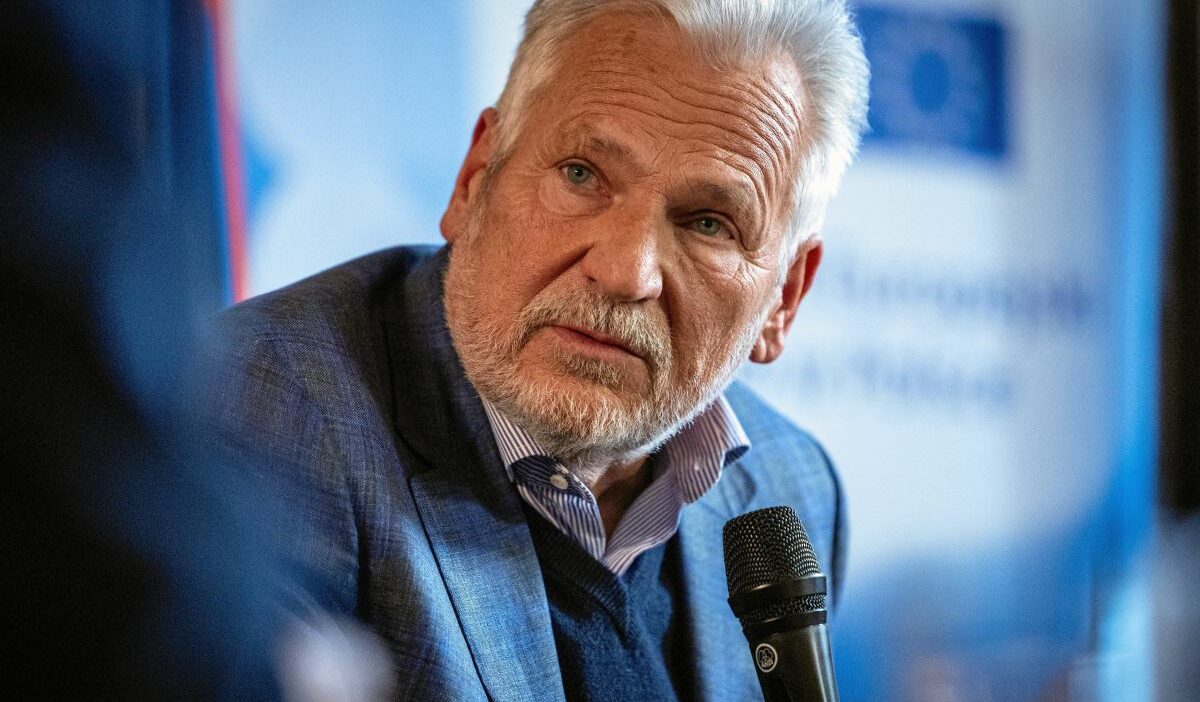
During a Tuesday appearance on Polsat News, former Polish President Aleksander Kwaśniewski questioned whether Donald Trump understands that the U.S. presence in NATO primarily serves American strategic interests and regional influence.
Kwaśniewski’s Critique of U.S. Policy
Former President Aleksander Kwaśniewski responded to reports regarding the cancellation of plans to rotate four thousand American troops into Poland. He challenged Donald Trump to recognize that U.S. involvement in NATO since 1949 has effectively maintained Western Europe within the American sphere of influence.
Kwaśniewski questioned the wisdom of abandoning this geopolitical position, asking if the U.S. intends to yield such influence to Vladimir Putin. He argued that the U.S. is currently grappling with long-standing internal issues, including financial instability, middle-class struggles, and infrastructure decay, which have caused a delay in necessary foreign policy reactions.
U.S. Defense Stance and Troop Rotations
U.S. Vice President J.D. Vance addressed the controversy during a White House briefing, clarifying that there has been no reduction in troop numbers. He characterized the current situation as a standard rotation delay rather than a strategic drawdown.
Vance emphasized that Poland remains capable of defending itself with robust American support. He argued that shifting resources is intended to maximize American security and encourage European nations to take greater responsibility for their own defense, stating that the U.S. cannot remain the world’s policeman. Final decisions on troop deployments have not yet been finalized.
Diplomatic Assurances from the Pentagon
On the same day, Polish Defense Minister Władysław Kosiniak-Kamysz held discussions with Pentagon chief Pete Hegseth. He received formal assurances that U.S. commitment to Poland’s defense remains unchanged.
The Polish Deputy Prime Minister confirmed that while a process of regrouping U.S. military forces and resources in Europe is underway, no decision has been made to reduce American military capabilities within Poland.