Over 40% of Lublin’s municipal housing tenants are behind on rent, creating a $18.3 million debt and straining the city’s housing system.
Record Debt and Rising Non-Payment
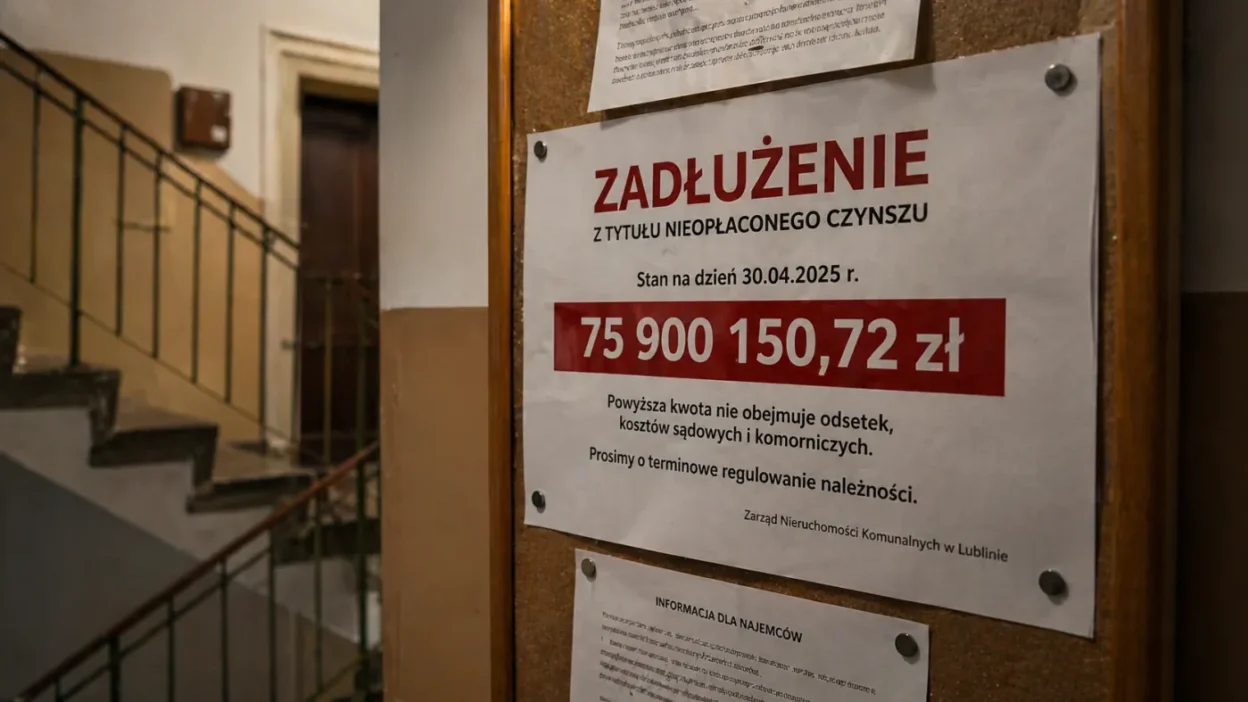
The scale of debt among tenants in Lublin’s municipal housing has reached a level that is beginning to realistically affect the functioning of the city’s housing system. Current rent arrears to the city amount to over 75,900,150.72 złoty (approximately $18.3 million), affecting nearly 40% of tenants.
This figure represents the basic debt amount only – excluding accrued interest and legal/enforcement costs, according to Zarząd Nieruchomości Komunalnych (Municipal Property Management Board).
Scale of the Problem
Approximately 37.82% of households using city-owned properties do not pay rent on time, meaning more than one in three tenants are in arrears, and the problem is growing systematically.
Extreme Cases and Individual Hardship
Among the debtors are individuals with relatively small arrears, as well as extreme cases. The largest recorded debt exceeds 800,000 złoty (approximately $193,000) and relates to a high-standard, large apartment where the rent was bid up by the tenants.
However, many tenants fall into arrears due to sudden life events – job loss, illness, or high medical costs. In such cases, the debt is often temporary, and tenants attempt to repay it.
Tenant Perspectives and Inequality
“I had a moment when I lost my job and my husband was hospitalized. There was no money for rent. It was a huge stress because I was afraid of losing my apartment. But I managed to get back on my feet,” said Anna, a resident of Lublin.
She also pointed out the inequality of the situation: “I don’t understand how you can not pay for years and still occupy a property, while others are waiting for an apartment.”
Long Waiting Lists and Systemic Issues
Lublin’s municipal housing stock consists of approximately 8,500 units, intended for individuals who do not own property and meet specific income criteria – currently around 4,000 złoty (approximately $965) per person per month.
Despite this, access to housing remains limited, with over 1,000 people on the waiting list and an average waiting time of 6 to 7 years.
Limited Enforcement and Legal Obstacles
Representatives of the Municipal Property Management Board admit that current regulations significantly limit the effectiveness of actions against debtors. Some tenants have never paid the full rent since moving in, sometimes paying only symbolic amounts.
Court proceedings often result in dismissal or granting tenants the right to social housing, of which there is a shortage. Evictions are rare, meaning some debtors remain in their apartments despite years of arrears.
Debt Relief Programs and Their Limitations
The city is attempting to reduce debt through debt relief programs, such as the possibility of working off debt through public works. However, eligibility requires unemployment, registration with the labor office, and assistance from the Municipal Family Assistance Center, with a debt limit of 30,000 złoty (approximately $7,250).
Interest in the program is limited, with participation declining over time and some agreements being terminated. There are also cases of people exploiting the system to obtain additional social benefits.
Illegal Occupations and Ongoing Challenges
A separate challenge is the issue of “wild” or illegal occupants. At the end of last year, 375 cases of illegal occupation of municipal apartments were recorded in Lublin. Individuals locate vacant properties, break security measures, and move in without the city’s consent.
Some attempt to legalize their stay by declaring payments based on their own calculations, but most do not pay any dues. Court proceedings in such cases can take several months, and the outcome often does not result in immediate eviction.
Low Rents and Future Plans
The current rent in Lublin’s municipal housing is 8.70 złoty (approximately $2.10) per square meter. Managers believe this is insufficient to maintain the housing stock in good condition. There is growing discussion about the need for rent increases, although such decisions could be socially controversial.
The city is also investing in the development of municipal housing, with two new blocks under construction, which will create over 200 apartments to partially alleviate the long waiting lists.